I'm back in the desert. Did I tell you that? Probably not, since I haven't really said anything for ages. You knew I was in Dubai for the Expo Opening Ceremony because that's when I discovered the canoeing. And you knew I got back to the UK because that's when I had the Cheesey Fries Of The Gods. Well now it's Dubai again for (obviously) the Closing Ceremony. It's a shorter stint this time, and that's a good thing because everything just seems more annoying now. This is the case a lot of the time these days. Is it my advancing age? COVID Fatigue? Just my default state? Whatever it is, sometime during lockdown I started an actual list of annoying things.
Others of you may also have a list, but I suspect yours is a casual thing you keep in your head in a sort of "man, I hate it when..." kind of way. Mine is categorised in Evernote, because that's how I roll. I add to it whenever something excites my peevishness, which is often. And sometimes I share it. I recently shared it on a day when I had to be at a four-hour meeting that started at 7:00am on a Saturday (because it was coordinated with a gang of people in Los Angeles, where it was 7:00pm). The meeting was long and difficult and sometimes frustrating. So following that a few of us went for lunch on the Expo site.
(Aside: this is one of the good things about being back. Last time, the wider Expo site was still under construction so the hospitality options were thin on the ground. Now there is an embarrassment of riches just steps from my door. This means I sometimes share texts with friends like, "I'll meet you in Belgium." Or "We're at that place upstairs from Estonia." Or "Let's go to Denmark because the beer is cheaper." Which, incidentally, is definitely not true in actual Denmark. Nor is it really true at Expo Denmark. It's just that in comparison with everywhere else on site, the beer in Denmark is somewhat cheaper. For instance, I went for drinks recently at an outdoor beer garden on site where a pint of Heineken was £9.62. It was lovely: great company, good food, nice evening. But for that price, those pints of Heineken should come with my own private Dutch person to feed me hand-peeled mini Babybels.)
Anyway, it was a long meeting, so we went for lunch across from the UK and next to Solomon Islands. And then one beer with lunch turned into another round, as it does. And another round turned into a few more after that and then it was 9pm. And somewhere in there I shared my list with the table, which was the cause of some amusement (and some debate). So I thought perhaps I should share some with you, because I haven't blogged in a while and even though I literally live at a world-class tourist attraction, it hasn't occurred to me to blog about that, but it has seemed quite natural to rant at you about my pet peeves, which is an insight into my current state of mind. And oh yes, this is going to be rant-y.
Here we go.
Single Lever Faucets:
I know they are supposedly better for people with difficulty gripping, or with arthritis, or... I don't know. I don't care. I hate them. Partly because I sometimes find it difficult to tell which way to manipulate them to get either hot or cold water. Normal taps are fine - hot on the left, cold on the right.
But look at this. What the hell? So to get hot water I move that handle thing... back? Left? Out? All of the above at the same time? No. Just no.
Yes, some single levers are more intuitive than the one in the picture. The ones with the lever on top will pretty reliably give you hot if you move them left and cold to the right. But even those are still on the list. Why? Adjustment. Separate twisting taps give you much better fine adjustment of both temperature and volume. Threaded things are perfectly designed to translate long turning movement into small movements of the tiny valve inside them. Single level faucets... not so much. How hard is it to get a small volume of water at a specific temperature with a single lever? Hard. Like one of those McDonalds Happy Meal toys where you have to get three baby ball bearings into three different holes at the same time. You end up doing tiny semi-calibrated taps on the lever to try and get in juuuuust the right spot. And you fail. You know you do.
Single Lever Faucets, you are On The List.
Still on plumbing:
Automatic Faucets:
The ones that make you do intricate Tai Chi moves with your hands to try and figure out how to trigger the sensor. Then force you to hold your hands in an unnatural position to keep the thing triggered. Then turn off anyway. Those ones. They're on The List.
Faucets that are too short:
The ones that don't extend far enough into the sink so you have to bash your knuckles up against the back of the sink to get your hands under the water and then end up splashing most of it out of the sink. List. Them. On it.
Still in the bathroom:
Centre Pull Paper Towels:
Thank you Google, for teaching me the name of this annoying variation on normal rolls of paper towel.
Obviously paper towel is supposed to come off the outside of the roll so that you end up with a wide flat sheet of material with maximum surface area, which then wraps conveniently over your wet hands and dries them efficiently.
Centre pull paper towels, by design, turn into a long, twisted ropey thing with much less useful surface area, so you use more paper and obtain poorer results. It's not better just because it's different people. Centre Pull Paper Towels, welcome to The List.
Open Concept Bathrooms:
This one requires no justification. Because any normal person knows at the very core of their being that this is wrong wrong wrong. I don't care how much you love the people you live with. I don't care if the door to your fancy modern open concept master suite is always closed to the rest of the world. I don't care if you often leave the bathroom door open anyway. Leaving the bathroom door open and not even having walls (let alone a door) are clearly very different things, which normal non-sociapathic people understand.
A flagrant example from my hotel room in Xi'an China. I ranted about it then and I maintain that stance today. And this one actually had walls, albeit glass ones. Still not good enough.
And before we leave the bathroom:
Wet Rooms:
FOR THE LOVE OF GOD whose idea was it to let water spray around all over a room that also contains things that really should not get wet like toilet roll and towels? And don't tell me it saves space. I live on a freaking BOAT. My shower can basically only be found with the aid of a scanning electron microscope and I still managed to fit in a shower curtain.
How did wet rooms become a trend? Is it also now trendy to walk around in wet socks because the floor of your bathroom is ALWAYS covered in water?
Wet Rooms you are soooooo on The List.
Speaking of socks:
Ok, I'm 53 now and I'm warming to the idea that sometimes you might wear socks with sandals. And I say this because I have a pair of sort of hybrid Birkenstock Croc kind of things are like walking on actual pillows and I wear them on the boat all the time - usually with socks - because it's cozy. (Also I never wear them out in public.) (Pause for cries of outrage. Yeah yeah, whatever. Go start your own blog and make your own list.) But my Crockenstocks are slides, where your whole foot is under a big strap that goes all the way across the top. Not the flip-flop kind with the bit that goes between your toes to hold the straps to the sole. Those ones are the problem, because some people wear socks with those by shoving the damned flip-flops onto their feet OVER their socks so the poor socks get stretched and shoved between your toes and you look like an idiot. Sorry, yes you do. (Also: not really sorry.)
Socks with flip flops. You + List = True
(Exception: Japanese tabi socks with the segregated compartment for the big toe which are specifically design to work with sandals. Note: this exception only applies when wearing traditional Japanese garb. While in Japan.)
Branching out into the kitchen:
Pedal Bins:
First, the leverage is all wrong, so the lid pops opening really abruptly and usually smacks against the wall. "So move it away from the wall", I hear you say? Ha! Then it will just slide around when you're trying to get foot on the pedal until it finds a wall it can smack into. On. The. List.
Drawers behind Cupboard Doors:
Drawer, yes. I fully support drawers. Easy access. Fewer things get shoved into darkened corners never again to see the light of day. Yay drawers!
Someone please tell me why we're now hiding the drawers behind doors. What is so offensive about drawer fronts that they need to be hidden? Did drawer fronts insult your grandmother? Are drawer fronts doing 5-10 years of hard time behind closed doors because the ladle that normally just barely fits shifted position again and now you can't get the drawer open? Get over it! Free the drawers!
Well I feel better getting that off my chest. And that's just the kitchen-and-bathroom part of the list. Wait until I get into the Vocabulary section! You'll be begging for the old two-month break between posts.
I’ve visited Brighton a few times before, though haven’t done some of the more classically touristy things there. Luckily, back before the Lord Mayor’s Show and before work got busy and before the winter weather arrived, I found a weekend to visit. This was mostly because Piran moved to Brighton during lockdown, which means I’ve lost a London-based friend, but gained one on the south coast, who now also boasts a very comfortable guest suite.
I went down on the train Friday night, and we spent Saturday tromping around the South Downs, with stops at a couple ancient hillforts and a dew pond and, most notably, lunch at the Gunn Inn in Findon. Piran rhapsodised about a lamb dish he’d had there once, so it seemed a good bet. And indeed it was. The fact that I can’t remember what I ordered as my main course detracts not at all from the story because what I do remember, indeed what still fills my dreams at night, is that we started by splitting a portion of cheesy fries which were disturbingly, astonishingly, addictively delicious. They came dressed not just with melted cheese but with chunks of fried chorizo, garlic aioli (yes I know that’s a tautology) and a drizzle of spicy oil. (Probably the fat from the chorizo. With a liberal dusting of crack.) They were so good that we did not even pause to photograph the dish when it arrived but did manage to finish our mains and a pint or two and were even persuaded to order dessert.
Dessert was this. Prompting the above expression for me, which clearly translates as “Are you kidding me?”
So that was Saturday in Brighton. Rambling, cheesy fries, and dinner with some of Piran’s Brighton gang at another pub. Good day, but just a warm-up for Sunday which started with a leisurely breakfast but had two very Brighton-y gems in store. First on the agenda was the 125th London to Brighton Veteran Car Run, the world’s longest-running motoring event and a perfectly quirky, perfectly photogenic, perfectly bloggy thing.
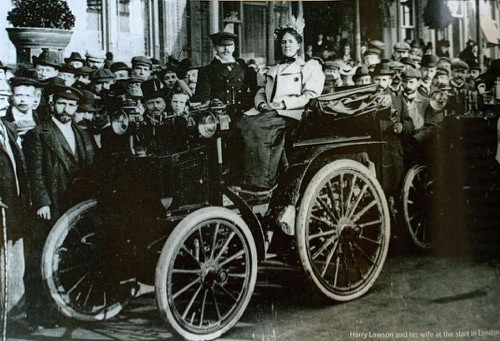
Established 1896, the first event was dubbed The Emancipation Run”, to celebrate the enacting of the Locomotives on Highways Act 1896. This legislation marked the end to some of the more restrictive limits to the use of horseless carriages on English roadways, including a speed limit of 4mph in the country and 2mph in towns. It’s commonly believed the 1896 legislation also repealed the infamous Red Flag Act, which “stipulated that self-propelled vehicles should be accompanied by a crew of three; if the vehicle was attached to two or more vehicles an additional person was to accompany the vehicles; a man with a red flag was to walk at least 60 yd (55 m) ahead of each vehicle, who was also required to assist with the passage of horses and carriages.” The Red Flag act had, in fact, already been repealed in 1878, but it’s an enduring myth of the Veteran Car Run commemorated by the ceremonial tearing in half of a red flag at the start of each year’s run.
Back in 1896, with a exhilarating new speed limit of 14mph, a group of 33 vehicles left from the Metropole Hotel in London (after a commemorative breakfast, of course). 17 of the 33 managed the entire 54 miles to Brighton, with the first finishing in 3 hours and 44 minutes, just squeaking in under the limit at an average speed of 13.9 mph. This rather dismal percentage of finishers is an enduring feature of the race, with vehicles regularly conking out, sometimes being revived by specially-trained mechanics from the Royal Automobile Club, and occasionally having to be pushed across the finish line hours after the leaders arrive. However one shouldn’t be too dismissive, as the central requirement to participate in the Veteran Car Run is that the vehicle entered must have been manufactured before 1905. The oldest car to participate this year was made in 1894.
Harry Lawson, organiser of the 1896 Emancipation Run, and his wife, at the start of the inaugural event
So on a dazzlingly clear and unseasonably warm morning, Piran and I headed to the sea front to witness the arrival of the first cars, expected around 10:30am. The traditional route starts at Hyde Park and runs past Buckingham Palace, through Brixton and Croydon and down the A23, finishing on the Brighton sea front at Madeira Drive. However, at 10:30 there was nary a car to be seen. Nor at 11am or 11:30 or even 12. So we filled the time with a stroll down Brighton Pier and along the sea front and through Brighton’s famous Lanes. And since I’ve talked about sea fronts and piers before, let’s just skip over that and get to the part where the cars finally stared arriving.
Here’s the final stretch, viewed from above, where each car stopped and the driver was interviewed about their journey, their vehicle, and, especially notable, the general excellence of the weather that day, all of which was broadcast over speakers to the assembled throng.
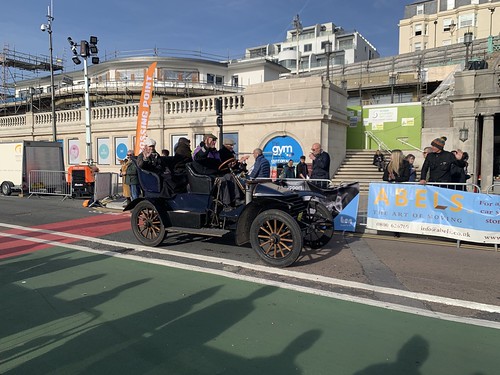
We made our way down to street level and found a spot near the pedestrian barriers to watch the cars trundle past close up.
Like this one.
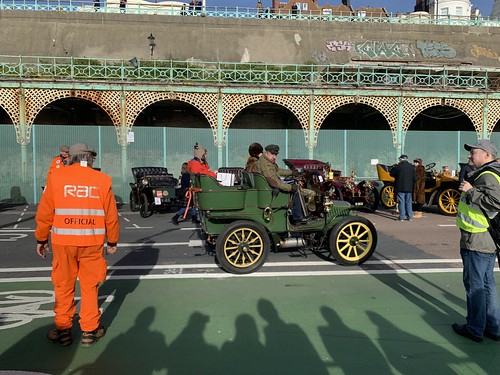
Finally we fetched up at the paddock where the cars were parked and where the drivers took a well-deserved break for refreshments in a nearby tent. Each car is also required to carry at least one passenger, and many people were wearing period dress, which definitely adds to the festive atmosphere. (Though I can imagine that in years when the weather does not cooperate one might fervently wish they had chosen Gore-Tex over tweed.) Some participants also carried picnics in special wicker baskets that were clearly part of the car’s design. Those were the days! Screw the satnav and the anti-lock brakes. Give me brass lanterns for headlights and a dedicated storage area for my stilton and champagne!
This fetching green-and-yellow beauty lurched into its spot with the aid of the his-vis-clad Royal Automobile Club Official, who helped stop it in place after the driver uttered the phrase of the day: “The brakes don’t work backwards!”
This paint job was particularly festive, though all the cars we saw were clearly well-loved and well-kept. Many have been in the same family for generations, and at least one was bought new by the current driver’s great-grandfather or great-great-grandfather or some such. Possibly in France. (Perhaps I should have been taking notes.)
The parking area was an ever-changing feast of antique motoring, because cars were constantly arriving, parking up, then leaving and being replaced by new arrivals. There were more than 300 cars entered, along with a smattering of vintage bicycles (including four penny-farthings) and one 1903 Minerva single cylinder motorcycle. After a suitable rest period, some cars were then loaded onto car-carriers to return from whence they came. However, other drivers proudly declared they’d driven their cars from home to the start line in London, then to Brighton, and would then drive straight back home to their garage in Little Snerglington-by-Snort or wherever it was they came from.
Eventually we tired of the never-ending rows of polished brass and glossy black and wandered to the city centre to try and catch a few of the cars in traffic. This was, for me, the most surprising part of the whole event. For some reason I’d assumed that the Veteran Car Run had some sort of priority lane from London to Brighton to keep these precious vehicles and their startlingly-poorly-protected passengers out of the regular flow of 21st century traffic. Not so.
All those cars were mixed in with everyone else on the road for the whole 54 miles! And some of them are so small. I mean look at those poor guys… that thing is basically a one hundred and twenty year old go-cart with a numberplate. Thankfully, participants in the Veteran Car Run and not allowed to exceed an average speed of 20mph.
By this time we'd had our fill of cars, however photogenic, and no one was offering US any stilton and champagne, so we wandered off. Astute Go Stay Work Play Live Readers will no doubt remember that I promised two very Brighton-y gems in the opening paragraphs of this post. However, it took me six weeks to get this written and posted, so I've decided to take my time and keep that in my back pocket for a future edition. In the mean time, I've opened a theatre show in London and done some work on another upcoming project, and continued battling with the boat engine, and put up the Christmas decorations and safely topped up my mince pie levels for another year. This post is shorter than some, but I'm taking the "done is better than perfect" view on this one. So, by the power vested in me as Supreme Leader of the Go Stay Work Play Live Global Consortium, I hereby declare this blog post DONE.
Maybe this happens to you too. It starts with a list of Things To Do pinging around your brain. Perhaps your list is something like this: go buy diesel injector cleaner, take out the garbage, book flights home for Christmas, go for a run, replace the starter battery, go to Lord Mayor’s Show, properly dispose of contaminated diesel fuel, write blog about your weekend, book a flu shot, just please for the love of God get off the damned couch, etc. Or perhaps you don’t live in London and also pretend to regularly write a blog and also qualify for free NHS flu jab and also own an aged narrowboat with an exceedingly temperamental diesel engine. Nevertheless, whatever is on your list, sometimes deciding what to do is a bit paralysing. You start one thing, but then bounce off that and towards something else that you can’t concentrate on, and then on to a third thing you don’t finish, then back to the first thing, and eventually it all just feels stuck.
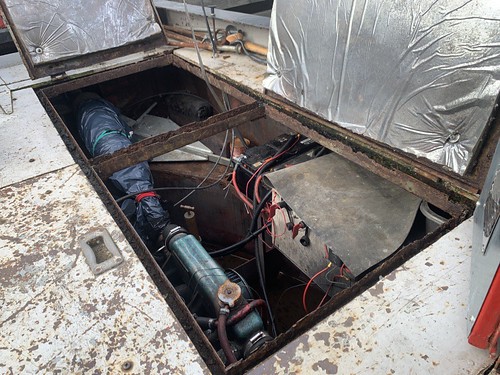
Stuck like my boat is stuck… in the process of having a nasty bit of fuel contamination dealt with by way of a new fuel lift pump, fresh fuel filter, clean diesel, and, for good measure, a new starter battery, glow plugs, and ignition switch. Because it’s never just one thing.
While your list may not be the same as mine, I suspect you'll still understand how I felt one Saturday not long ago, when the sky was sort of clear but my brain was definitely not. Luckily, Piran plucked me out of the mire with a short phonecall and reminded me of something I knew already, but needed to be told again: Doing something is almost always better than doing nothing. So I got off the couch (one thing done already!) and got properly dressed and headed to the City for The Lord Mayor’s Show.
So… there’s quite a bit to explain here. Astute Go Stay Work Play Live Readers have certainly already internalised the concept of the City of London so I won’t beat that dead horse again. However, we haven’t yet covered the Lord Mayor of London yet, let alone his show, so settle in.
The Lord Mayor of the City of London is, naturally, the mayor of the City of London and also the head of the City of London Corporation (the municipal governing body of the City). The Lord Mayor of London has nothing to do with the directly elected Mayor of the Greater London Authority. Clear as mud? Good. Within the City, the Lord Mayor is accorded precedence over everyone other than the Queen and in modern times their role is about supporting and promoting local residents and businesses - especially the financial sector - by delivering lots of speeches, hosting visiting dignitaries, being driven around in a Rolls Royce Phantom, and looking good in ermine and tights.
The Lord Mayor of London is elected yearly on Michelmas, and in November the new Lord Mayor is sworn in. One of the ancient requirements of the office dates back to the reign of King John in 1215, when the King granted the City the right to elect its own mayor. (Prior to that the mayor had been appointed by the sovereign.) (Yes, prior to 1215. This is not a recent phenomenon.)
"Know ye that we have granted … to our barons of our city of London, that they may choose to themselves every year a mayor, who to us may be faithful, discreet and fit for government of the city, so as, when he shall be chosen, to be presented unto us, or our Justice if we shall not be present… and he shall swear to be faithful to us…” (from the 1215 London Charter)
Astute Go Stay Work Play Live Readers will note that this charter requires the Lord Mayor to be presented to the sovereign or his Justice and swear fealty, a requirement still observed today. In medieval times, this meant the newly minted Mayor sailed up the Thames from the City to the seat of royal power at Westminster. That trip gradually attracted more and more hangers on and eventually grew into a festive terrestrially-based parade now known as The Lord Mayor’s Show!
So the Lord Mayor’s Show is a parade! And who doesn’t love a parade?
Fun Fact: The term “float” used for parade vehicles originated with the decorated barges that made up the Lord Mayor’s procession along the Thames.
Actually, it’s not just one parade but two. First, the entire menagerie travels from Guildhall - the ceremonial and administrative centre of the City of London Corporation - to the Lord Mayor’s official residence at Mansion House and then to the the Royal Courts of Justice on the Strand. Whereupon everyone in the parade hangs about on the street for a bit while the new Lord Mayor swears an oath of allegiance to the Queens Bench. Following that, everything starts back up again for the triumphal return to Mansion House.
This is where I came in, because my busy morning of dithering meant I didn’t arrive on scene until the procession was already at the Royal Courts. The parade is now so extensive that it’s actually longer than the distance between Guildhall and the Royal Courts and has to budge up into side streets between the Strand and the river before the return journey.
Carriages waiting outside the Royal Courts
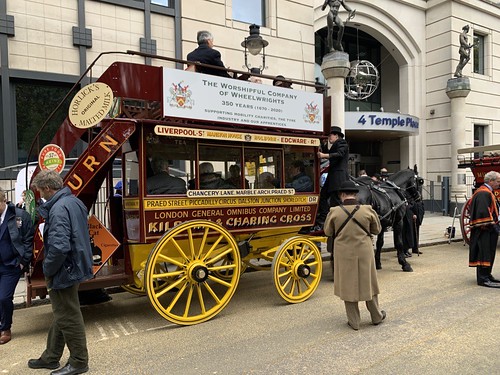
This meant that when I finally arrived, I was the one parading past the muddled floats, lounging marching bands, the odd tank surrounded by soldiers drinking cups of tea, and a lot of signs like the one on this excellent vintage horse-drawn double decker bus:
Presented by the Worshipful Company of Wheelwrights, a City of London livery company. Livery companies are a whole other rabbit hole we’re about to dive down, so I hope you have a fresh cup of coffee and are sitting comfortably.
Livery companies started life as medieval guilds and have evolved into modern trade organisations for various crafts, fields, and professions. Many show their medieval roots in their names, such as the Mercers (general merchants), Fishmongers, Haberdashers and Goldsmiths. Livery companies are normally styled as The Worshipful Company of Pewterers or, to cite a more modern addition, The Worshipful Company of Management Consultants (which really does not have the same ring). The term “livery" originally referred to the specific dress or uniform worn by the household servants of noblemen and by extension came to mean any special dress denoting a particular status or trade.
There are currently 110 livery companies registered by the city of London, including the mellifluously named Worshipful Society of Apothecaries and the less romantic Worshipful Company of Tax Advisers. The list of livery companies is maintained in a strict order of precedence established in 1515 (when there were only 48), and is based on their economic power at that time. The remaining 62 companies are ranked according to seniority, which explains why the Launderers outrank the International Bankers. Go Launderers!
Bonus Fun Fact*: The Worshipful Company of Merchant Taylors and the Worshipful Company of Skinners have long disputed their ranking in the order of precendence, so each year at Easter they swap places between six and seven on the list. This is thought to be the origin of the phrase “at sixes and sevens”. (*Note: not guaranteed to be a fact)
Extra Bonus Fun Fact**: Membership in a livery company conveys upon the liveryman the Freedom of the City of London. Now largely a formality, it once conveyed other privileges, including the right to drive sheep across London Bridge, as demonstrated by Stephen Fry in this diverting 45 minute dive into the City. (**Note: Actual fact!)
One of the other privileges of liverymen is the election of the Lord Mayor of London. Each year, the members of the City’s livery companies come together for the election in Common Hall, which is not a physical location but rather the name given to a gathering of liverymen. The physical location of the Common Hall is Guildhall, which is all appropriately medieval-sounding, given the Lord Mayor of London occupies one of the world's oldest continuously elected civic offices.
Back at the parade route, I was getting a bit peckish and decided to find a nice cafe to sit down, warm up, and possibly get a start on the blog while waiting for the parade to get going again. Sadly, even through the Lord Mayor’s Show attracts thousands of people to the area, very few of the local places were open. This is quite common in the City, which is utterly dependent on the 500,000 people who work there during the week (pre-COVID), as opposed to the mere 9,000 who actually live within the City’s boundary. On weekends the City is normally quite deserted and most shops, pubs and restaurants don’t bother opening up.
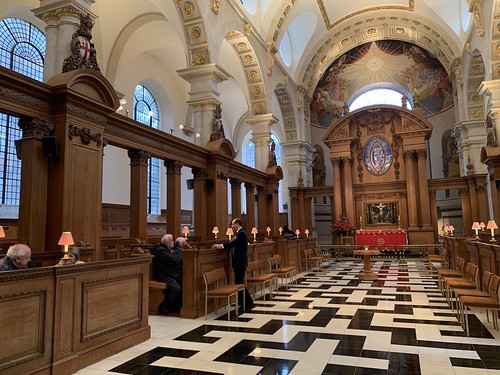
Instead, I wandered into St. Bride’s, a lovely Christopher Wren church complete with a crypt that boasts a bit of Roman paving and spire that’s said to have inspired the design of traditional multi-tiered wedding cake.
St. Bride’s is also known for its association with journalism and the printing trade, which is no surprise given its location just off Fleet Street. And the church enjoys a close relationship with the Worshipful Company of Stationers and Newspaper Makers. The City is like that - it’s just utterly packed with history and connections that fold back on themselves over and over. This is true all over England, but in the City it’s concentrated to an almost ludicrous degree. This is evidenced by the amount of time it took me to write this post. I normally spend a fair bit of time clicking around semi-purposefully soaking in information about whatever is the topic at hand. For this post that process was notably longer because there is just so much to soak in.
Anyway, St. Bride’s was open and, more importantly for me that day, they were serving tea and coffee and had a tempting array of packaged treats so I made a donation and settled into a seat in the quire to relax for a bit. By this point AGSWPLRs will note that we’re now 1,700 words in and there’s still no parade in sight. What can I say? It was that kind of day. But fear not, I finally made it out of St. Bride's and onto the parade route where I stood outside Blackfriar’s Station waiting for what seemed like ages. Luckily, there were Morris Dancers, so that was as bafflingly diverting as Morris Dancing always is.
I appreciate a bit of traditional folk dancing as much as the next blogger, but you don’t have to watch these guys for long to understand why people make fun of them.
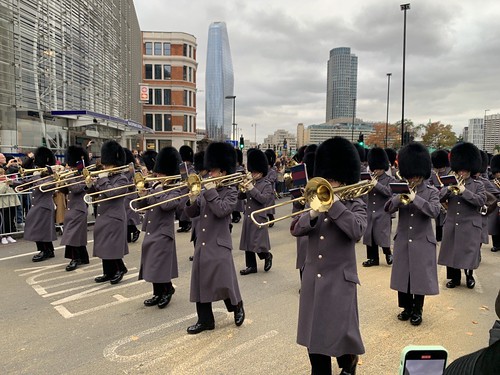
And, finally, finally, the parade could be heard approaching, led by the Band of The Grenadier Guards and the Band of The Coldstream Guards.
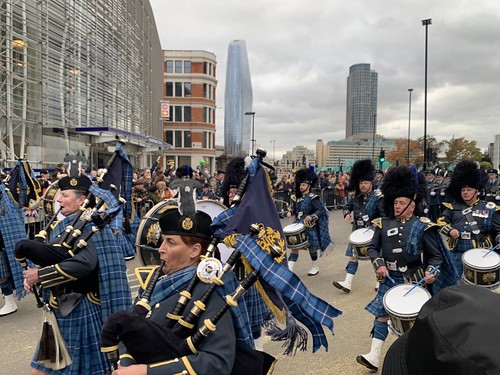
These look like they belong in an opening ceremony somewhere in my past.
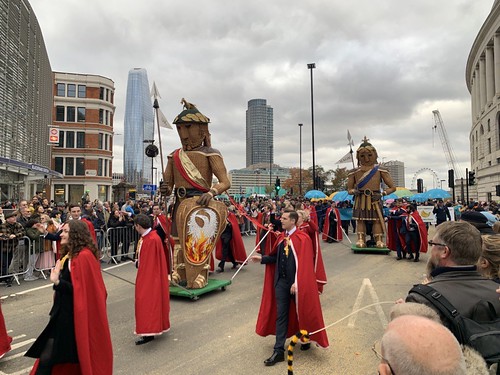
The Guild of Young Freemen, with wicker representations of Gog and Magog, two legendary giants who are the traditional guardians of the City of London. Gog and Magog also famously appear as large wooden carvings at the Guildhall. (See previous note about everything connecting to everything else...)
The Bank of England, taking their gold out for a walk
And a pipe band!
Of course it’s not a proper parade without a skip covered in astroturf full of giant fuzzy green chickens...
Is it possible these guys also need a new fuel lift pump?
Or might they consider a houseboat call?
And finally, after the fancy dress and the soldiers and the liverymen (soooooo many liverymen) the man of the hour appeared.
The Right Honourable Vincent Keaveny, Lord Mayor of London. And the utterly Cinderellian Lord Mayor’s State Coach, the oldest ceremonial vehicle in regular use, which dates from 1757.
And then it was over, except for the cleaning up. As with any parade that includes livestock, street-cleaning is a necessary part of the aftermath. But because it's London, even that comes with a footnote. The phrase "after the Lord Mayor’s Show, comes the dust cart" has long meant a disappointing or mundane event occurring straight after an exciting or magnificent one. As in, "We were expecting a great game after last week's barn-burner, but it was all a bit after the Lord Mayor's Show." Which accorded perfectly with the next item on my agenda that Saturday: a trip to the Marble Arch Mound. The Marble Arch Mound was very, very after the Lord Mayor's Show.
And eventually I booked flights for Christmas, and got my flu jab, and, obviously, I wrote a blog.
Hmmm… a solid six months since the last blog and I’ve definitely lost the habit. Then again, I did blog pretty consistently for eleven years, so I think I deserved a sabbatical. (Also everyone should really get a pass for pretty much anything that they were supposed to do but didn’t, or did do but weren’t supposed to for about the last eighteen months, right?) Now, though, I’m properly back in London and life has sort of calmed down again and I feel like I really should get back into it, partly because Astute Go Stay Work Play Live Readers deserve better (all twelve of you), and partly because it’s actually a good mental exercise and it's nice to flex those writing muscles and force myself to get out and do things and pay proper attention to them while I’m doing them.
When last we left out humble blogger it was May and she’d just got out of enforced quarantine at HMP Heathrow. I only had a very short amount of time back on the boat once I was paroled, much of which was taken up by all the life admin stuff that needs doing when I’ve been away for a while, with the added bonus that my phone was hacked AND my wallet stolen in the same two day period, which necessitated a whole lot more life admin and meant I didn’t really do or see much. I did manage a nice day out tromping across soggy fields with Piran, which included my first proper pint in a very very long time, and I got to a few hash runs, and failed to get the boat engine running (of course), and got my first jab, and then I packed my bags again and took another taxi to the airport. Considering how little travel most people have been able to do in the last year and a half, I feel like perhaps I may be overcompensating.
The destination this time was Dubai, once again. I returned to do the Opening Ceremony for the World Expo in Dubai, which was frustrating and time-consuming and not too COVID-y and eventually came off reasonably well. I didn’t have a ton of spare time while I was in Dubai, and even when I did, I didn’t have much motivation to get out and do things. For one thing, I was there from May to October, which is the hottest part of the year. And it really was hot. So hot. Ridiculously hot. AND humid. You probably think it’s dry and desert-like in the UAE right? Well Dubai is on the ocean so the humidity gets very high, which, coupled with the 45+ degree temperatures, and the UAE’s strict policy requiring masks one hundred percent of the time, even when outside, makes the whole business of being outdoors just insanely unpleasant. (Actually you’re allowed to take off the mask if you’re doing vigorous exercise outdoors. Which is good, as we shall see.) Also, I was in Dubai to do a job, and the more time I spent out mingling with the COVID-y random public, the greater the risk. So even when I had time off I often spent it in the comfort of apartment because leaving was just not worth the effort.
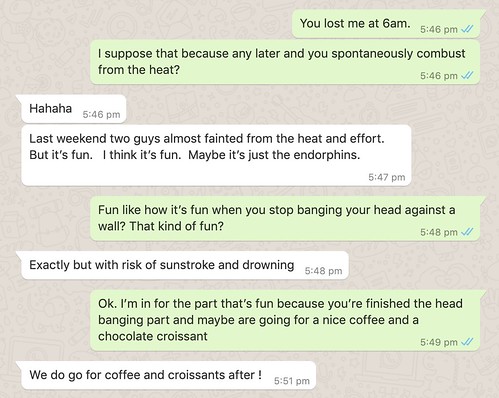
I did meet up with the local Dubai hashers when schedules permitted. And I took the metro to the nearby mall occasionally, and I had one boozy Friday brunch. So there really was not much to blog about. That is until I innocently messaged my local hasher friend Caleb about whether there was anything to do over the weekend and he replied "Saturday morning 6am Kite Beach - outrigger canoe paddling.” This is the exchange that followed:
There were going to be pastries! And it’s not like I had anything else to do at 6am on a day off.
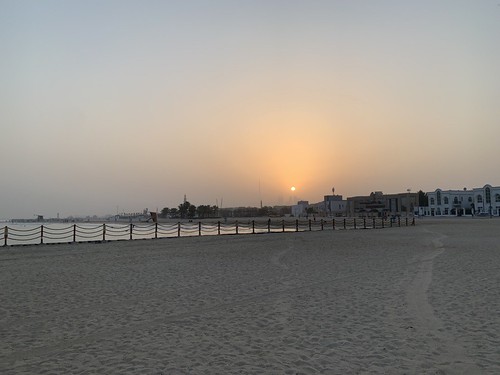
And that’s how I ended up hailing a taxi at 5:30 in the morning to get here.
So… outrigger canoes. They exist in lots of ocean-going cultures, but the ones used by the group in Dubai are Hawaiian/Polynesian style. (Outrigger canoeing is actually the state sport of Hawaii.) These six-seat canoes have a deep, narrow, very heavy fibreglass shell and the outrigger to the left. The outrigger is called the ama (“AHH-muh”) and the arms that attach it to the canoe are the iako (“YA-koo”). As with traditional North American canoes, you face forward and use a single paddle (often called a blade) and alternate paddling on either side of the boat. Normally half the occupants paddle on one side and half on the other side of the boat. Each paddler has a different focus, depending on their position in the boat. The front seat - one - is also called the “stroke”. They set the pace of the boat, with those behind them trying to exactly match their stroke rate. Two’s job is to match the rate of the stroke for the paddlers on their side. Three and four are mostly there for power, and Three usually also calls the changes so that everyone switches sides in unison. Seat six, at the back, steers. And five is where they put the newbies.
Of course seat five is where I ended up. I really didn’t know what to expect, except Caleb said it would be vigorous - two hours of hard paddling. He also sent me a YouTube video of a famous outrigger canoeist (who knew there was such thing?) outlining the precise details of the stroke, which all seemed a lot more intense than I’d imagined. My response after seeing the video: "This seems quite technical. How serious is this group? I was kind of relying on my innate Canadian canoe-sense and Girl Guide training to get me by…”
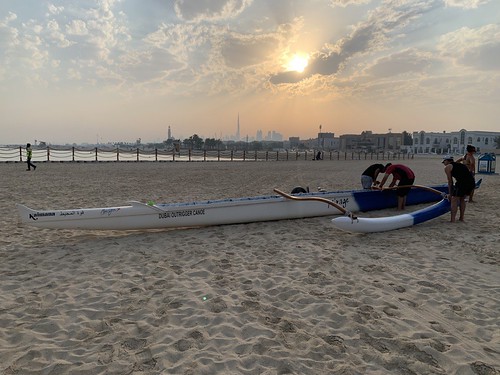
Here’s what the big canoes look like - this one’s rigging was being checked to make sure the ama and iako were securely fastened. Because without the ama, these canoes would be impossibly tippy. (Actually, even WITH the ama they are not the most stable… more on that later.)
It turns out I was right to be concerned. First of all, it was an exceptionally humid day, even by Dubai standards. And the guy at the front setting the pace took off with what seemed like an insanely high stroke rate. I hadn’t exactly been expecting a casual sight-seeing trip, but equally I was not expecting a gang who appeared to be planning to get to Bahrain by lunchtime. Nonetheless, my Girl Guide training did me proud and I sort of managed to keep up, though mostly I was just concentrating on keeping hold of my paddle when changing sides, which happened about every fifteen strokes.
One of the many things I did not understand about outrigger canoeing is that it’s really an endurance sport. Races tend to last hours, not minutes. This was not Olympic canoe sprinting. This was cross-the-ocean-to-populate-a-new-continent kind of stuff. (One of the most famous races is the MolokaÊ»i Hoe between the islands of Molaki and Oahu - 41 miles.) And did I mention it was humid? Sooooo humid. And hot. Like the sun was trying to kill us.
Of course we took breaks. But because it’s an endurance sport, the sessions between breaks tend to be fifteen or twenty minutes long which is approximately eleven lifetimes when it’s your first time in the boat and you can barely manage to hang on to your paddle. On the breaks you drink a lot of water, and if you’re lucky you also get frozen section of oranges which are the most delicious oranges IN THE UNIVERSE. And sometimes on a break you jump out of the canoe so you can cool off in the water. But the joke is on you because BWA HA HA HA the water is as warm as a bath because THERE IS NO ESCAPE FROM THE SUN and then there is another 14 years of paddling and then it’s only five kilometres back to the beach which is ok except one of your arms has literally fallen off and floated away and you’re hallucinating and losing feeling in your legs because your ass is actually three inches wider than the canoe that you’re wedged into.
And then it’s over and you’re lolling in the water at the beach and it’s all kind of ok.
I really can’t overstate how difficult that first paddle was. But after we’d regained consciousness and hauled the canoe back up the beach and rinsed it and swaddled it in its special canvas covers and put away the paddles and laid in a daze in the nearby hut for a while, we really did go for coffee and pastry. And I managed to dump half the beach on the floor in the Costa Coffee disabled toilets while changing into dry clothes, and it all seemed like it might have been kind of fun. So clearly at that point I was still hallucinating.
But the next week I went back anyway, much to the surprise of anyone who’d been there the week before. They’d been certain they’d never see me again because even the experienced paddlers admitted that the previous week had been insanely hot and difficult and not exactly the kind of introduction to the sport that would encourage a return visit. And yet there I was again. And I kept going back whenever my work schedule permitted. And I even bought a giant insulated water bottle to fill up with ice, and a beach towel, and a big droopy caftan to change clothes under, which I think the cleaning staff at the Costa Coffee must have appreciated.
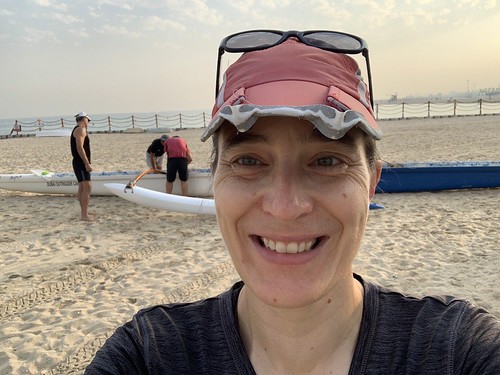
Pam + goofy grin + really beat up hat + guys in the background tying off an ama.
I did get more comfortable and confident in the canoe, and the group was very friendly and welcoming, and it was really nice to be out on the water with a lovely bunch of people doing something physically challenging as a team. I even tried the single seater canoes a couple times, on days when there weren’t enough people to take the six-seater out. Which is when I discovered, as I mentioned earlier, that even WITH an outrigger, these canoes are still quite unstable.
The term for when the canoe flips over is “huli” (“HOO-lee”), and I’d only been on the single seat canoe for about 90 seconds when I managed to huli for the first time. A slight shift of the weight too far to the right, the outrigger tips slightly too far up out of the water, and everything goes over much faster than you’d expect. It’s even more dramatic when one of the big six-seater canoes goes over. We spent an hour one morning on a Huli Drill, where we deliberately tipped the big canoe so we could all learn what happens and how to recover. It was weirdly fun.
(Tragically, I lost my sunglasses on that first single-seater huli, when they came off my head and went to a watery grave not far from the beach. This was sad, because I got those sunglasses for free when they’d been left in the rental car I had in Winnipeg for Christmas 2019. So they had history, those glasses. Miraculously, the incident was merely another chapter in the history of those sunglasses. Because the next morning I was out with the gang again, this time in the 6-seater (the only time I went two days in a row) and we actually located the sunken treasure where it had landed on the seabed the previous morning! Caleb dove in and retrieved them, and I’m pleased to say I still have those sunglasses, though they now sport a snazzy blue lanyard to keep them on my head. Those sunglasses have a real story to tell, and I don’t want to lose them again!)
Thanks to Caleb for this shot, which shows a whole boat on the water.
Eventually though, work got busy and I had to stop going out to paddle. Because it turns out that you can’t be 52 years old and get up at 4:45am and paddle hard in hot weather for two hours and then go to work until 10pm without literally falling asleep at your desk at some point during the day. Or at least I can’t do that. But once the ceremony was over and the packing was done I found the time for a couple more early-morning runs. On my last outing, there were a lot of very new people and Caleb and I ended up being the two most experienced people in the boat (after our steerer and fearless leader Tina, of course). So Caleb sat stroke, setting the pace from the front and I sat in three calling the changes. Which was kind of a cool way to end things.
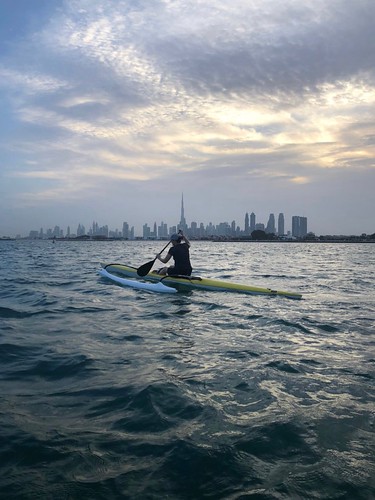
My other “last paddle” that week was in a single seater, when Caleb snapped this amazing shot which is totally going in my “Funeral Photos” file, along with the picture of me riding sidesaddle on the back of a scooter in Bali, and the picture of me standing in the water at the very edge of Victoria Falls.
Outrigger Canoes. Who could have predicted that would be the most satisfying and enjoyable part of my four months in Dubai? Luckily, I’m supposed to be heading back there in the New Year to work on the Closing Ceremony, and I’m definitely planning on setting the 4:45am alarm again.
First thing first: I’m back. Back in London. Back on the boat. Back after 391 days.
The boat. Still floating but… well, let’s not get ahead of ourselves.
Yes, I’m back. But of course it’s not that simple because it never is. I’d intended to return around March 22 to make it an even year away, which seemed like a nice punctuation mark. However, things did not go to plan. It turned out that the long-postponed job I’d had on the Opening and Closing Ceremonies for the Dubai World Expo finally lurched back to life in the new year and they decided to have an in-person workshop in Dubai in mid-April. I was asked to attend in order to make cheap-and-cheerful prototypes of various actual physical objects to be carried, waved, flapped about and otherwise manipulated in the actual performance space by real people actually in each other’s presence. What a weird idea.
That left me with a choice - fly back to London as intended and quarantine for 10 days on the boat, then have a week of “freedom” before flying to Dubai for the workshops. Or, hang around freeloading off my sister for an extra few weeks and fly directly from Canada. Naturally I took option number two, because the Dubai business meant I’d have to quarantine on returning to London anyway, and I didn’t fancy ten days quarantine on the boat in March, and another ten days after Dubai in April.
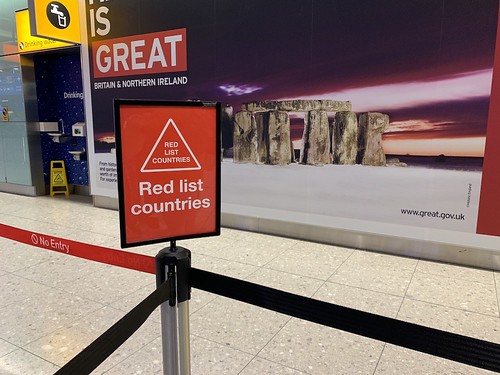
Thus, 391 days. And my first days back were, of course, in quarantine. But instead of arriving from a “Amber List” country (Canada) I was arriving from a “Red List” country (UAE). Thus, instead of ten days in the cramped but familiar and much-missed confines of the boat, I’d have to spend ten days at Her Majesty’s pleasure in a managed quarantine hotel. Luckily, the production company paid the £1750 cost of the quarantine package, which included the hotel, three meals a day, and the two COVID tests I’d need before they’d let me out. In my naivety, I sort of thought that quarantining in a hotel might be simpler than quarantining on the boat. For instance, there’d be unlimited wifi. And unlimited hot water. And food would just show up without me having to figure out how to get groceries delivered. And I could raise my arms above my head.
Ha. I truly was naive. Then again, I’m no stranger to quarantine. Before I landed at Heathrow I’d already done 35 days in total, so I thought I knew what I was in for. Sure, it wouldn’t be the same luxurious environs of my first quarantine in Canada. I could accept that a hotel room wouldn’t offer the same space and facilities as a carefully chosen AirBnB, but my thinking was coloured by the comfortable and pleasant week of quarantine in Abu Dhabi. That room was spacious and well-equipped with a small fridge, generous storage space, a separate couch-ish area, and a large window that faced the sunrise. The Holiday Inn Express at Terminal 4 had exactly none of those things.
Welcome to what I came to think of as Her Majesty’s Prison Heathrow.
But let’s back up a bit again. Because it was by no means a quick and simple process getting from the landing gate to my cell at H.M.P. Heathrow. And while I appreciate that the whole hotel quarantine thing is relatively new, they’ve had a bit of time to work out the kinks now and I was expecting a slightly smoother process.
Stupid Red List.
First, there’s a lot of paperwork required when travelling internationally during a pandemic. Of course I needed proof of a negative COVID PCR test, performed within the proscribed period (differing depending on destination and - word to the wise - sometimes even required when you’re only transiting through an airport not staying in the country. More on that another time…). I also needed a completed “Passenger Locator Form” and proof that I’d booked the managed quarantine package. And for some reason that documentation had to be checked at several stages by several people reached by standing in several long queues of passengers who seemed to have forgotten about trying to stand two metres apart.
And then there was an extended period spent in a small alcove near the baggage carousels while an ever-growing group of exhausted travellers waited for buses to the various hotels. This was especially frustrating, because there was no queueing system, and no sorting of people according to which hotel they’d been booked into, of which there are many. When I finally got on a bus it was full of people going six different places, meaning that the bus had to stop at a hotel, unload the unsorted luggage from the compartment under the bus, check and cross-check the people and the luggage with the information at the hotel, close up the luggage compartment, and then proceed to the next hotel to repeat the same process. Naturally I was in hotel number six and was the only person left on the bus when we finally arrived at my stop. From the time the plane landed to the time I got to the reception desk it was four hours later.
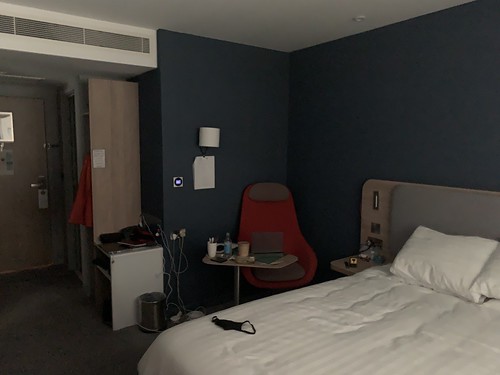
Eventually I found myself in Room 508, and it was not good. My hotel room in Abu Dhabi had a huge window that even opened a tiny bit. Room 508 had a window of course, but it was a solid pane - no fresh air for me! Worse, though, was that the window faced INTO THE BUILDING. And I don’t mean it looked onto another building. I mean the window looked into the hotel itself. Whatever genius designed that place created a large covered atrium area surrounded on all sides by hotel, meaning that each guest had a 50-50 chance of getting a room facing out at the actual world, or one facing… other hotel rooms.
A slightly distorted panorama, but you get the picture. Not even a hint of sky. And this light level was enhanced by the camera on my phone.
This was the amount of natural light that reached the room at solar noon. Again, the phone camera makes it look better than it was. And the navy blue walls didn't exactly help.
Of course there was no min-bar fridge. No drawers to unpack into. No proper desk. And certainly no couch. A Holiday Inn Express is not designed for long term guests. It’s designed for overnight stays by people who have an early flight the next morning. Emphasis is on providing a comfy bed, a giant tv and a good shower. Astute Go Stay Work Play Live Readers will not be surprised to hear that my first day at H.M.P. Heathrow was not a happy one.
Oh, and that first day? That’s not Day One of quarantine. That’s Day Zero. So even though I’d landed at 7:00am, that day didn’t count. Welcome home. I can understand why page 11 of my 28-page Welcome Pack included a list of eight different mental health services I could contact if it all got to be a bit too much. (Including one called C.A.L.M. - Campaign Against Living Miserably. And I am NOT making that up.)
Once I’d resigned myself to Room 508 and memorised the C.A.L.M. number, my next job was the menu. Along with the Welcome Pack, I’d also received full page menus for every day of my sentence.
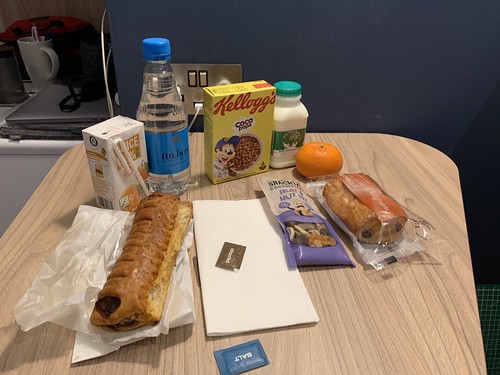
A typical day’s offering. Each meal came with some default settings and also had one or two options, including hot dishes.
Charmingly, I was required to choose my options for every meal of my entire stay on the morning of Day Zero. So, for instance, I needed to report whether I wanted a cheese omelette or a vegan sausage roll with my breakfast the following Saturday. Now I’m generally a person who loves having a plan, but even I found this a bit much. Then again, it actually turned out to be fairly simple, because who in their right minds would want “Vegetable Nasi Goreng” for breakfast when they could have a Bacon and Egg Omelette Bap? All my choices were duly entered into a web-page and, I thought, properly recorded for my future dining pleasure.
Ha.
On Day Zero I waited two hours for both lunch and dinner, and had to call to follow up in order to be fed. I put this down to that fact that I’d arrived too late for the computer system to record my choices and had to indicate my preferences on paper at check-in. No matter, because surely all would be fine for Day One breakfast, which arrived at 7:30 the next morning in a brown paper bag outside my door.
Not. My Cornish Sausage Roll was conspicuously absent, with a cup of porridge in its place. I managed to flag down the delivery guy, who changed out the porridge, and sat down to breakfast trusting that the mix-up was an isolated incident.
This is really a lot of food. Every breakfast came with milk and cereal, water, juice, fruit, pastry, some kind of snack and the hot option. The other meals were equally generous. Quarantining was definitely not a waistline-friendly situation.
Then Day One lunch was wrong. But this time the woman doing the delivery wouldn’t exchange things, because I’d touched the erroneous sandwich, therefore potentially slathering it with the plague. So she brought me the salad I’d asked for and I kept the sandwich too. Again, not diet-friendly. But surely supper would be correct.
Not. This pattern repeated for most meals until on Day Four I was finally able to express my frustration adequately to the guest services people, who told me to request a security escort to the reception desk and fill out a paper form for the remaining meal choices. Because obviously the computer system was - and I’m going to use a technical term here - utterly fucked. I did that, and went to bed with a glimmer of hope that the next morning would deliver my Bacon and Egg Bap without drama.
Which it did. Sort of. In fact, it delivered TWO Bacon and Egg Baps, along with the rest of two complete breakfasts, in two brown paper bags. Well-played, Holiday Inn Express, for finding a new and interesting way to screw up. By this point I was beyond caring, and simply had a double Bacon and Egg Bap and put the extra cereal, juice and snacks to my growing hoard of uneaten non-perishables. Eventually you have to accept that you have no control at all and just take the double bacon when you get it.
Here’s what the hoard of uneaten food looked like on the morning I checked out, along with all the paper bags and plastic containers that I brought with me back to the boat.
The food situation certainly kept me on my toes. But the lack of natural light was a downer, and it was weird to have no sense of the outside world at all. Eventually I realised I could get YouTube onto the giant tv and found a nice live-streaming camera of a street in Oxford that I just kept on all day. Oddly, I couldn’t find a nice view from a London camera, but the Oxford one was a street I remembered from my visit during the Grand Tour, and was a close enough shot that I could see people moving around, which was nice.
Kind of like having a window. It also helped to play random cafe noises in the background during the day.
The most exciting development - other than the double bacon - was the arrival of my Day Two COVID test kit. This was a self-administered test of the stick-up-the-nose variety that came with a thick instruction book and a lot of little sticky barcode labels.
By the time this test kit was delivered, I estimate I’d had fifteen different PCR tests done. Still it was a novelty to be wielding the stick myself.
The reason this self-test was exciting is that once I could report a negative test result I could be allowed OUT OF THE ROOM. So when I finally got the all-clear late on Day 4 I quickly pulled on my running clothes and waited for my security escort. (Anyone leaving their room for any reason had to be accompanied by a security guard. I suppose to prevent them from making a break for freedom. Fair call, I guess.) And where did my guard lead me?
To the prison yard, of course. Where I and my fellow inmates did desultory laps, watched over by men in hi-vis vests. It really did feel like yard time. Still, it was glorious to see the sky and breath fresh air, even though I was doing 180 metre-long circuits of a dis-used carpark in the back end of Terminal 4.
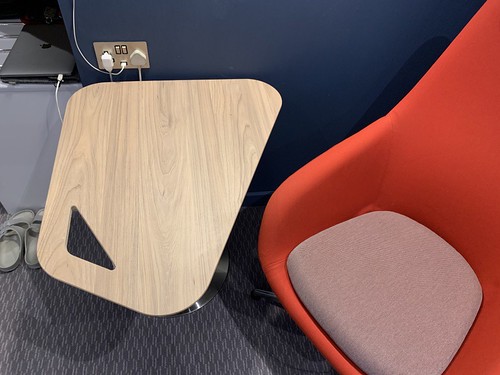
And thus the days passed. I was doing remote work on the Dubai project, with the standard-issue ration of Zoom meetings and paperwork. And the wifi was good, and there was Netflix, and I found a routine that passed the time. Luckily, I was free to order in alternative food or other essentials if I’d wanted, though I’d stocked up on the flight back. There was a short layover in Bahrain where I made sure to pick up a few non-perishable snacks, a fresh book for Non-Fiction Hour, and - crucially - two bottles of duty-free red wine. I even made my peace with the ridiculously tiny and non-functional table in the room, which was clearly designed by the same misanthrope who did the window.
First, does it really have to have that many weird corners and angles? And second, when you’ve already made a table that small, why, in the name of all that is holy, would you put a big stupid hole in it? It’s pure form over function. Smarten up!
I've complained a lot here, but it's clear the people at the hotel were genuinely trying to make quarantine an ok experience. I think they were just overburdened and under-staffed and trying to implement a system on the fly. I'm sure most quarantine rooms actually have proper windows, for instance. (Occasionally I got a glimpse of the sky from the window of the guy across the hall, if he happened to open his door at the same time I did. Lucky Room 507!) And really, it was only ten days.
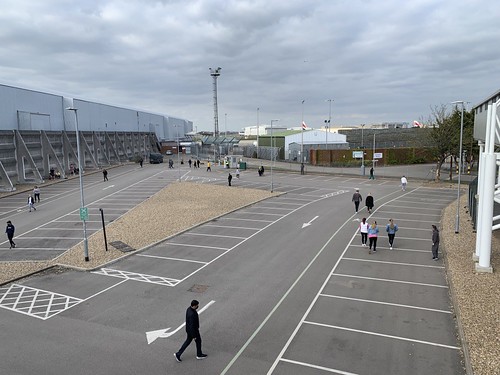
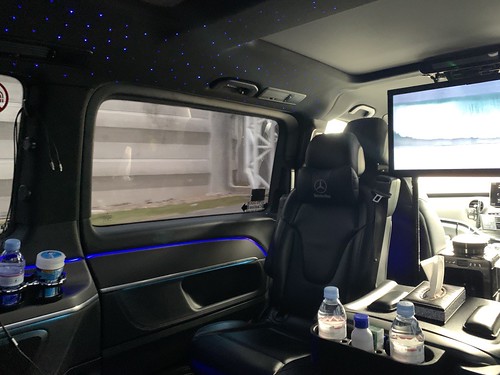
On the morning of Day 11 I was free to go. In fact, I could have left at one minute past midnight, but I had a good night's sleep and enjoyed one last bacon bap and then treated myself to an Uber XL for the trip home, because I had a lot of luggage and I was in a celebratory mood. And this Uber did not disappoint.
My return to the boat was not without issues, but that’s a story for another day. For now, I’ll just say I’m ok, and despite the issues, it’s good to be back. And I’ll close with these words to live by:
Astute Go Stay Work Play Live Readers will have noticed a distinct dearth of blogging in 2021, which I can only say perfectly reflects the amount of bloggy things that I’ve done so far this year. That total being, obviously, zero. Yes, there was a post in January that I pulled out of thin, frigid air without leaving the house. But it was a pale effort. Not so any more! Today I’m pleased to bring you the tale of a day trip to an actual outside activity at an actual touristy destination with an actual friend I’m not related to by blood or marriage. Heady stuff.
It all starts in Calgary, where I’m on what I like to think of as my Farewell Tour, which is basically just me hanging out at my sister’s place for a bit before finally heading back to London. Or at least that was the plan. Now it’s altered slightly to allow me to spend a week in Dubai on Expo-related work stuff first, after which I get the pleasure of spending my ten days of quarantine not in the loving and much-missed “comfort” of the Lucky Nickel, but in a random airport hotel not of my choosing. This is because the UAE is on Boris Johnson’s Red List of countries that require hotel quarantine, while if you’re coming from Canada they trust you to quarantine at home. (Don’t ask me to explain the UK’s semi-porous borders policy. All I know is that it’ll be ten more days before I’m properly home, but at least during those ten days I won’t have to worry about getting groceries, or monitor whether I’ve got enough water left to shower. And I’ll also have enough room to raise my arms above my head. So, you know, swings and roundabouts.)
But back to our exciting and bloggy destination: an outdoor, socially-distanced, fully masked visit to the Yamnuska Wolfdog Sanctuary. This thanks to my friend Patti, with whom I've been doing regular outdoor walks to catch up and get some sun and air. On our last walk Patti mentioned she’d been planning to visit the sanctuary, and considering the most exciting place I’d been in months is Costco, I happily agreed to join her there. (In my defence, Costco actually was kind of exciting, because I got a pair of the new AirPods that Apple started making once they finally admitted that all ears on the planet are not identical in size and shape, and maybe a bit of squishiness on the ends would be a good idea. And all I can say is... noise-cancelling? Life. Changing.)
So… The Yamnuska Wolfdog Sanctuary. It does exactly what it says on the tin. It’s a non-profit site that takes in wolfdogs who are surrendered by their owners or other organisations who can’t care for them, or are rescued from abuse, neglect, abandonment or euthanasia.
And what is a wolfdog? That, too is exactly what it sounds like: a cross-bred animal that’s part wolf and part domesticated dog.
The Yamnuska Wolfdog Sanctuary offers a few ways to experience the animals. You can simply do a self-guided walk around the site, observing the wolfdogs in their enclosures and reading the copious informative signage. You can also take the Intro Tour, a guided visit to a fenced viewing platform inside one of the enclosures. Or... you can do the Interactive Tour where you actually go into two different enclosures and get up close with the wolfdogs themselves. Of course that’s what we did. Because nobody goes to a wolfdog sanctuary without wanting to pet the wolfdogs. Yeah sure, we had to sign a waiver that clearly stated, in bold print, the risk of “serious injury and possible death”. Nevermind that, because… fluffy doggies! And regardless of how you decide to partake of the wolfdog experience, there are a couple of unusual rules that apply to all visitors: Take no bags or loose items into the enclosures. Do not wear any fur or fake fur. And whatever you do, do NOT bring your dog. I wisely decided to leave my mink stole and any extraneous labradoodles at home.
Rocky and Loki, the two friendliest wolfdogs. These guys are much more dog than wolf.
And now, a wolfdog primer: Wolves and dogs don’t naturally cross-breed. Wolves are monogamous and highly territorial, therefore very unlikely to accept another canine for mating in the wild. They’re also fertile for a very short time each year. This means that wolfdogs are almost exclusively the result of intentional crossbreeding by humans to supply the exotic pet trade. So it’s important to point out that the folks at the Yamnuska Wolfdog Sanctuary are not breeding or encouraging the breeding of wolfdogs, they’re simply trying to care for existing animals who need a home, educate the public about the unique challenges of wolfdog ownership, and advocate for wolf conservation.
Most wolfdogs are not simply half wolf and half dog; they’re more often the result of breeding two wolfdogs or a wolfdog and a domesticated dog. Wolves (Canis Lupus) and domesticated dogs (Canis Lupus Familiaris) are, of course, the same species. Domesticated dogs are simply the result of years of selective breeding, and though they’re a different sub-species they remain, on a biological level, the same animals. This is why the offspring of a wolf and a cocker spaniel can go on to have more little spaniolf puppies.
Categorised by how much wolf is in them, wolfdogs divide roughly into high-content (85-99% wolf), medium content (50-85%) and low content (less than 50%). Interestingly, the sanctuary doesn’t determine a wolfdog’s inherent wolfiness by DNA testing, which you’d think would be the obvious way to do it. Apparently accurate testing is very expensive and involves taking a 30-second oral swab, about which the wolfdogs are naturally not overly cooperative. Instead they use phenotyping, which involves simply observing the physical and behavioural traits of each animal, and making an educated assessment. This doesn’t sound as cool as DNA testing, but probably results in fewer stitches and missing fingers.
The Yamnuska Wolfdog Sanctuary was founded in 2011 by Georgina de Caigny, who was drawn to wolfdogs from a young age. When she was nineteen Georgina got her first wolfdog, a high-content animal called Kuna, and quickly realised that she didn’t have the skills or resources to deal with her new "pet". Owning a wolfdog is exceptionally challenging. High-content wolfdogs lack the affinity for humans that we’re used to in domesticated dogs. They have no instinct to please us, instead being naturally fearful of humans. They tend to be destructive, have a strong prey drive, don’t enjoy being indoors, and usually can’t be walked on city streets or taken to dog parks to interact with other dogs. They’re really apex predators, not pets. On realising this, Georgina made the remarkable decision to re-design her life in order to provide the right environment for her wolfdog and eventually founded the sanctuary, which is dedicated to the rehabilitation and rehoming of these often misunderstood animals.
Our trip started in the visitor centre / gift shop (of course) where we met Skookum, the sanctuary greeter. Despite appearances he’s not a wolfdog, he’s a Giant Alaskan Malamute (emphasis on Giant). They also have a pack of three Irish Wolfhounds, though we didn’t get to meet them. I guess they like ‘em big at the sanctuary.
After a brief intro, we headed to the first enclosure, home to a pack of five high-content wolfdogs. Kuna, the animal that launched the journey that resulted in the Yamnuska sanctuary is the dominant female of the pack and still resident, though she was not there when we visited because she was recovering from a leg operation. We did, however, meet Zeus, the short, dark and handsome dominant male, and the rest of the pack. We were directed to sit in a semi-circle of socially distanced lawn chairs and NOT GET UP. Then we each got a handful of assorted treats to tempt the animals. Our guide explained that these high-content wolfdogs were unlikely to approach close enough to eat from our hands, but could be lured closer with treats tossed on the ground nearby.
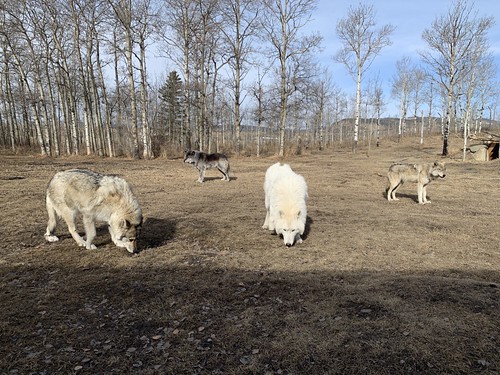
Here’s the pack, sniffing out their treats. The youngest female of the pack, Ylva, was boldest, though even she would come no closer that a few feet from the ring of chairs. And these are animals with years of experience of human interaction. Again… really not pets.
The enclosures themselves are generously sized - up to two acres each - and completely surrounded by high fences with dig guards, overhangs, electricity and double-doors (no escapees so far!). The sanctuary sits on 160 acres of land and has eleven enclosures. It's currently home to 35 wolfdogs, including several rescued from the infamous Milk River seizure of 200 malnourished dogs in 2015. Each enclosure houses its own pack - sometimes as few as two wolfdogs. There’s even one enclosure separated from the overall layout with no public viewing, for a pair that are exceptionally skittish. The enclosures are separated by pathways that run between them and the public are free to wander along the paths and see the animals going about their lives.
High, inward-facing fences and additional low barriers to keep curious human fingers from being sampled.
The whole place is also generously scattered with informative signage about its inhabitants and about wolves and wolfdogs in general. This, for instance, totally blew my mind.
Once we’d exhausted the attention of the high-content wolfdogs, we moved inside the enclosure of a low-content pack where things got more interesting. These animals were much doggier, very food-focused and clearly knew the routine. Of the three wolfdogs in that pack, Rocky and Loki were positively friendly.
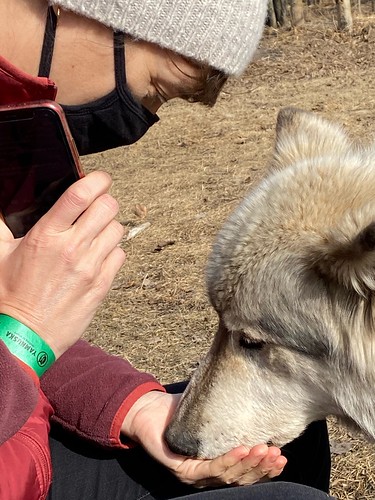
They even have strong likes and dislikes about their treats and will snuffle in your hand to root out what they want.
Rocky, a venerable 18-year old, has bonded so strongly with one of the young keepers that he goes home with her at night. Clearly, there’s not a lot of wolf in Rocky. These low-content wolfdogs were much more approachable but once the treats ran out even they didn’t stick around for belly rubs and cuddles. And I’ll admit the force with which they did their snuffling was a bit unnerving.
Interacting so closely with the wolfdogs was definitely the highlight of the visit, but it's not the only thing to do. As I mentioned, visitors are free to wander the paths between the enclosures, and the sanctuary also has a few non-canine inhabitants, including chickens, goats and sheep. The guides were quick to point out that these other residents were absolutely, positively NOT there as food for the wolfdogs. They were themselves rescued and were simply living their best lives at Yamnuska. The goat enclosure even had a tiny trampoline, which was very cute, though I'm sure not as cute as it would have been to actually see baby goats bouncing on said tiny trampoline. Almost as good as baby goat yoga.
The goat enclosure, with goats barely visible in shade, top right.
The Sanctuary also schedules regular "enrichment activities" in the different enclosures each day. We caught the tail end of a feeding session designed to help more skittish animals get used to human contact with the keepers. And they also planned a special set of Easter activities, including an easter egg hunt for the wolves with actual eggs. (I guess the chickens earn their keep.) And of course there's a gift shop with all the usual items - stuffed toys, sweatshirts, mugs etc, but also with matching sets of fluffy wolf paw slippers and mitts (photos on Flickr). I resisted, though they probably would have gone really well with the mink stole.
Eventually the hours of strong winds and chilly temperatures got the better of us and it was time to head home, heady with the excitement of an actual day out, and with that particularly satisfying sort of well-earned weariness that comes from being outside for long periods on a blustery day. Not to mention the excitement of interacting with other humans for hours on end. Nevermind the wolfdogs, it's we humans who need the enrichment activities these days. I wonder if they have any free enclosure space available?
After quitting my job, selling my house, and spending a year traveling around the world, I now find myself living much of the time in London, England. And because I am officially an International Woman Of Mystery, often I do jobs overseas in exotic places like Indonesia and Azerbaijan and Russia. Oh, and in between, I live on a boat. No, really.