Showing posts with label Games. Show all posts

Whatever Paddles Your Canoe

Sunday, October 31, 2021

Hmmm… a solid six months since the last blog and I’ve definitely lost the habit. Then again, I did blog pretty consistently for eleven years, so I think I deserved a sabbatical. (Also everyone should really get a pass for pretty much anything that they were supposed to do but didn’t, or did do but weren’t supposed to for about the last eighteen months, right?) Now, though, I’m properly back in London and life has sort of calmed down again and I feel like I really should get back into it, partly because Astute Go Stay Work Play Live Readers deserve better (all twelve of you), and partly because it’s actually a good mental exercise and it's nice to flex those writing muscles and force myself to get out and do things and pay proper attention to them while I’m doing them.

When last we left out humble blogger it was May and she’d just got out of enforced quarantine at HMP Heathrow. I only had a very short amount of time back on the boat once I was paroled, much of which was taken up by all the life admin stuff that needs doing when I’ve been away for a while, with the added bonus that my phone was hacked AND my wallet stolen in the same two day period, which necessitated a whole lot more life admin and meant I didn’t really do or see much. I did manage a nice day out tromping across soggy fields with Piran, which included my first proper pint in a very very long time, and I got to a few hash runs, and failed to get the boat engine running (of course), and got my first jab, and then I packed my bags again and took another taxi to the airport. Considering how little travel most people have been able to do in the last year and a half, I feel like perhaps I may be overcompensating.

The destination this time was Dubai, once again. I returned to do the Opening Ceremony for the World Expo in Dubai, which was frustrating and time-consuming and not too COVID-y and eventually came off reasonably well. I didn’t have a ton of spare time while I was in Dubai, and even when I did, I didn’t have much motivation to get out and do things. For one thing, I was there from May to October, which is the hottest part of the year. And it really was hot. So hot. Ridiculously hot. AND humid. You probably think it’s dry and desert-like in the UAE right? Well Dubai is on the ocean so the humidity gets very high, which, coupled with the 45+ degree temperatures, and the UAE’s strict policy requiring masks one hundred percent of the time, even when outside, makes the whole business of being outdoors just insanely unpleasant. (Actually you’re allowed to take off the mask if you’re doing vigorous exercise outdoors. Which is good, as we shall see.) Also, I was in Dubai to do a job, and the more time I spent out mingling with the COVID-y random public, the greater the risk. So even when I had time off I often spent it in the comfort of apartment because leaving was just not worth the effort.

I did meet up with the local Dubai hashers when schedules permitted. And I took the metro to the nearby mall occasionally, and I had one boozy Friday brunch. So there really was not much to blog about. That is until I innocently messaged my local hasher friend Caleb about whether there was anything to do over the weekend and he replied "Saturday morning 6am Kite Beach - outrigger canoe paddling.” This is the exchange that followed:
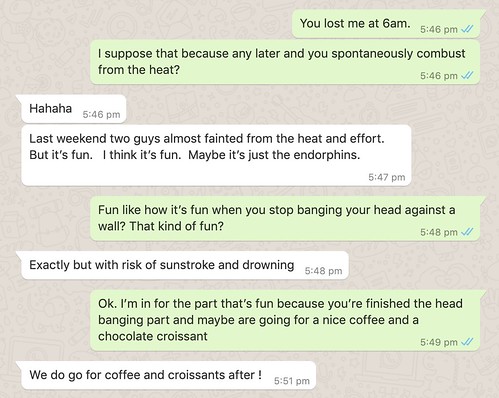
Screenshot 2021-10-31 at 2.16.31 pm
There were going to be pastries! And it’s not like I had anything else to do at 6am on a day off.

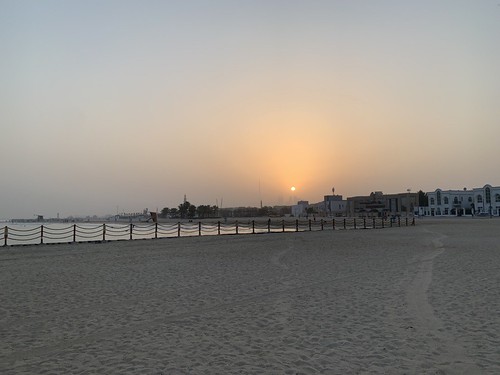
IMG_7161
And that’s how I ended up hailing a taxi at 5:30 in the morning to get here.

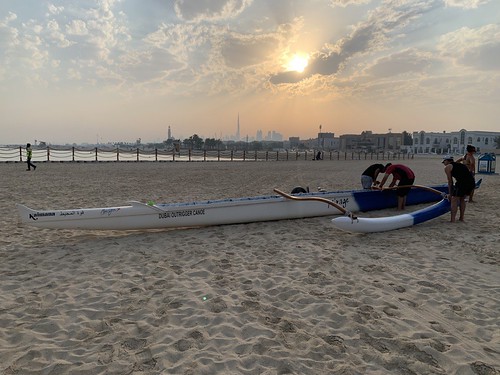
So… outrigger canoes. They exist in lots of ocean-going cultures, but the ones used by the group in Dubai are Hawaiian/Polynesian style. (Outrigger canoeing is actually the state sport of Hawaii.) These six-seat canoes have a deep, narrow, very heavy fibreglass shell and the outrigger to the left. The outrigger is called the ama (“AHH-muh”) and the arms that attach it to the canoe are the iako (“YA-koo”). As with traditional North American canoes, you face forward and use a single paddle (often called a blade) and alternate paddling on either side of the boat. Normally half the occupants paddle on one side and half on the other side of the boat. Each paddler has a different focus, depending on their position in the boat. The front seat - one - is also called the “stroke”. They set the pace of the boat, with those behind them trying to exactly match their stroke rate. Two’s job is to match the rate of the stroke for the paddlers on their side. Three and four are mostly there for power, and Three usually also calls the changes so that everyone switches sides in unison. Seat six, at the back, steers. And five is where they put the newbies.

Of course seat five is where I ended up. I really didn’t know what to expect, except Caleb said it would be vigorous - two hours of hard paddling. He also sent me a YouTube video of a famous outrigger canoeist (who knew there was such thing?) outlining the precise details of the stroke, which all seemed a lot more intense than I’d imagined. My response after seeing the video: "This seems quite technical. How serious is this group? I was kind of relying on my innate Canadian canoe-sense and Girl Guide training to get me by…”
IMG_7369
Here’s what the big canoes look like - this one’s rigging was being checked to make sure the ama and iako were securely fastened. Because without the ama, these canoes would be impossibly tippy. (Actually, even WITH the ama they are not the most stable… more on that later.)

It turns out I was right to be concerned. First of all, it was an exceptionally humid day, even by Dubai standards. And the guy at the front setting the pace took off with what seemed like an insanely high stroke rate. I hadn’t exactly been expecting a casual sight-seeing trip, but equally I was not expecting a gang who appeared to be planning to get to Bahrain by lunchtime. Nonetheless, my Girl Guide training did me proud and I sort of managed to keep up, though mostly I was just concentrating on keeping hold of my paddle when changing sides, which happened about every fifteen strokes. 

One of the many things I did not understand about outrigger canoeing is that it’s really an endurance sport. Races tend to last hours, not minutes. This was not Olympic canoe sprinting. This was cross-the-ocean-to-populate-a-new-continent kind of stuff. (One of the most famous races is the MolokaŹ»i Hoe between the islands of Molaki and Oahu - 41 miles.) And did I mention it was humid? Sooooo humid. And hot. Like the sun was trying to kill us. 

Of course we took breaks. But because it’s an endurance sport, the sessions between breaks tend to be fifteen or twenty minutes long which is approximately eleven lifetimes when it’s your first time in the boat and you can barely manage to hang on to your paddle. On the breaks you drink a lot of water, and if you’re lucky you also get frozen section of oranges which are the most delicious oranges IN THE UNIVERSE. And sometimes on a break you jump out of the canoe so you can cool off in the water. But the joke is on you because BWA HA HA HA the water is as warm as a bath because THERE IS NO ESCAPE FROM THE SUN and then there is another 14 years of paddling and then it’s only five kilometres back to the beach which is ok except one of your arms has literally fallen off and floated away and you’re hallucinating and losing feeling in your legs because your ass is actually three inches wider than the canoe that you’re wedged into.

abf4254b-4831-4280-9ba0-affb9d9bdb9b
And then it’s over and you’re lolling in the water at the beach and it’s all kind of ok.

I really can’t overstate how difficult that first paddle was. But after we’d regained consciousness and hauled the canoe back up the beach and rinsed it and swaddled it in its special canvas covers and put away the paddles and laid in a daze in the nearby hut for a while, we really did go for coffee and pastry. And I managed to dump half the beach on the floor in the Costa Coffee disabled toilets while changing into dry clothes, and it all seemed like it might have been kind of fun. So clearly at that point I was still hallucinating.

But the next week I went back anyway, much to the surprise of anyone who’d been there the week before. They’d been certain they’d never see me again because even the experienced paddlers admitted that the previous week had been insanely hot and difficult and not exactly the kind of introduction to the sport that would encourage a return visit. And yet there I was again. And I kept going back whenever my work schedule permitted. And I even bought a giant insulated water bottle to fill up with ice, and a beach towel, and a big droopy caftan to change clothes under, which I think the cleaning staff at the Costa Coffee must have appreciated.
IMG_7374
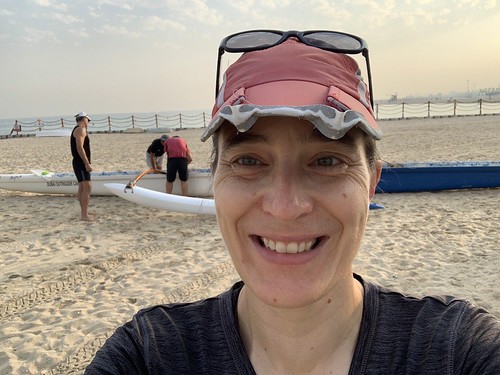
Pam + goofy grin + really beat up hat + guys in the background tying off an ama.

I did get more comfortable and confident in the canoe, and the group was very friendly and welcoming, and it was really nice to be out on the water with a lovely bunch of people doing something physically challenging as a team. I even tried the single seater canoes a couple times, on days when there weren’t enough people to take the six-seater out. Which is when I discovered, as I mentioned earlier, that even WITH an outrigger, these canoes are still quite unstable. 

The term for when the canoe flips over is “huli” (“HOO-lee”), and I’d only been on the single seat canoe for about 90 seconds when I managed to huli for the first time. A slight shift of the weight too far to the right, the outrigger tips slightly too far up out of the water, and everything goes over much faster than you’d expect. It’s even more dramatic when one of the big six-seater canoes goes over. We spent an hour one morning on a Huli Drill, where we deliberately tipped the big canoe so we could all learn what happens and how to recover. It was weirdly fun.

(Tragically, I lost my sunglasses on that first single-seater huli, when they came off my head and went to a watery grave not far from the beach. This was sad, because I got those sunglasses for free when they’d been left in the rental car I had in Winnipeg for Christmas 2019. So they had history, those glasses. Miraculously, the incident was merely another chapter in the history of those sunglasses. Because the next morning I was out with the gang again, this time in the 6-seater (the only time I went two days in a row) and we actually located the sunken treasure where it had landed on the seabed the previous morning! Caleb dove in and retrieved them, and I’m pleased to say I still have those sunglasses, though they now sport a snazzy blue lanyard to keep them on my head. Those sunglasses have a real story to tell, and I don’t want to lose them again!)

WhatsApp Image 2021-10-23 at 11.41.48 AM
Thanks to Caleb for this shot, which shows a whole boat on the water.

Eventually though, work got busy and I had to stop going out to paddle. Because it turns out that you can’t be 52 years old and get up at 4:45am and paddle hard in hot weather for two hours and then go to work until 10pm without literally falling asleep at your desk at some point during the day. Or at least I can’t do that. But once the ceremony was over and the packing was done I found the time for a couple more early-morning runs. On my last outing, there were a lot of very new people and Caleb and I ended up being the two most experienced people in the boat (after our steerer and fearless leader Tina, of course). So Caleb sat stroke, setting the pace from the front and I sat in three calling the changes. Which was kind of a cool way to end things.
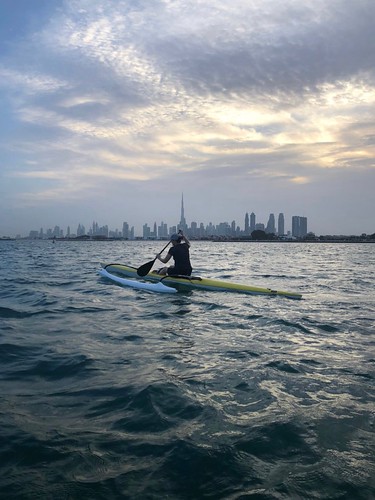
IMG_8693
My other “last paddle” that week was in a single seater, when Caleb snapped this amazing shot which is totally going in my “Funeral Photos” file, along with the picture of me riding sidesaddle on the back of a scooter in Bali, and the picture of me standing in the water at the very edge of Victoria Falls.

Outrigger Canoes. Who could have predicted that would be the most satisfying and enjoyable part of my four months in Dubai? Luckily, I’m supposed to be heading back there in the New Year to work on the Closing Ceremony, and I’m definitely planning on setting the 4:45am alarm again.

Games People Play: Cricket (Part Two)

Sunday, July 28, 2013

Now that you're all experts in the distinctions between silly mid off and square leg, and can recite the lbw rules by heart, let's spend some time looking at the culture of the game.  It's particularly appropriate that I should be blogging about cricket right now, because we are currently two glorious games into the most famous grudge match in cricket - The Ashes, an approximately biennial series of test matches played between England and Australia which is one the greatest sporting rivalries in the world.  (No really.  More famous even than the Montreal Canadiens vs. the Boston Bruins).  The story of the Ashes is a good one; let's let Wikipedia give us the highlights:
The series is the result of a satirical obituary published in a British newspaper, The Sporting Times, in 1882 after a match at the Oval in which Australia beat England on an English ground for the first time. The obituary stated that English cricket had died, and the body will be cremated and the ashes taken to Australia.  The English media dubbed the next English tour to Australia (1882–83) as the quest to regain the Ashes.  
The Obit
The famous obituary

It's difficult to overstate the importance of The Ashes to English and Australian cricket fans. Perhaps an imperfect analogy will illustrate the point: imagine that during the 1972 Summit Series, Russia had unexpectedly won the final and deciding game on Canadian ice.  And then suppose they got really snotty about it and proclaimed the "death of Canadian hockey" and burned a hockey stick and put it into a little urn.  And then suppose that urn full of "The Ashes" had been fought over every two years since, with the rivalry growing more bitter with every passing series.  See what I mean?  Important.  Actually, more important than that even, because the rivalry between England and Australia is something that really has no analogy for Canadians.  There's a bitterness about the struggle between the upstart antipodean colonials and their former masters that just never materialised in Canada.  This is likely because the Aussies are generally consummately successful at almost any sport they try, and because the English were kind of rubbish for a long time, and because the Aussies are maybe not the most sporting winners, and the English are used to being moaning losers and… well it's complicated.  I'll just say it again, The Ashes are IMPORTANT.

The Urn
In the beginning there were no actual ashes, but shortly after a tiny urn containing the cremated remains of a bail became the focus of the contest.  And when I say tiny, I do mean TINY, as you can see from this picture of England bowler James Anderson and Tim Bresnan after winning the Ashes 2011.  After a long time in the sporting wilderness, England are having a bit of a heyday.  They've won the last two Ashes series, had a cracking good Olympics, chalked up two consecutive wins in the Tour de France and finally (FINALLY) a British born player has won Wimbeldon.  Heady days indeed.  Add in unseasonably hot sunny weather and a new royal baby and people here are a bit giddy.

The Ashes is traditionally is series of five test matches, each of which can last for up to five days.  Taking into account rests between matches, this means an Ashes series is rather a marathon.  This year the first test started on July 10 and the fifth day of the fifth match is scheduled for August 25.  And as I write this England are in very good shape indeed.  They've won the first two matches, the second of which was nothing short of a complete disaster for the Aussies, with England winning by 347 runs, a rather crushing margin.

There's been a bit of controversy this year too.  Cricket is seen very much as a gentleman's game.  Players are meant to be gracious winners and good losers.  The laws of the game even include a preamble about "The Spirit of Cricket", which is seen as a crucial part of the game.  In fact, the phrase "it's just not cricket" is used to describe anything (not just in sport) that's unfair or unsportsmanlike.  Recently one unwritten law of cricket etiquette - "walking" - has been in the news.  In cricket terms a players is said to "walk" if he leaves the pitch voluntarily after apparently being dismissed, without waiting for the umpire to confirm the dismissal.  The idea is that the player knows he's out, and honourably leaves the game without having to be told.  In recent years, more and more players have started to hang about on the off-chance that the umpire's decision might go their way which is seen by many as, well, just not cricket.  The issue was in the news after the first Ashes test match when Stuart Broad, a prominent English player, refused to walk after he was caught out on ball that hit the edge of his bat.  Untold acres of forest were milled into newsprint so that everyone in the country could hear every opinion, for and against, about Broad's refusal to walk.

The infamous moment
The infamous moment

Cricket has also given us a few good turns of phrase beside "it's not cricket".  For instance when we say "I'm stumped" that comes from cricket.  And when an older person dies instead of saying, "Well he had a long life" you might hear, "He had a good innings."  And what about "sticky wicket"  and "bowled over"?  Thanks, cricket!

Of course like any other major sport, cricket has a pantheon of famous players stretching back through the ages.  Perhaps the most famous was the Australian Sir Donald Bradman, who is widely regarded as the greatest batsman ever, retiring with an astonishing average of 99.94 for test cricket.  Scoring 100 points in a single game is called a "century" and many cricketers never manage it once, let alone achieving an average of close to that.  When I heard about that statistic I asked my housemate Jools about his last at bat and posited that, considering everyone knew he was about to retire and he was so close to averaging 100 for his career, would the English bowler perhaps not have tossed him an easy one?  Jools was aghast and said, in her most offended voice, "It was TEST CRICKET Pam.  Against AUSTRALIA!" (So you see what I mean about England vs. Australia?)  Bradman's dominance was so complete that many consider him the greatest sportsman of all time, across all sports, though to counter this I would humbly submit the stats of Wayne Gretzky. (In fact, someone has, and has determined that Gretzky was bascially as great as Bradman. So there!)

As for bowling - it's definitely a black art.  The action itself is different than baseball pitching. The bowler takes a long run up and bowls the ball overhand with an almost straight arm, and usually the ball bounces once in front of the batsman before it's hit.  A lot of the art of bowling is in making the ball ping off in an odd direction after it bounces, making it harder for the batsman to hit.  This is helped by the fact that a cricket ball has a wide, heavy seam running all the way around the ball, which affects the trajectory of the ball through the air and when it bounces.  Fast bowlers fling the thing at great speeds (85-95 mph).  Spin bowlers twist the ball when releasing to impart spin, which mean their deliveries are slower but can be remarkably tricky.

Bowling
A bowler about to release the ball

The condition of the ball also plays a big part in how it reacts, meaning that tampering with ball is a big no-no.  And unlike baseball, if the ball is hit into the crowd it gets returned to play.  A new ball is only allowed into the game under a few specific circumstances (if it's been lost or tampered with, or in test cricket, at the start of a new innings, and after 80 overs).

New cricket ball on grass.
A shiny new cricket ball.  It's made of cork covered in leather.

The other absolutely vital bit of English cricket culture I need to address is Test Match Special. TMS is the BBC radio coverage of professional cricket, which provides coverage and colour commentary on most matches involving the English national team.  One might think that ball by ball coverage of the 45 hours of regulation play in an international test match could, just possibly, be a dull affair, and you would not be alone in that opinion.  There is a percentage of the population that would rather listen to a dentist's drill.  But for cricket fans Test Match Special, and its iconic theme tune are sacrosanct (think: Hockey Night in Canada).  It's particularly noted for its commentators, who, as you might imagine, have a lot of time to talk about things other than cricket, since the game tends to unfold at what might charitably be called a leisurely pace.  Henry Blofeld is particularly known for this, commenting on "things like construction cranes or numbers of pink shirts in the crowd; as well as pigeons, buses, aeroplanes and helicopters that happen to be passing by."

I tuned in to Test Match Special during the first test of this year's Ashes and it is a bit hypnotic.  And I felt that I'd just heard what must be the most particularly English few seconds of radio when Test Match Special cut away to the Shipping Forecast.  It really doesn't get more English than that.  Plus I got to write down this actual quote, which happened after two wickets had fallen in relatively quick succession (and by this I mean in less than half a day). Clearly agitated by the pace of the game the announcer said, with no trace of irony:
"It's just drama.  Every half an hour something happens."
And that, dear friends, is cricket.

Games people play: Cricket (Part One)

Sunday, July 21, 2013

Hold onto your hats kids, the time has come to dive into that most English of past times… cricket!  I've been waiting to report on cricket until I had the chance to go to an actual English cricket match with and actual English cricket fan, and the opportunity final came this week when I succeeded in browbeating my lovely friend and Olympics colleague Ted into visiting the Oval on an uncharacteristically hot, dry and gorgeous Monday evening.  Ted is a proper lifelong cricket fan, so I was particularly touched that he got the train all the way in to London for a trifling evening game.  Thanks Ted!

Untitled
Here's the Oval, with a lovely sunset in the background.

Cricket is a huge subject and one that I find quite interesting, so I'm going to break things up into a couple of posts so that I can cover what I want to, and so your coffee doesn't get cold while you're reading.  Settle in.

First, let's review the fundamentals of the game.  Cricket is a ball-and-bat game played by teams of eleven players on a large grassy, field.  The teams take turns batting and fielding, with the batting team trying to score runs and the fielding team trying to dismiss the batters. In the middle of the field, which interestingly has no official size or shape, but is generally a big oval, there's a rectangular 3 x10 metre area called the pitch where most of the action takes place.  At either end of the pitch is a set of stumps - three stout stakes driven into the ground, side by side.  Resting on the stumps but - critically - not attached to them are two round wooden peg sort of things called bails.  The team that's batting fields two batsmen (not, heaven forfend "batters") at a time, who stand at opposite ends of the pitch.  During play, the fielding team's bowler will throw the ball towards one of the stumps (or "wickets") and the opposing team's batsman will attempt to hit it away to stop it from striking the stumps.  If the ball hits the stumps and one or both bails is dislodged, the batsman is dismissed.  Simple.  

In order to score runs the batsman and his partner run back and forth between the stumps after the ball is hit.  Each time the batsmen change places, one run is scored.  If the fielding team catch a batted ball before it hits the ground, the batsman who hit it is dismissed. (And despite the ball being as hard as a baseball, the players do not wear gloves.)  If the ball bounces before it's caught, the fielders attempt to retrieve it as quickly as possible and throw it back towards the stumps.  If a ball thrown back at the stumps hits them and dislodges a bail, the batsman is out.  Or if the ball is returned and caught by a player who then knocks the bails off himself while holding the ball, the batsman is similarly dismissed.  

Untitled
A closer look at one end of the wicket

In addition to scoring runs a few at a time by running back and forth between the wickets, a batsman can score four points at once if he hits the ball far enough that it rolls up to and hits a low boundary marker around the edge of the field.  If he hits a ball clear over the boundary - like a home run - that's worth six points.  These scoring plays are known, not surprisingly, as "boundaries".

Every time six balls are bowled (a division of the game called an "over"), the direction of bowling changes.  This means that depending on where the batsmen end up at the end of an over the same batsman may continue batting, or the other guy may end up "on strike" (not a labour disruption, but the term used to indicate that he's the guy being bowled to.)  And that's pretty much it.  Whoever has the most runs at the end wins, though getting to the end can be quite a marathon, as we shall soon see.  And of course there are approximately 11,436 other rules that I've left out for clarity, like the six other ways a batsman can be dismissed (five of which are exceedingly rare and one that's quite common, the often controversial lbw - "leg before wicket")

There are several forms of cricket currently played professionally.  Traditionally, each team bats for two complete innings (a word used, disconcertingly, for the singular as well as the plural.  As in "England had an excellent innings yesterday.  We'll see if the Australian innings can top it today.")  To complete an innings one team bats until 10 of the 11 batsman have been dismissed, leaving one man "not out".  Because two batsman are required to play, a team with ten men out cannot continue batting and their innings is over.  Then the other team bats until ten wickets have fallen, after which the other team has their second innings, and so on.  As you can imagine this process takes some time, but there is a limit.  For instance, an international "test match" (the highest level of professional play) is normally limited to five days, though it can end sooner if all four innings are completed.  If the innings are not complete by the end of play on the 5th day, the match is declared a draw.  It's important to note here that a draw is very different than a tie.  A tie would occur if the score was even at the end of the last innings, which is quite rare.  On the other hand, playing for a draw can be a legitimate strategy for an underdog team but it does make it possible for a game of cricket to last for five days and still end up with no winner.  It's just one of the many confounding but charming things about the game.

(Aside: There have been experiments with "timeless test matches" - ones with no time limit where play continues until four complete innings are played.  The trouble with this is that when a batsman hits the ball he's not actually required to run; he'll only run if he feels there's a good chance of scoring safely.  Therefore it's possible for a batsman to play very defensively, and bat almost forever.  The last timeless test match was played in 1939 between England and South Africa when the game "was abandoned as a draw after nine days of play spread over twelve days, otherwise the England team would have missed the boat for home.")

In the 1960s quicker forms of the game appeared with a shorter time limit or fixed number of overs, in order to speed up play.  There are popular one-day matches, which are usually limited to 50 overs (300 balls bowled).  The newest and quickest form of the game is called Twenty20, introduced in 2003.  In a Twenty20 game, each team only bowls 20 overs (120 balls) and the game is usually finished in about 3 hours, meaning it can be played in an evening.  It's a very different sort of thing to a test match, often with more hitting and potentially more excitment.  That's the kind of game Ted and I went to on Monday night, despite Ted's protests that it's not really proper cricket at all.  (Think of it like the difference between a real NHL hockey game with the potential for unlimited overtime, and a ten minute game of 3-on-3.  Not really the same at all is it?)

People who play cricket are called cricketers, and cricketers are usually divided into batsmen, bowlers and all-rounders.  Though a player may specialise as a batsman or bowler, that doesn't mean that's all he does.  Everyone bats, though bowlers often appear late in the batting order because they're often, but not always, kind of crap batsmen (again, like baseball).  Several bowlers are used in any game but unlike pitchers in baseball they don't just lounge around on the sidelines when they're not pitching.  There are only eleven players on the team so if a bowler's not bowling, he'll be fielding somewhere.  It's a large field to cover with not many men, so the players move around a lot depending on who's batting, and what direction the batsman is facing, and whether the batsman is right or left handed.  The captain of the team is the one who decides which player fields from where, and he's constantly directing them to adjust their positions to gain the best tactical advantage.  And the names for the fielding positions are just fantastic: Square leg, Third man, Mid-wicket, Fine leg, Long off, Silly mid-on… lovely.  These names are made more confusing because they're all related to the position of the batsman, so when the batsmen switches ends, the names of the positions move around.  It's highly confusing, though I did manage to correctly identify a Fine Leg at one point, which Ted was appropriately impressed with.

Cricket_fielding_positions2.svg
No wonder I was confused

Of the mainstream sports in England (footballrugby, and cricket), cricket is the second most popular, and, I think, the first most posh (not polo-and-fox-hunting-posh, but still...).  After all, any game where you stop in the middle of the afternoon for tea would have trouble purporting to be a rough and tumble sort of a past time.  In fact, during a day's play it's normal to stop after two hours for lunch, then after another two hours for afternoon tea. Perhaps this constant stopping to eat and drink is why in times gone by cricketers were not known for their physical prowess.  Apparently even professionals used to be rather heavy and slow, though now they're all proper athletes with training regimes and, you know, abs.  Ted claims that it's far more common now than when he was a boy to see a fielder run a player out by hitting the wicket with a ball thrown from deep in the field.  It's quite a feat, really. The stumps are only 9 inches wide head on, and from an angle they're much narrower.  Also, these days deep fielders are much more likely to chase down a batted ball heading for the boundary in order to stop it hitting for four points.  In the old days, a player might have to put his drink down in order to make a play like that.

ricky-ponting-run-out_5m6kX_17022
Ricky Ponting being run out.  Look at that bail fly!  Ricky Ponting is a famous Australian batsman.  As captain of the Australian team he was once bowled out in an Ashes test match against England (more on the Ashes next week) by a substitute local player who'd been brought in to field because one of England's players was injured.  It's a famous moment in the history of the game.  Interestingly, Ponting is now playing for the Surrey Cricket Club, one of the teams that I watched on Monday night, so I got to see him bat. 

Similar to baseball / softball in North America, there are many levels of play in cricket starting at the highest, International Test Cricket, played by the best players in the country, through professional county leagues similar to AAA baseball and on to the cricket equivalent of slo-pitch beer leagues and even down to pick-up games similar to street hockey.  Also like its cousin baseball, cricket is mad for statistics.  Being a game that unfolds slowly, and with a mostly fixed number of outcomes for each ball, it lends itself to that obsessive sort of record-keeping that involves knowing, for instance, how many boundaries a particular batsman has scored against left-handed bowlers after tea break in the fourth day of a test match when playing south of the equator and batting into the sun, and so on.

Score-Sheet-Guide-web-2
A cricket scorecard, which allows one to record the result of every ball bowled.

Watching a quick Twenty20 match at the Oval reminded me a lot of going to a Winnipeg Goldeyes game.  It was a warm evening, and the crowd was happy, and there's beer and junk food to eat, and the game unfolds at the same generally leisurely pace that means you can still have a nice conversation and learn about the intricacies of the lbw rules or go stand in line for another beer without missing much.  Interestingly, the announcer doesn't butt in nearly as much, perhaps because there usually isn't a parade of new batters to announce regularly.  Unlike outs in baseball, which happen pretty regularly, the fall of a wicket is a quite momentous thing.

As for the cricket grounds, the Oval is not as famous a cricket ground as Lord's, which is the other large cricket ground in London and is often called the Home of Cricket.  Still, the Oval has a certain gritty urban charm, and is conveniently situated a scant 20 minute bus ride from home, so it's ok in my book.

Untitled
The Pavillion at the Oval.  That black screen is there so the batsman can see the ball against it as it's bowled.  The screen moves back and forth because the position of the wickets on the field is not fixed.  Groundskeepers move it around between matches so it doesn't get all worn out in the middle of the field. Weird, but oddly sensible too.

Despite the presence of a world class player like Ponting, Surrey were crushed by the visiting team from Essex.  Surrey scored 148 runs in their innings, which was a bit weedy.  Essex went on to match that number after losing only two wickets and when they got their 149th run, the game was over.  (Full scorecard here.)  This is just like the way a baseball game ends.  Regardless of how may men are out, when the home team (batting last, of course) score one more run than the other team it's all over.  Ted declared it may have been the least interesting Twenty20 match he'd ever seen, though he's not a fan of Twenty20 anyways, so I have no idea how resounding a condemnation that really is.  I thoroughly enjoyed the evening.  

Untitled
Ted looking oddly crazed and me looking out of focus.

And that's my best crack at giving you an overview of cricket.  Next week, we'll look more at the culture of the game, including talking about The Ashes, and Test Match Special and maybe some famous players and whatever else pops into my head.  I bet you can't wait.

Games people play: Football

Sunday, January 27, 2013

It was a real stroke of luck, the fact that the first football match I've ever attended ended up being not just a Premiere League game, but a game between Chelsea and Arsenal, a somewhat classic rivalry.  It was thanks to the triplets, of course.  The wife of a friend of a friend recently gave birth to triplets, hence the friend of a friend, who has Chelsea season tickets, won't be allowed out of the house until approximately 2028, hence the tickets were offered to my friend Jeremy, who kindly invited me along.  Thus it was that I found myself sitting in the stands at Chelsea's famous grounds - Stamford Bridge - on the snowiest Saturday London has seen in a very long time.

Untitled
The entrance to grounds at Stamford Bridge

These tickets were especially coveted because Chelsea are in the Premiere League - the top tier of English league football.  I confess I have been perpetually mystified by the English football league system.  Premiere league, Championship League, FA Cup, (no to mention the UEFA cup and all those European teams...) It's all a bit difficult to grasp.  So as a public service I'm going to try to explain it here, with the aid of Wikipedia, and a very enlightening conversation had over dinner a few weeks ago.  Deep breath... here goes:

English League football is a massive system of interconnected leagues playing in what's often described as a pyramid structure, with the very best teams at the top of the pyramid, and more and more weaker and weaker teams making up the base.  At the heart of the system is the concept of promotion and relegation.  The teams at each level of play are not fixed at that level but can move up to the next level or down to the level below, depending on their performance each season.  Usually the top three in each division are promoted and the bottom three relegated each year.

Most people are familiar with the Premiere League, which is made up of the top 20 teams in the country.  Below that is the League Championship, then League One and League Two (Old timers will known these all as Divisions One, Two, Three and Four, but those names were not sexy enough for TV.) Together these four divisions comprise the professional clubs.  However, below that are another TWENTY layers comprising a total of more than 140 leagues, 480 divisions and nearly 7,000 teams.  It is a BIG pyramid. In fact, England has far more football clubs than any other country in the world, regardless of size or population.  (This is similar to Canada's stats on hockey.  Canada has more than 10 times as many registered hockey players per capita than any other country.)

The most beautiful thing about the English football league is that the super-highly paid professional players for Chelsea and Arsenal and Manchester United and such are in the same overall system as a small village team like Puddlemere United Amateur Men's Saturday Football Club and Benevolent Association.  It's kind of charming.  And, if Puddlemere really pulled their socks up and worked their way up to at least the tenth layer, they might eventually end up competing against a Premiere League team for the Football Association Cup, better known as the FA Cup, which is the grand prize in English League football.  It's a bit like the Montreal Canadiens playing a beer league team from Porcupine Plains for the Stanley Cup. I love that.

(There are actually other rules that might eliminate Puddlemere from mounting a challenge for the FA Cup, such as the lack of an appropriate stadium for hosting home games, but let's not allow that to cloud the essentially egalitarian nature of the whole thing.)

So that's the English league system.  Zillions of teams, promotion, relegation, FA Cup.  The other thing that's always puzzled me is why Premiere League teams occasionally hop over to the continent to play Real Madrid or Bayern Munich.  It turns out that the English League is part of another, larger league you may have heard of - the Union of European Football Associations, better known as UEFA.  The top four teams in the Premiere League play against the top teams in the leagues of other European countries, competing in the UEFA Champions League (Particularly confusing for those who've just got it sorted out that the ChampionSHIP League is the second tier of the English Football League.  Try to stay with me.)  Again, I find this strange.  To trot out the hockey analogy again, this would be like the Edmonton Oilers hopping over to Finland to play one of the top Finnish club teams, in parallel with the regular season.

Having got all that sorted out, let's get back to Stamford Bridge, home of Chelsea FC. Jeremy and I fetched up there after a drink in the Chelsea Ram, an appropriately partisan pub en route to the grounds.  (Correct terminology here: football is played on a pitch not a field, and the stadium is often called the grounds).  We had tickets in The Shed, which is the nickname for the south stands and home to the most ardent Chelsea supporters.  I was expecting to spend the afternoon slowly perishing from hypothermia - it wasn't THAT cold, but anyone who's attended a CFL game knows that sitting mostly motionless in an open stadium during a snowstorm is not the most comfortable experience.  Luckily, it turned out that our seats were quite sheltered, and much warmer than expected.

Untitled
Me in The Shed displaying an unflattering pose, wardrobe choice and expression.

I'd actually been worried that the game might be cancelled - it was snowing quite heavily, and it just didn't seem likely that men in shorts would take to that sort of thing.  However, apparently the revenue that Premiere League teams get from television rights is so great that they go to some lengths to ensure that weather is not a factor.  This means that the pitch itself is heated to prevent snow building up, which seems highly extravagant in this climate, but nonetheless did the job, as you can see.

Untitled
Snow in the air... no snow on the pitch

Sitting in The Shed was fun.  The Chelsea supporters had an impressive repertoire of chants that they employed for the entire game.  Some were quite simple, like the old favourite "Chelsea, Chelsea, Chelsea, Chelsea, Chelsea, Chelsea... etc." sung to the tune of Auld Lang Syne.  Along with that was the popular "We know who we are! We know who we are! Champions or Europe! We know who we are!"  (This because Chelsea won the aforementioned UEFA Champions League in 2012.)


The Chelsea fans also made use of this little tune for a few other ditties, including a clever one importuning Arsenal's famous French manager ArsĆØne Wenger with the words "We want you to stay. We want you to staaay. ArsĆØne Wenger we want you to stay."  I'm guessing they think he's a bit crap and hence the longer he stays at Arsenal, the better for Chelsea.

The game was enjoyable and though I've never been a big fan of football, I was impressed with the ball control those guys exhibit.  And I managed to get a reasonable grasp of the notorious offside rule and we got to see all three goals relatively close up, including one successful penalty shot by the famous Chelsea midfielder Frank Lampard (who has his own chant, of course).  And luckily the score was always in Chelsea's favour, which made things much more fun in The Shed and got the fans chanting all that much more.

Untitled
Our view of the goal. I was surprised at how close the stands are to the pitch.

Though the day was cold, I wouldn't have said no to a nice cup of beer to drink while I was watching the match, but it was not to be so.  This is because "drinking alcohol within sight of the pitch has been against the law since 1985, when it was banned in a bid to curb drink-fuelled hooliganism." (Quote from here)  In fact, the drive to reduce hooliganism has had impacts all over football.  For instance, it's normal to segregate home team fans from visiting supporters, and clubs will reserve a certain section and a limited number of tickets for opposing fans.  This meant that the small group of Arsenal fans at my game were tucked into a corner of The Shed making a loud little patch of red in a sea of Chelsea blue. (Oh, and when we were planning our day out, Jeremy took great pains to express how important it was that I not wear ANYTHING red.  I can't tell you how grateful I was that the only toque I have is bright blue.  Phew.)  In the bad old days, during the worst eras for hooliganism, fans were even segregated on their way to and from the stadium.

Hooliganism also used to be more prevalent in the days of the terraces.  Stamford Bridge, as with all top-flight grounds in England, is what's called and "all-seater" stadium, meaning that every person in the place has a place to sit.  This won't seem strange to any North American readers, but in the UK it used to be common for football stadiums to have standing areas called terraces.
"...terraces were located in the areas behind the two goals as a cheaper alternative to sitting in the stands, which were traditionally located at the sides of the field. Naturally the price of standing in the terraces was much cheaper than a seat with the result that over the decades they became the most popular spectators' area for younger working class men and teenage boys to watch the game."
Terraces were banned following a tragic accident at Hillsborough Stadium in Sheffield.  At that time it was common for terraces to be divided up with high steel fencing between sections and with fencing between the terrace and the field to prevent both home and away fans from invading the pitch.  At an FA Cup semi-final match in 1989 overcrowding in these penned-in terraces resulted in a massive human crush that ended up killing 96 people and injuring a further 766.  An inquiry into the disaster resulted in the removal of perimeter and side fences in terraces and eventually in the move to all-seater stadiums that are now the norm.

Untitled
Now they deploy lots of bouncers around the edges of the pitch to stop fans from invading after the game.  The people in green are photographers at the edge of the pitch.  The people in yellow are bouncers, crouched down to stay out of sightlines but ready for the end of the match.

And though hooliganism is much much less common now, as we left the grounds after the game, I noticed a local pub had signs in the windows reading "Home fans only".  It may be a long time since overcrowded terraces and over-boozed yobs itching for a fight meant that you could expect a brawl between rival fans as a matter of course, but people are still twitchy.

I don't think I'll ever be a big football fan.  After a lifetime of hockey it just seems the field is too big and the action too slow and the players too prone to writhing around on the ground when lightly jostled.  Also, being a football fan over here seems to require an intensity of devotion I have a hard time mustering for anything that's not edible.  Even so, I'd go to another game if the opportunity arose.  And there's no denying the deep love that the English have for the game at all levels, and the inescapable place it has in the country's psyche.  One look in any of the daily tabloids will confirm that.  Me, I think I'll be checking out a few home games of the Streatham Redskins, who are handily located at a rink just behind Brixton tube station and whose tickets can be had for a mere £8, which is a long way cheaper than the Premiere League.

But back to Chelsea v. Arsenal.  With the game safely in the bag and Chelsea fans happily streaming out of the grounds it was time for the long trip home.  Transport For London doesn't cope well with snow, and the snow we've had this week has been persistent.  Still, it was fun to see the hundreds of snowmen gracing Clapham Common as I rolled past on the bus, and the walk back to the house was pretty, and my bedroom was warm, and I was ready for a cozy night in.

Untitled
Rush Common in the snow and twilight.

The Games People Play: Rambling

Monday, December 10, 2012

First of all, apologies for missing my self-imposed deadline to have a fresh blog posted every Sunday morning.  I have no excuse, except perhaps for the fact that I had a bit of getting ready to do for my trip home to Canada for Christmas.  In truth, that didn't really take a whole lot of time, but getting here was time-consuming and distracting.  For instance, I had to take THREE different flights (London to Newark, Newark to Denver and Denver to Saskatoon), making for the longest Thursday ever.  I can't believe that was the best combination of flight times and price.

On the plus side: Because I was forced to be conscious for about 24 hours straight, I had the time to stare at the crossword until I actually finished it, despite the fact that it fought back every step of the way.  Also, I ALMOST finished the Telegraph Toughie crossword which I have never even come close to cracking before.  And I don't even feel badly about missing those last two clues because I later found out that one of the answers was SPILIKINS which... what the Hell?  Is that even English?  

Then again, on the minus side: On the Newark to Denver leg of the trip I ended up sitting in between a man and a woman who were both of the species Mobilis Textus Addicticus, and were texting the whole time we were sitting on the plane waiting to push off.  When the announcement came that it was time to turn off all phones, I suppose I misheard because they actually must have said "All phones except for you people in Row 26, who can keep texting for as long as you want because you are SPECIAL."  Honestly, we were actually taxiing down the runway and these people were still at it.  At one point I almost leaned over to Mr. 26D and said, "Look buddy, unless you are actually talking someone through an emergency appendectomy via text message, TURN OFF THE FREAKIN' PHONE."  Why are people so stupid?

But none of that has anything to do with the topic of today's blog which is another in our series about recreational past times. Today, we're walking.  However, I'm not talking about normal, boring, every day walking - the kind of self-propelled movement of oneself to the pub or bus stop or corner shop.  What I'm talking about is sometimes referred to here as "rambling" and is about striking out across the countryside in a pair of stout boots to tromp through muddy fields and up hills and past sheep.  (We'd generally call this hiking in North America.)  After my pleasant walk along the Devon coastline with Anne a few weeks ago, I decided it might be enjoyable to try some longer walks on my own, especially since I've got the time for this sort of thing right now.  Luckily, Google quickly directed me to the website of the Saturday Walkers Club which was so perfectly suited to my needs it's a bit astonishing. Their website boasts a collection of more than 160 different walks in the south of England, each of which is easily accesible from London by public transport, meticulously documented with directions and maps, and crafted to take one past a convivial rural pub at about lunch time and somewhere for a cup of tea at the end.  All for free.

Rambling is apparently the most popular outdoor recreational activity in England, and I can understand why.  The country is perfectly suited to it.  First of all, the place is TINY.  If I tried to go for a nice ten mile walk here in Saskatchewan I might manage to make it from one farmer's property to the next and could hope to see, er, some wheat, and perhaps some more wheat.  In England ten miles takes you through dozens of small fields, up and down hills, through woods, alongside rivers, into and out of three or four tiny villages, past a couple of medieval-era churches, perhaps near a castle or a country estate and to so many ridiculously picturesque viewpoints it's, well, ridiculous.

P1090835
See what I mean?  This is the ornamental folly on Temple Island, at Henley-on-Thames, which astute fans of the Olympic Opening Ceremony may remember from the show's opening sequence.  Nice bird too.

The other important feature that England boasts which is absolutely crucial to the art of rambling is its huge network of public footpaths.  Public Rights Of Way, as they are technically known, are legally protected pathways that the public have the right to use.  Most cut through private lands but are available to anyone travelling on foot; many have been in use for hundreds of years and are jealously protected by walkers and walking clubs.  I think this is the result of the fact that the whole island has been so thoroughly tramped, civilised and mapped for, well, millennia.

Footpaths
This is a photo I took of a map of a corner of countryside near Hever Castle in Kent.  Everything lined in yellow is a public footpath.  As you can see there are rather a lot of paths shown, and this is a vanishingly tiny bit of the country.

My first walk was a fairly challenging 11 mile loop starting and ending at Knockholt station, which is so close to London it's actually accessible with an Oyster card.  I downloaded the walk directions onto my phone (trusting in the claim that a map really was not necessary) packed a dry pair of shoes and socks, some chocolate biscuits, and some fruit into a backpack and headed out to the train station.  Since this was my first walk, I wasn't equipped with anything so sensible as waterproof boots, because I wasn't going to spend money on fancy walking boots when I didn't even know if I'd enjoy this walking business.  I went in an old pair of running shoes.  This proved to be a slight miscalculation on my part because approximately four steps along my first grass path, the toes of my shoes were soaked through.  At this point (300 metres into an 18km walk) I resigned myself to the fact that my feet would be wet for the next 6 hours.  Luckily, despite the fact that my fingers and toes will quickly turn into blocks of ice when I've sitting at home watching tv, if I'm on the move my feet almost always stay toasty.  I've run entire marathons in shoes that were so wet they squelched.

I was a bit nervous about the whole thing, but I needn't have worried.  First of all, you're never far from help in rural Kent - it's not exactly Scott-of-the-Antarctic territory.  And really, the walking club directions really are exemplary.  Here's an excerpt from that first walk, to give you an idea of their meticulous detail:
"In 180 metres at the valley bottom go through a wooden kissing gate as the footpath starts to ascend. After 120 metres go through a metal kissing gate and up into a wood.  In 80 metres at a path T-junction turn half-right up a bridleway. After 45 metres ignore a footpath to the left and continue through what is now a wooded field border." (Knockholt Circular Walk number 7)
It is generally pretty hard to go wrong, and quite fun to come up over a hill and be able to see the next fence, wood or gate, exactly where it's supposed to be.  It's a bit like a scavenger hunt, and is immensely satisfying.  And, on the rare occasions when the directions were not crystal clear, I usually had enough signal on my phone to call up the map on the website to double check, or even use the compass app to confirm my heading.  All in all, the system works really well, especially is you're able to recognise a few key types of landmark such as:

Kissing Gate
A typical kissing gate, a way of keeping a field closed to livestock or motorised vehicles, but open to walkers, without having to rely on someone to close the gate.

IMG_1908
A stile, which comes in many forms and is simply a way of helping people climb over a fence.  This one has a little hatch to the right to allow dogs to pass through.

P1100015
A squeeze gate, another way of keeping livestock corralled while allowing walkers to squeeze through the tapered gap in the middle. This one also shows the helpful yellow flags that indicate public rights of way and the green "walking man" signpost that's a dead giveaway.  Also: sheep!

The walking club directions are all that I need 99% of the time.  Though part of the fun of rambling is lost when you can't bust out a 1:25,000 scale Explorer series Ordnance Survey map.  The OS map is a creation of the Ordnance Survey, the national mapping agency of Great Britain.  They produce several scales of map, but the one most useful for walkers and cyclists is the astonishingly detailed 1:25,000 series, which covers the entire island of Great Britain in 403 sheets.

Screen Shot 2012-12-10 at 10.41.46
Here's a look at what the OS map for part of my Knockholt walk looks like.  The green highlighted line is the route of the walk.  These OS maps are really just fantastic - they're so detailed that individual buildings are shown.  And how can you not love a country with places like "Pratt's Bottom" and "Birthday Wood"? 

As Bill Bryson writes in "Notes from a Small Island", on the subject of the wonderfulness of Ordnance Survey maps:
"As a rule, I am not terribly comfortable with any map that doesn't have a You-Are-Here arrow on it somewhere, but the Ordnance Survey maps are in a league of their own. Coming from a country where mapmakers tend to exclude any landscape feature smaller than, say, Pike's Peak, I am constantly impressed by the richness of detail on the OS 1:25,000 series. They include every wrinkle and divot of the landscape, every barn, milestone, wind pump and tumulus. They distinguish between sand pits and gravel pits and between power lines strung from pylons and power lines strung from poles. This one even included the stone seat on which I sat now. It astounds me to be able to look at a map and know to the square metre where my buttocks are deployed." 
Despite the lack of an OS map, I managed to finish that first walk successfully, though I did have to jog the last mile or so in order to get back to the train station before simultaneously losing the daylight and missing the train.

Shoes
My shoes, after 12 miles of puddles and mud.  The picture doesn't really properly portray the comprehensive muddiness and toe-wrinkling wetness.  I have since invested in a pair of inexpensive but waterproof walking boots which, despite the conventional wisdom that cheap boots are a false economy that will quickly lead to blisters and tears, have performed perfectly and carried me through a lot of November mud.

Since that first walk, I completed a lovely Sunday afternoon ramble at Henley, which included a nice section through the Great Wood and ended at a place called the Chocolate Theatre CafĆ©. (It's like they knew I was coming.  Even better, it was just around the corner from the "London Real Ale Harry Potter Marmite and Cheese Double Decker Bus Free Wifi Pub".)  I also did a nice walk from Chorleywood to Chesham, though the day was quite hazy so I was forever reading directions that said something like "Follow the path up the hill with the field on your right, not forgetting to turn around at the top to take in the stunning view of the Chess River Valley" which turned out, in my case, to be rather underwhelming sea of grey.  Though it did make for a nice series of shots of a lonely tree in the middle of a field:

P1090970
The middle of the series.

Quite often on these walks, I've ended up going through fields that are actually full of livestock - usually sheep, which just run away when you get near them, but sometimes cows or horses.  On one memorable occasion I passed through a field with a group of cows some distance away when one of them spotted me and started the whole lot bellowing while it proceeded, with some haste, to canter towards me in a distinctly menacing fashion.  (And if you think cows can't be menacing I assure you that you are quite wrong.) Luckily, I wasn't far from the gate and managed to escape before the advance Cow Guard arrived and things got ugly.  Not long after I met a woman heading towards the field in the other direction.  I think it's a measure of how assimilated I've become that I didn't say something like, "Christ, be careful in there, those cows are freaking mental!"  Nope.  I said, "The cows in the next field are a bit territorial today" and left it at that.  Well I mean there's no reason to make a fuss is there?

P1090956
Much friendlier.

I'll certainly be doing more rambling when I get back to England after Christmas.  As much as I love London, it really is nice to get out of the city sometimes and see a bit of countryside. And now that I've actually bought a pair of boots, I'm sure that I'll soon be tucking the cuffs of my trousers into the top of my socks, which seems to be the mandatory uniform of the English Walker.  (It must be a way of allowing them to recognise one another, because from a practical standpoint I can't see why it's preferable to have mud on your socks instead of on your cuffs.)  And once the cuffs are tucked in, it won't be long before I'm snacking on Kendal Mint Cake.  At that point, the disease will progress inevitably to its terminal phase, when I'll certainly be discovered sitting on a rock at the top of a hill in a steady drizzle, with a plastic-clad OS map dangling around my neck, munching on a soggy cress sandwich with a thermos of hot tea at my side and muttering, "Ooooh, lovely" and "Oh, I couldn't possibly be so naughty" when some other anorak-clad nutter offers me a bloody rich tea biscuit.

God, I need a job...

P1090962
Another of the picturesque shots that come a dime-a-dozen on a typical walk.


P.S.  More pictures from my various walks can be found at Flickr, in the set called "Rambling"

The Games People Play: Going to the dogs...

Sunday, November 11, 2012

Yes, last week I went to the dogs. To be more specific (and less annoyingly devoted to a rather mediocre play on words) I attended an evening of greyhound racing. Similar to horse racing, with the obvious exception that there are no jockeys (not even very tiny ones), greyhound racing was most popular in the UK immediately after WWII, especially among working class men.  Its popularity has declined since then, and I'd describe it as a niche sport these days.  I went with a group of hashers on a Friday night for an evening of fun, beer, betting and general distraction from the dark chill that has descended since the clocks changed back.

(Ranting pause:   Why on earth do we structure that stupid Daylight Savings Time thing so that there is LESS daylight on winter evenings?  Isn't it depressing enough that it's cold and grey without the sun setting at 4:30 in the freakin' afternoon?  It doesn't need to be light until 11pm in June.  It needs to be light until 6pm in December!!   We now return you to your regularly scheduled blog post.)  

Greyhounds are remarkable creatures.  The second fastest land animals on the planet, they can reach speeds faster than 40 mph in about six strides (cheetahs get up over 70 mph!). Because greyhounds are sighthounds - dogs that chase their quarry by sight, as opposed to scenthounds who track by scent - they are encouraged to run around the 480 metre long oval track by chasing an artificial motorised "hare" that travels the outside of the course.  (Hounds, a hare and beer - it was the perfect activity for hashers!)  Each dog start the race inside a trap, which is less devious than it sounds.  Just like the starting gates in horse racing, the traps are a way of keeping the dogs segregated and even, and open just as the hare passes them.  A typical race features six dogs and lasts about 30 second and where I went they run 13 races per evening, two night a week.

Untitled
Here they come! They're so fast it's pretty much impossible to get a good photo. At least not with my camera (or my level of commitment to standing outside in the cold at a dog track).

The track I went to is on the edge of Wimbeldon (the uncharitable would say it's really closer to Tooting, but who's counting?).  It features a cunningly well-hidden entrance which requires an almost complete lap around the exterior of the stadium through a dark and deserted parking lot which is not exactly the warm and family-friendly intro that might bring greyhound racing back into the mainstream.  To be fair, the dog people are actually trying to promote the sport and get people in the doors, as evidenced by an offer of free admission and racing program to anyone with an Oyster card (which in London is basically anyone with a pulse).

After navigating the scary parking lot and flashing my Oyster card I finally made it to the inner sanctum to meet up with my fellow hashers.  The stadium featured what looked like a credible restaurant on the upper level with nice trackside seats and big windows where you could watch the races in heated comfort.  Naturally, we did not sit there.  We congregated here:

Hounds
The spacious and well-appointed punters area.

Going to the greyhounds races is a lot like going to any kind of stadium event - a bit chilly, a bit exciting and with lots of slightly overpriced mediocre beer, burgers and chips - but with the added excitement of betting!   Now that I'm a veteran of betting on the races, I was well-equipped to have a flutter on the dogs.  And with a total of thirteen races there were plenty of chances to lose money in different and arcane ways.

There are two systems of betting at the dog track.  Most people bet on the totes, which is a system where the total amount bet by everyone (minus taxes and the house's take) is divided equally among everyone with a winning bet.  This system is known as "parimutuel" or "totaliser" betting, but the cool kids just call it the totes.

Untitled
The desk for placing tote bets and picking up your winnings.

Because the winnings are shared the payout changes depending on how many bets are placed.  This means that the odds when you place a bet might be 4:1 but if more and more people place the same bet, they could become 2:1 or 5:3 or whatever.  It's basically some kind of cross between algebra and black magic, and I'm not even going to attempt to understand it, especially since the Wikipedia article on the subject includes this little gem:

Screen Shot 2012-11-08 at 5.20.35
Okaaaaaaaay....

The other way of betting on the dogs is with proper real live bookies who wear flat caps and stand next to the track with fists full of cash and boards displaying the odds, which they update themselves.  The minimum bet with these guys was £4-5, and their odds are fixed.  If it's 4:1 when you place your bet with a bookie and your dog wins, you get four times your stake.  Simple.  Nonetheless, most of us stuck with the totes where the minimum bet for a win/place was just £2.

Untitled
See! They really do wear flat caps!

So how did I do?  Well it turns out that I am basically the Greyhound Whisperer because in the first six races of the night I placed a winning bet SIX TIMES.  Yep, I won every race. However, lest you think that I walked away with enough money for new Kia and a time share in Majorca, let me assure you that my system was not exactly paying out millions.  In fact, after those first six races I had made a grand total of £6.60 in profit.

Hounds
Me with my winnings on the first race.  20 pence!  
(By the end of the night I'd won ten out of thirteen races.  Greyhound Whisperer, I tells ya.)

Why did I win so little? Mostly it's because I was only betting the minimum £2 each time.  Also, I was betting on a single dog to win OR place (come first or second) and when you hedge your bets like that the payout is lower.  Most importantly though, I always always always bet on the favourite, as determined by which dog was displaying the closest - and therefore least profitable - odds.  So while others were picking a dog whose name they liked, or one who'd finished in the top one or two in previous weeks, or was running from a particular trap, I just bet the odds.  I was playing the long game. Then again, I did end up down £2.20 by the end of the night, but that was entirely because I foolishly abandoned the system on the last race and placed two £2 bets instead of one.  If I'd controlled this reckless behaviour I would have ended up 80 pence in the black.

Racing form
Also, my system avoids the necessity of reading the racing form, which is so complex and arcane that they need to publish this How-To guide inside the front cover.

So that's the fun, light side of dog racing - greyhounds doing what greyhounds do best making for a cheap and cheerful night out with friends.  Sadly, there can be darker things going on in the background at the dog track.  These fall into two broad categories - abuse of the dogs, and fixing races.  (I went down a bit of a rabbit hole in researching this stuff, so bear with me while I try to give you the broad strokes.)

I watched two different documentaries on dog racing, one from the BBC produced in 2001 and one from Channel 4 produced in 2007.  The Channel 4 offering was a look at the famous old dog track in Walthamstow which ceased operation in 2008.  Featuring a bookmaker, a professional gambler, some regular punters and a couple who own and race dogs, it painted a rosy and nostalgic picture of life at the dog track.  The dog owners were especially lovely, shown feeding their greyhounds steak and vegetables while they were eating beans on toast, and lavishing their four-legged family with love and attention.  Sadly, this kind of treatment is probably the exception, especially for dogs owned by larger kennels.  And because a greyhound's life expectancy is about fourteen years while their racing career usually only lasts about four, they quickly become an unprofitable liability to their owners once retired.  The BBC documentary estimated that 10,000 dogs a year were retired from racing (probably fewer now that the sport has declined) and though greyhound rescue organisations are active in the UK, they are often overburdened and only manage to save about one in four dogs (based on figures from 2007).  The rest are euthanised so that's, you know, less than ideal.

The other sad fact of life for a racing greyhound is that it seems some (perhaps many) of the races are fixed.  This can be accomplished by actually doping the dogs - giving drugs to speed up one dog, or slow down the others.  This practice must be less prevalent now that anti-doping testing is the norm at tracks regulated by the Greyhound Board of Great Britain, but races at unregulated independent arenas  ("flapping tracks") are easier to fix.  And even where drug-testing is used, it's possible to fix races in less detectable ways. For instance, overfeeding a dog and therefore slowing it down before a trial that determines in which heats it will race puts the sluggish and overfed dog in a heat with naturally slower dogs so that it can fly past the rest of the pack on a night when it hasn't had too much dinner.  This practice, referred to as "putting on the brakes" isn't just illegal, it's also dangerous to the dogs, who can suffer painful and sometimes fatal gastric torsion.

It's all kind of seedy, as evidenced by this anecdote from my night of racing, which certainly made me think twice:  On the last race of the night my friend Phillip decided to put £5 on a dog with one of the professional bookmakers trackside.  He had his eye on a certain greyhound and approached the bookie to lay his bet, but before he could do so he was elbowed aside by a guy who placed a bet of more than £100 on a different dog.  Phillip, sensing that Mr. Pushy knew something he didn't, wisely put his fiver on the same dog as the high-roller and walked away with £25 when the race was over.  Fishy?  It sure looks that way. Another friend reported that he'd had a mate who owned a dog when in university and was informed by the other owners at the track where he raced that his dog would be allowed to win every eight weeks.  So it seems all is not exactly one hundred percent above board at the old dog track.

Proponents of the greyhound racing point out that proper racing tracks enforce strict guidelines about the welfare of the dogs.  Opponents cite case after case of abuse or neglect and you can find pages and pages of stuff on the internet on both sides of the topic.  It's all very much like the Grand National in some ways.  The danger to a horse in the Grand National (that I blogged about in the spring) is more obvious and dramatic than the behind-the-scenes neglect or abuse of racing greyhounds.  Still they're both, at their core, a pastime in which humans use animals for amusement and if that's something that makes you squirm in your seat then you should probably give the greyhound track a wide berth (probably along with the burger stand).

As for me, I suspect I've spent my first and last night at the dog track.  The evening was fun, sure, but it's a sport with a chequered past, and one that's definitely on the way out.  Where hundreds of dog tracks across the UK used to provide entertainment for thousands upon thousands of average punters, now just 29 registered tracks and 14 flapping tracks are still in operation.  Much of that decline is down to the immeasurably greater entertainment options available now.  As the old bookie in the Channel 4 documentary said, "When I was a youngster we had dog tracks, we had dance halls, and we had cinemas, that's all we had. Today we've got everything you can think of."  So it seems a night at the dog track is a dying past time, which may not really be a bad thing.

Finish Line
The end of the line.

The Games People Play: Place Your Bets!

Monday, April 16, 2012

This Saturday was the annual running of the Grand National horse race at Aintree Racecourse near Liverpool.  The National is a famous and simultaneously beloved and reviled event that excites comment even among those who never watch horse racing at any other time of the year. Far from a standard, somewhat dull, single trip around a boring oval racecourse, the Grand National is a steeplechase, meaning that the horses race over a series of fences and ditches. Considering that 40 horses and riders start the race, this makes for a mad, crushing, insane, extraordinary sort of melee that is exciting and terrifying at the same time.

For reasons that are not clear to your humble blogger, the Grand National is the one race every year that gets everyone out to the betting shops (Well not everyone, but loads more people than would every normally darken the door of a bookie's). Newspapers all publish the odds on each horse in the field and often print a blank column for people to fill in for use in office sweepstakes, much as we in Canada might do for a Grey Cup pool. According to Grandnational.org:
Nearly half the UK adult population have a flutter on the Grand National staking a total £300 million, at an average of £8 per bet and Grand National day is the one day of the year when women close the gap on men in the betting stakes – one in every three Grand National bets is placed by a woman. 
All this gave me an excellent opportunity to place a few bets of my own, which is something I've been wanting to try out for ages but haven't had the guts to pursue on my own. Even though you can't walk down any High Street in England without passing at least three bookmaker's shops, it's always seemed like a highly arcane and certainly dodgy kind of thing to me. Luckily, the occurrence of the Grand National this year coincided with the return of the Crossword Tutor Patrick from foreign exile, and Patrick has some experience with semi-scallywag-ish things like betting shops. Thus, I had a native guide to act as an escort, explain the system, and take pictures of me at the betting window. (None of which turned out looking anything other than blurry or weird, so too bad...)

We put a cap on our betting for the day at the princely sum of £6.00 per person, and each decided to split our money among three horses. And, to increase our odds even further, we bet "each way", meaning that instead of paying out only for a win, if any of our horses came second, third or fourth, they'd also pay out, though at a lower odds. An "each way" bet costs double a standard "to win" bet, but of course the odds are much better. For my £6 I got three £1 "each way" bets at a very friendly Ladbroke's on The Strand in the West End. Ladbroke's are one of the biggest chains of betting shops, and it turns out that they're not particularly creepy or scary at all. At least that one wasn't. This one had friendly clerks wandering around in bright red t-shirts emblazoned with "I'm here to help". (I think it was smart for me to try this whole betting shop thing for the first time on the busiest betting day of the year, when the shops are expecting a lot of inexperienced punters to come in to place their yearly bets.)

So Patrick and I poured over the charts and made highly scientific determinations of which horses to bet on, based on important things like whether the name was funny, and what colour the jockeys might be wearing. I chose the favourite, Sychronised, and a horse called Organised Confusion (which reminded me of work), and one called Calgary Bay (of course). Patrick put his money on Deep Purple, Sunnyhillboy and According To Pete.

Grand National
Our betting slips showing the name of the race, the bet (E/W stands for Each Way), the name of the horse and the total stake.  When you take these to the window you have to specify whether you want them "priced", which means the printout of your bet will display the odds as they were when you placed the bet.  If the bet is not priced, then any payout would be according to the odds at the moment the betting closed.  Since the odds shift around constantly until the start this could work for or against you.

After we forked over the grand sum of £12, we wandered off to find a nice pub in which to watch the proceedings.  On the way we went through Trafalgar Square where they were holding some kind of "Happy Holland Day" festivities that seemed to involve wearing a lot of orange and eating french fries.  More interesting / terrifying to me was to see the big countdown clock in the square that's ticking away the days, hours, minutes and seconds until the Olympic Opening Ceremony.

Pics
104 days??? How the hell did that happen???

I certainly needed a drink after that, and we eventually settled ourselves at the Cambridge Pub where there was a reasonably sized screen, a respectable number of real ales on tap, and an empty table.  (Interesting aside: Showing most sporting events in pubs requires that the pub pay for a special license, but the Grand National is one of a very short list of events that is required to be broadcast "free to air".  Others include the FA Cup Final, the World Cup Final and, of course, the men's and women's Wimbeldon Championships.)  It seems quite a few people in the area had the same idea we did.

More pics
Everyone looking at the big screen.  Except that guy at the bar who might be checking his betting slips, and the guy on the phone at the back, who is probably just a loser.

Finally, after a bizarre incident in which the favourite, Synchronised, threw off his jockey during the warm-up and had to be rounded up and reunited with his rider, and after an odd amount of time spent stretching out the starting tape, they were underway.  And, as you'd expect from a free-for-all involving 40 horses and 40 riders and 30 fences, it was mayhem.

Grand Natl

Yes, horses fall.  Badly.  All the time.  

It really is crazy. As you can see from the above photo, it's an incredibly dangerous race. With so many horses and those crazy fences, falls are expected, and bad falls are standard. Though 40 horses and riders might start, fewer than half that number are generally expected to finish, and it's commonplace to see riderless horses galloping along with the rest of the pack on the course.  This year 16 of the 40 starters actually finished the race (in 1928 there were only TWO finishers).  And, worst of all, there are an average of three horse DEATHS every year at the Grand National, which makes me (and lots of other people) question whether it's really something that we should keep doing.  That's the really divisive, contentious thing about the race.  Organisers have recently redesigned some of the more dangerous fences, but horses continue to be badly injured.  This year two horses suffered broken legs and had to be put down, including Synchronised, the who had been favoured to win going into the race.  There really has to be a better way.

Nonetheless, it was impossible not to get caught up in the excitement.  My horses were all out of it fairly quickly, except for Calgary Bay, who at least managed to finish (though well out of the running).  On the other hand, one of Patrick's horses was involved in the closest finish in the history of the National.  Sunnyhillboy ended up leading coming off the last fence and looked like he had it won but an astounding surge by Neptune Collonge meant that our boy lost by, literally, about half a nostril.  And for the first time ever, a female jockey placed in the top three - Katie Walsh, on Seabass.  (The whole race is on Youtube, here.)

And so our hopes of a big payout were dashed (and when I say big, I mean £22.00). Instead, we had to content ourselves with a tube ride back to Brixton, where Patrick collected his generous winnings for the second-place finish.

Pics
Patrick and his fiver, patiently posing for a photo in the Brixton Ladbroke's, which was not nearly so nice as the one on the Strand where we placed our bets, and hence not really a place you want to hang around having your picture taken with a £5 note.

And that was my first Grand National.  I'm really of two minds about the whole thing.  It was fun to place the bets and exciting to watch the race, especially with that photo finish.  It wasn't until a while later that we found out that two horses had to be put down, which certainly put a damper on matters.  I don't know what the solution is, and people who love horses and racing obviously don't know either.  It's definitely a British institution, but I really don't know how much longer it can last in its present form.  It could be that the Grand National's days are numbered.  If so, I'm glad I had a little taste, though really I would have been more glad if Sunnyhillboy had a slightly longer nose...