Showing posts with label Grub. Show all posts

GRUB!: Parkin

Sunday, November 13, 2022

Right, where were we? Ah yes, er, June.

A lot has happened since then, though apparently none of it worth blogging. For one thing, I helped successfully deliver both the Opening and Closing Ceremonies for the Commonwealth Games in Birmingham. Then I had a brief three-week stint at home on the boat at the end of August, which was lovely. I met my new next-boat-neighbour Tim, and managed to repaint the roof of the boat (which really, really needed it), and went another round with the boat engine. For the record, despite replacing the starter battery, glow plugs, ignition switch, and glow plug wiring, the engine will still not start. A whole new starter motor has now been acquired and is sitting in the box tucked away until I find the heart to resume the struggle. 

IMG_2103
On the plus side, the various repairs required me to buy a hydraulic crimping tool! (Pause for sotto vocce "oooooohhhhhs!" from tool geeks and "huuuuuhhhs??" from everyone else.)

And then, all too soon, it was off to the next job. This was, bizarrely, in Riyadh, Saudi Arabia. The event was the opening show for the 2022 Riyadh Season, which I will describe here with Wikipedian exactitude as "a state-sponsored annual entertainment and sports festival". Life in Riyadh was... fine. No, really. Things have relaxed a lot there in the last few years. Women no longer have to wear the abaya in public - as long as your shoulders and knees are covered, you're good. And there was no requirement for a "male guardian" to accompany me if I went out. Not that I went out. The work was busy enough that there wasn't much opportunity. I didn't run either, because while there was a gym with treadmills in the hotel, the hours were segregated by gender and - unsurprisingly - the women's hours were decidedly inconvenient. (Call me crazy, but a brisk 5k on the treadmill at 9:30pm was not appealing.)

IMG_2215
I did get out of the city once, and saw a bit of the "desert" which was much rockier than the Lawrence of Arabia sweeping sand dunes sort of thing you're probably expecting.

Oh yeah, there was also ten-day break in the middle of that whole thing wherein I flew back to the UK to meet Karen for a vacation we'd been planning long before the notion of Saudi Arabia reared its head. 

IMG_2313

IMG_2349

IMG_4918
Guess where we were? (Also, what is that slightly crazed expression on my face??)

Astute Go Stay Work Play Live Readers will recall that Parkin is a traditional gingerbread cake associated with Bonfire Night and usually found in the north of England, especially Yorkshire. It features lots of butter and sugar, mostly in the form of golden syrup and black treacle. And I suppose because it's from The North it's also got a good measure of oatmeal. Butter, sugar, golden syrup, treacle, oatmeal... sounds a lot like flapjacks. Sadly... not. (Oooooohh! Foreshadowing!)

IMG_2807
The now-traditional staged photo of ingredients. 

We've talked about Golden Syrup before on the blog (though let's face it, it's been ten years, we've talked about pretty much everything on the blog) but haven't touched on treacle yet, beyond a vague threat to blog about treacle tart. So... treacle is basically the British equivalent to molasses. It's a by-product of refining sugar created when sugar cane or sugar beets are boiled down until the sugar crystallises, at which point the crystals are removed to become sugar and the remaining syrup goes on to become molasses or treacle. In both cases, the darkness of the resulting syrup depends on how long the liquid is boiled. Molasses tends to be boiled longer, resulting in a darker syrup, whereas treacle is usually lighter. Unless, however, you're dealing with black treacle, which is very black indeed.

IMG_2811
Black Treacle. It literally does what it says on the tin. And I say that as one who literally knows what "literally" means and how to use it properly.

All this is to say that North American AGSPWL readers who want to try this recipe would probably be just fine substituting molasses for the black treacle and corn syrup for the golden syrup.

I decided to use the recipe from BBC Good Food website, maybe because it's the BBC, and maybe because I use the BBC Good Food Roast Timer whenever I roast a chicken and it has never failed me.

Unlike a traditional sponge cake where you might start by creaming together butter and sugar, this parkin started by melting all the good stuff in a saucepan and then adding the flour, raising agents and liquids. I also decided to spice things up a bit by adding a small amount of freshly grated ginger root, because I figured it's gingerbread, right?

Things were looking and smelling great when the parkin went into the oven, and even better when it came out an hour later. I was worried it might not be cooked through, since the recipe called for a 9" cake pan, and mine was 8". However, the old toothpick in the middle trick confirmed that all was cooked through, so out it came to cool.

I looked at a few different recipes for parkin before settling on the BBC one, and they all had small variations. However, they all agreed on one point: this is a cake that improves with time. Every recipe I read said that you should make parkin up to a week before you want to eat it because it gets softer and stickier the longer it sits. 

I know that not everyone who reads this blog has met me personally (I estimate that only about 85% of you have). But even if you haven't, you may have picked up on a slight tendency I have towards impatience. So it will likely not surprise any Astute Go Stay Work Play Live Reader to learn that the notion of baking an entire cake and then NOT TOUCHING IT FOR A WEEK was simply not a thing that was going to happen on this blog.

IMG_2812
So yeah, this happened. 

And how was it? This warm, spicy gingerbread cake that smelled so lovely and came with such a beguilingly seasonal back story?

Meh.

It was a bit dry. Pleasant enough, but certainly nothing to write a blog about. "Ok", I thought. "I guess they weren't kidding about the waiting thing." So I wrapped up the remaining 15/16ths of the cake tightly and set it aside. And then, in a supreme triumph of willpower wherein I shared the exceedingly tight confines of my 200 square foot boat with almost an entire cake, I DID NOT TOUCH the parkin for DAYS. About three days later I unwrapped it to check for the promised soft-and-stickiness. Not much appeared to have changed, but I had a piece anyway.

Meh.

And now, as I write this fully a week after baking, the parkin remains the same sorta dry, slightly crumbly, decidedly unsticky thing it was when it emerged from the oven seven days ago. Maybe I overbaked it? Maybe I didn't wrap it tightly enough for the magical stickifying effect to happen? Maybe I picked the wrong recipe. For instance, this one comes with whisky caramel sauce, which I suspect would make a massive difference. Or maybe Big Parkin has just been perpetuating this myth of stickiness for centuries. It's not inedible by any means. It's still cake, after all. Let's just say it's no Cartmel Sticky Toffee Pudding and leave it at that.

So parkin was a bit of a bust, though it's not like every other GRUB! post has all been an unalloyed success either (Welsh Rarebit, I'm looking at you). So in the interests of completeness, I'm giving you the recipe here. Because it's entirely possible I just didn't do it right and someone else could turn this into the soft and sticky delight I was promised (Karen?).

Go Stay Work Play Live Parkin (taken in its entirety from the BBC Good Food Website)

Ingredients:

200g butter 
1 large egg
4 tbsp milk
200g golden syrup (or corn syrup)
85g black treacle
85g brown sugar
100g rolled oats
250g (2 cups) flour
1 tbsp ground ginger
half a thumb grated fresh ginger (this was entirely my addition)

Heat the oven to 160C / 325F / Gas Mark 3 (In retrospect this This seems quite low. Gas mark 3? Maybe I dehydrated this cake instead of baking it?)

Line a 9" square cake tin with baking parchment.

Beat the egg and milk together.

In a saucepan, melt the butter, syrup, treacle and sugar together until the sugar dissolves. Turn off the heat and mix in the oatmeal, flour and ginger, followed by the egg and milk.

Pour the batter into the tin and bake 50 - 60 minutes, until the cake feels firm and a little crusty on top. Cool in the tin and then wrap in more parchment and foil. Keep for up to five days before eating if you can - it'll become softer and sticker the longer you leave it, up to two weeks.

Suuuuuure it will.

GRUB!: Butter Tarts

Sunday, May 24, 2020

It’s been two months since I left London, which seems simultaneously aeons and also the mere blink of an eye. I won’t bother trying to encapsulate the experience here, or try to express my thoughts on the pandemic, the lockdown and the state of the word in general in the form of interpretive sourdough sculpture or whatever because there is everything to say and yet also there is really nothing to say. So instead I’ll just report that weather is finally properly lovely and warm and things are green and there have been two orioles at the bird feeder recently. ORIOLES!

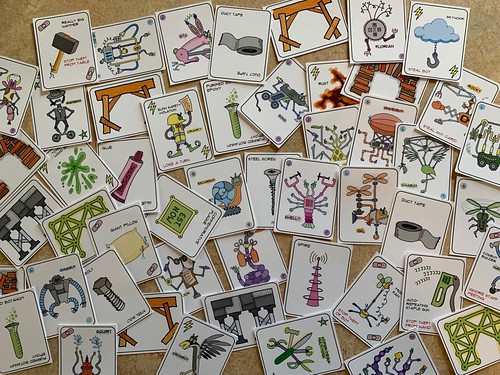
What have I accomplished in the two months I’ve been here? Well, I’ve drawn more that sixty tiny cartoon robots, and developed a card game revolving around them that is actually kind of playable.

IMG_3597
Prize for anyone who can figure out the gist of the game from this random array of cards...

I also drew some other stuff and made a couple actual physical postcards to send to friends. And my cryptic crosswording skills may just be at an all-time high. And I’m one film away from finishing watching the entire Marvel movie franchise, in order. Oh, and the downward dog is… better.

IMG_3594
Also I built a birdhouse. For the discerning wren, looking to get away from it all. No comment on whether this may be a model for my next plan, once the boat starts to feel just a bit too big and expensive. You know, what with the total collapse of the live performance industry and all.

Here are things I haven’t done in lockdown: wrap up the year-end business accounts, banish the email address from my last gig that keeps popping up annoying messages telling me it can’t log in, finish the “Boat Manual” I started ages ago, purge the photos on my computer so the hard drive isn’t bursting at the seams, clean up my online passwords, keep up with the Russian, or make banana bread.

I did, however, make something infinitely better than banana bread. I made buttertarts!

I'm Making
As I reported to Karen.

I’ve mentioned butter tarts before, but it bears repeating if only because I know I’ll struggle to get this post up to a normal word count. Butter tarts are individually sized sweet tarts made with short crust pastry and filled with a cooked mixture of butter, sugar, vanilla, egg and raisins. They occupy the same category as treacle tart, tarte au sucre, and shoofly pie, being a sugar/syrup-based filling in shortcrust pastry. Butter tarts are iconically Canadian and were recently celebrated by Canada Post in a set of truly excellent commemorative stamps that also included Saskatoon Berry Pie, Nanaimo bars, Tarts au Sucre and Blueberry Grunt.

215490_CanadaPost_SweetCanada_Souvenir_Front_PROD
What an outstanding collection. I’ve never had Blueberry Grunt but all the rest of those are absolute keepers.

215490_SweetCanada_Souvenir_Back_PROD
Though I must protest at the characterisation of butter tarts as “Ontario-based”. I mean sure, they had to give the prairies the Saskatoon Pie, but really?

So I decided to make butter tarts. They’re actually pretty simple, even more so if you shortcut and use pre-made frozen tart shells, which are obviously not as nice as homemade pastry but clearly still inifintely better than no butter tarts at all. I wanted to make the pastry too because it’s nicer, and I’m not exactly short of time, and because the butter tarts of my childhood have lovely folds in the sides where the round disc of pastry wrinkles to fit into the muffin tin in which they’re baked. And I think the foldy sides are important. As, apparently, does Canada Post, because you can see the type specimen butter tart they used for their stamp is exceptionally foldy.

IMG_3547
Thus the famed Robin Hood Prize Winning Recipes cookbook was unearthed.
(Published in Moose Jaw, Saskatchewan in 1947.)

The locally-favoured pastry recipe I used featured Crisco vegetable shortening instead of butter, which apparently produces a flakier crust. I’m not a pastry expert by any means, and not about to get into the great debate over the right fat to use in pastry. I just went with it. Oh, and the pastry recipe called for in the Robin Hood cookbook is a sweetened one and I think these are actually better with regular unsweetened pastry, since they are not exactly lacking in the sweetness department and the plain pastry sets that off well.

IMG_3553
Though I must register my deep disappointment that the Beehive Syrup people have abandoned the iconic yellow beehive-shaped bottle of my childhood in favour of the insipid and utterly uninspired offering shown in the photo above. Shame on you! Shame!

IMG_3557
Pleasingly, the pastry did make somewhat foldy sides when it went into the tray.

With the pastry shells chilling in the freezer it was on to the filling, which is very simple to make, and even easier if you soften the butter in the microwave instead of bothering with a stovetop melting scenario outlined below.

IMG_3549
The Robin Hood butter tart recipe. Surprisingly little butter for a recipe that has butter right in the name. I don’t know why they’re called that so don’t bother asking. (Also note that the bit about using one egg or two lets you produce a more liquidy oozy filling with just one egg, or a more structural, set filling with two. I went for two and I have no regrets. The flavour is the same, and they’re just easier to eat.) (Also also note that UK-based Astute Go Stay Work Play Live Readers lacking the correct locally sourced Beehive Syrup could probably substitute golden syrup with acceptable results.)

Also also also note that you definitely want the full 2/3 cup of raisins in this. And don’t even think about coming in here with any of your raisin-hate because it’s my blog and this blog is a place of raisins. Raisins in pie. Raisins in brownies. Raisins in Chicken Salad. Raisins anywhere I damned well want. And especially, emphatically, raisins in butter tarts.

And when I googled around about raisin pie in general, and the prairies + raisin pie filling in particular I came across this post from Facebook that is so perfect I’m including it here. It’s from someone named Wanda (already awesome) to the E.D. Smith pie filling company:
"Hi, I’m wondering why we cannot get the raisin pie filling anymore? We used to buy in the big pails to make pies for our local curling rink kitchen and it’s no longer available in Saskatchewan, Canada. We can’t even get the tins.”
So so sooooooo prairie. She can’t get enormous vats of canned raisin pie filling to make pies for the local curling rink. Because, tragically, E.D. Smith no longer make raisin pie filling AT ALL. I feel your pain Wanda. Stay strong!

To summarise: Raisins rock. Raisin haters shut up. Moving on.

IMG_3561
The filling mixture. Note I didn’t bother with the “beaten just sufficiently to combine” business. I just dropped the eggs in and whomped the bejesus out of it and it was all fine.

IMG_3563
Spoon the whomped up filling into the unbaked tart shells, being careful to get the raisins relatively evenly distributed. Do not hesitate to add raisins where lacking.

These went into the hot oven on the bottom rack, as required by Robin Hood himself, normally not one to be trifled with. But here I have to report that Mr. Hood led me wrong and I would recommend the middle rack, because they were very cooked and started to brown excessively after less than ten minutes so I moved them up and cracked open the oven to cool it off some and kind of watched them and hovered, but you could probably avoid that drama by using the middle rack. (Edited to add that it turns out the oven was acting up and was probably 25 degrees too hot so perhaps all the drama was a particularly local phenomenon and maybe you should just pay attention to the King of Thieves after all.) Also note that the filling puffs up a lot when baking but settles right down once the tarts are out of the oven.

IMG_3568
Butter tarts cooling on the porch. As you might note, the pastry was perhaps excessively flaky, which is an unusual thing to complain about in pastry. However in a handheld individual tart I feel like a bit more structural integrity might be helpful.

IMG_3570
Flakiness aside, the butter tarts were a hit, and even better on the second day, and third. And lots of them had the requisite foldy sides. And it goes without saying that these are really really good with coffee.

Reviews were good too… "excellent raisin to filling ratio, good consistency. I like the sweetness level, good pastry, over all good bake.” Great British Bake Off, here I come.

And just to really stick it to any lingering raisin-haters still hanging about, as a special bonus I include the Robin Hood Prize Winning Recipes offering for Raisin Pie.

Raisin Pie
“Good pastry is an accomplishment that brings more happiness to the world than the ability to sing a high C or fell the Sheriff of Nottingham’s deputies with a single arrow loosed from a stout English longbow!” - Robin Hood.

GRUB!: Toad in the Hole

Sunday, January 26, 2020

It's been a very quiet start to 2020 here at Go Stay Work Play Live World Headquarters on board the Lucky Nickel. I’m stalled on two different work projects waiting for other people to do things, and motivation for any grand project or adventure has been low, so I’m contenting myself with minor boat maintenance and brief excursions into the outside world. (And a bit of wassailing of course.)

IMG_1757
And photographing stunning sunrises like this one.

We’ve had some quite blustery weather of late, which along with the long travel times for me to get from the marina to anywhere besides Tesco, and the fact that dusk seems to come at about 3:15pm, has meant that I’ve been mostly cocooned in the boat listening to the ropes creak and bingeing on videos. As I said, I’m easing in.

Along with the foul weather and general aimlessness comes the desire for properly cozy food and the time to faff around with it. And since I’d rather cook up something yummy from the comfort of my home than venture out into the rain and wind to find something to blog about, it seemed a good time to pick from the list of potential GRUB! topics. Thus, Toad in the Hole! (Though I did ponder treacle tart quite seriously. All in good time.)

Toad in the Hole is a dish that falls into that enormous category of foodstuffs where meat - in this case sausages - is the star, supported and surrounded by a comforting carbohydrate of some form. The intention with these dishes is to stretch a small amount of an expensive ingredient into a meal for many people (like fish pie or, say, shaving black truffles over a big pot of Kraft Dinner.) I’ll admit now that I’d never had Toad in the Hole before I decided to try it out on this occasion, and if I’d given it any particular thought I suppose I’d assumed the the “hole” into which the toad sausage was planted was some kind of potatoey something-or-other.

(Pause for cries of shock and outrage)

Of course I was woefully misinformed on this subject. Toad in the Hole is, of course, comprised of sausages nestled in a crisp and tasty bed of Yorkshire pudding! This was a revelatory discovery and certainly put a bit more spring in my culinary step as I contemplated supper.

I suppose now I should pause because there’s a chance that somewhere out there in GSWPL-land there may be some sadly deprived readers who are living a grey and unfulfilled Yorkshire pudding-less existence. My condolences to you if you are one of those people, but cheer up because you are about to be introduced to the glory that is Yorkshire pudding!

First of all, this is one of those cases where we’re using the term pudding in its broadest possible sense meaning, basically, food. It’s not Bill Cosby Jell-o pudding custardy thing, and it’s not a chilled and set sweet thing like summer pudding. It’s also not a sweet steamed effort like sticky toffee pudding or Christmas pudding and it’s not a steamed savoury thing like steak and kidney pudding. Or even a sausagey sort of thing like black pudding. (And now I just have to pause and comment that I have blogged about a LOT of pudding.) Unaccountably, Yorkshire pudding is a light and airy baked affair that’s closest cousin is probably American style popovers. Which is to say that it’s a thin batter of flour, egg and liquid, baked with some fat and resulting in a crispy light puffed up golden brown thing that’s really really really good with gravy. Traditionally it’s made in a large baking dish and cut up to be served but it’s actually very common (at least when you’re not in Yorkshire) to get little individual Yorkshire puddings made in muffin tins. These little ones have the advantage of being mostly hollow when done correctly, meaning they are a perfect vessel for gravy.

Screenshot 2020-01-22 at 6.59.03 pm
Yorkshire puddings made in a muffin tin, from Mary Berry’s recipe. Note that Yorkshire puddings are often simply referred to as “Yorkshires” or even simply “Yorkies” (Not to be confused with the dogs or the chocolate bars.)

So, Toad in the Hole is sausages in Yorkshire pudding. Simple. Filling. Sure to be delicious. And because it was sad to contemplate Yorkshires without gravy, I decided to whip up some onion gravy to go along, since it was mentioned in one of the recipes I found and gravy is pretty much always a good idea.

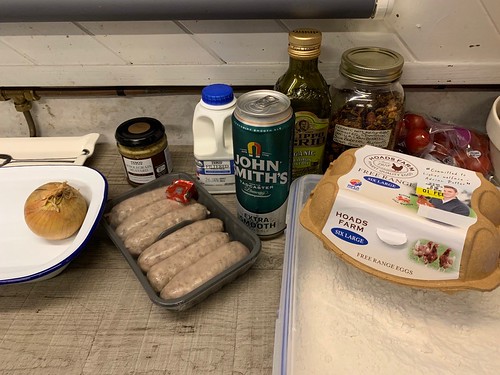
IMG_1990
The gathering of ingredients, along with the chosen baking dish.

My effort was based on this recipe from the Guardian, though I’ve noted changes I made.

Toad in the Hole with Onion Gravy:

For the Toad:
6 sausages (I used 4. There’s only one of me and I suspected that a day’s worth of leftovers would be plenty.)

For the Hole:
3 tbsp beef dripping or good lard (I just used olive oil, which was the only oil I generally stock)
2 eggs
100g plain flour, sifted, plus 1 tbsp extra for the gravy. (Sifted? Who has time to sift? I’m unemployed and even I don’t have the time for that. Life is too short to sift.)
85ml whole milk
85ml ale (I think this is meant to add lightness to the batter but it’s probably very optional. Just make sure to end up with the right total amount of liquid.)
2 tbsp wholegrain mustard
1 tbsp neutral oil (Or perhaps might I suggest... olive oil?)

For the gravy:
2 medium onions
A bit more oil (Like maybe olive oil?)
500ml (2 cups) of beef stock (A stock cube is fine. This is not the Cordon Bleu.)
A bit of flour

Method:
1. Take the batteries out of the smoke detector. You’ll thank me later.

2. Put the oil/dripping in the pan and put it in the oven, which you are about to turn on.

3. Heat the pan with the oil to one million degrees. (This is the one thing that EVERYONE mentions about making Yorkshire pudding: you must get the fat in the pan very hot. Very, very hot. Mary Berry says “absolutely piping hot”. My mom says “screaming hot”. And my mate Simon says, “it should be one degree away from taking down the whole neighbourhood”. Note this might be slightly less that one millions degrees. Perhaps try setting the oven for 200-220ºC/400-450ºF.)

4. Brown the sausages and then set them aside. They’ll cook through in the oven, but won’t get that nice browned look without this step. Plus then you can use all the crunchy leftover bits in the pan for the gravy.

5. Make the batter by cracking the eggs into a large bowl and beating vigorously with a whisk or electric beater, until thick and voluminous. Beat in the flour and milk alternately in small amounts, until you have a smooth batter.

IMG_1993
I don’t have an electric beater, but I do have this nifty little hand-cranked food processor sort of thing that I got at a dollar store in Azerbaijan. I has a chopping blade, a whipping attachment and a basket for spin-drying greens. Genius little device, plus this was the first time I’ve got to use the whipping thingy, so yay!

4. Add the ale and mustard and beat again. (At this point the batter will be worryingly runny and you might want to WhatsApp your mom if she is a seasoned Yorkshire pudding maker and send her a quick video of the runniness, after which she will assure you that it looks fine and mention AGAIN that the fat really must be very very VERY hot.)

5. Let the batter sit for a bit while you’re waiting for the oven rack to start melting, which is a good indication that the fat is almost hot enough. (This is the point at which I had the little boat oven turned up to gas mark nine, which is as high as it goes. That’s supposed to be equivalent to 275 deg c but was actually hovering around 200 on my oven thermometer. This is also the point at which I started to think my first Yorkshire puddings were not going to set any records for awesomeness.)

6. Get the fire extinguisher out of the cupboard and set it nearby. Remove the pan of hot fat from the oven and quickly pour in the batter, which should sizzle when it hits the oil. Add the sausages after that, take photo for your blog (optional), and then get the whole thing back in the oven. Bake for about 35 minutes until the batter has risen beautifully and is golden brown and delicious. (Alternatively, peer helplessly through the grease-spattered window of your inadequate oven trying to see if it’s rising at all.)

IMG_1998
Optional Photo. Yes everything is kind of swimming in fat. 
This is not a diet food situation, people.

7. In between peering, get on with the gravy. Slice the onion thinly, add a bit more oil to the sausage pan, and get it all on the heat. The onion should cook slowly on low heat. Really slowly. They shouldn’t brown so much as melt. Help things along by adding a bit of stock to the pan.

8. Once the onions have cooked down a lot add most of the stock and let it cook down more to thicken. Once you get tired of waiting for it to thicken, add a spoon of flour to the remaining stock and mix it into a slurry and then pour that in to thicken things up because honestly who has time to wait for gravy to thicken when there is Yorkshire pudding to be had?

9. Get the Toad in the Hole out of the oven.

10. Put the batteries back in the smoke detector (do NOT forget this step) and put away the fire extinguisher.

11. Eat!

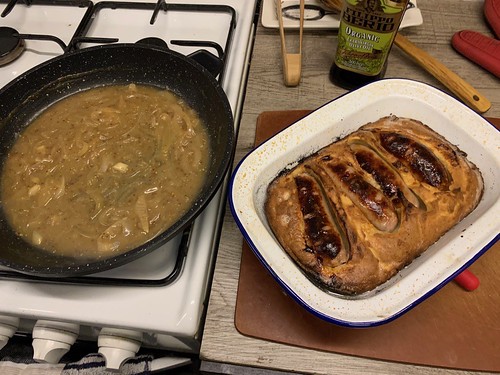
IMG_2004
The finished dish. Not much rise on the Yorkshire pudding, but the gravy’s looking decent.

And that's Toad in the Hole, Lucky Nickel style. I also steamed some broccoli to go along with it, and even though the Yorkshire pudding was nothing like as high and light as it could have been, it still tasted like Yorkshire pudding, if a bit more dense. Plus I had almost a whole can of beer left and lots of gravy, so all in all I’m calling this a success and a very worthwhile way to spend an evening.

GRUB!: Coronation Chicken

Sunday, May 5, 2019

Sometimes GRUB! posts present themselves naturally. For instance, how could I not blog about eating my way across Belgrade? Or find myself in Cornwall and not tell you about Cornish pasties and cream teas? Sometimes, though, I do a GRUB! Post when I’m casting about for a quick something to blog about without having to climb a mountain or go spelunking or ride a camel or anything similarly uncomfortable or effortful. I’ve got a big list of unusual or geographically quirky foodstuffs, making it relatively easy to write something up quickly. Because, as much as it might tarnish my reputation as a scrupulous blogger and intrepid International Woman of Mystery, there are times when I just need a gimme topic to keep things ticking over here at Go Stay Work Play Live World Headquarters. And that’s how we arrive at today’s subject: Coronation Chicken.

The coronation is question is not the street. Though in my usual fashion, I fell down a Google-hole while researching that link and ended up discovering this utter gem of a fact about Coronation Street:
"The 2002 edition of the Guinness Book of Records recognises the 1,144 episodes sold to the now-defunct CBC-owned Saskatoon, Saskatchewan TV station CBKST by Granada TV on 31 May 1971 to be the largest number of TV shows ever purchased in one transaction” (from Wikipedia, of course)
This goes a long way to explaining why I have enduring memories of switching on the tv in Saskatoon in the 1970s only to hear the familiar wail of those opening trumpet notes and lunge for the channel dial like a man who’s crawled across the desert might lunge for a tall glass of water. In those days it sometimes felt like the only thing on every Saturday was never-ending stream of Coronation Street and Kinsmen Kingo Bingo. The Beachcombers was a treat. What can I say? The multi-channel universe was still decades away. Bleak times indeed.

But back to Coronation Chicken! The coronation in question is, of course, the coronation of Queen Elizabeth II in 1953. And unlike other traditional recipes I’ve blogged about, this one’s origin can be definitively traced to its creators, Constance Spry and Rosemary Hume. Spry and Hume were principles of the London Cordon Bleu School in 1953 and were asked to devise a dish to be part of the luncheon banquet served to international dignitaries attending the event. Left to walk a fine line between the obviously regal and luxurious nature of the proceedings, the austere times (post-war rationing was still in force) and the challenges of a kitchen too small to prepare hot food on site, the chefs devised a cold chicken salad with an exotic touch and a nod to empire in the form of (gasp!) curry powder.

Queen-Coronation-Menu
Listed here as “Poulet Reine Elizabeth"

Any of my UK-based readers will no doubt be familiar with the modern evolution of Coronation Chicken whose irreducible elements are chicken, mayonnaise, curry and raisins or sultanas. These days, Coronation Chicken is most commonly found as a filling for commercially made sandwiches along with those stalwarts: Tuna & Sweetcorn, Egg Mayonnaise, Prawn Mayonnaise and my personal favourite, Cheese & Onion. (For a full rundown of popular UK sandwiches, here is an excellent source.)

It was actually surprisingly difficult to find a Coronation Chicken sandwich the day I went looking. Sandwiches seem to have moved on. Witness the Chicken Tikka & Mango Chutney sandwich and something called the Wicked Kitchen Smashin' Pumpkin Falafel Sandwich (give me strength...) It all makes me sense that Coronation Chicken has fallen out of fashion somewhat, a bit like prawn cocktail and cheese fondue. Definitely languishing in the forgotten second tier of the sandwich pantheon. Trust Marks & Spencer to come to the rescue though, with a fine example of this British classic!

IMG_4027
Coronation Chicken Sandwich, about to be enjoyed by your humble blogger. 

It’s also normal to find pre-made pots of these sort of sandwich fillings in grocery stores, because the effort of boiling an egg and mashing it with some mayonnaise is just too much for some people. These are the same people who buy pre-packaged jacket potatoes wrapped in tinfoil and those little containers of cubed melon. Astute Go Stay Work Play Live Readers be warned - these are not your people! Stay well away from them and their melon cubes and their accompanying tiny non-functional plastic forks. (Note: This does not apply to Cheese & Onion sandwich filling, which is excellent and which I never eat by the spoonful straight from the pot.)

IMG_4022
Pots of sandwich filling. Oddly. it's much easier to find Coronation Chicken as a sandwich filler than as a sandwich. 

Because the simple mayo-curry-raisin version of Coronation Chicken is so common, I was surprised to discover just how complex the original recipe was. Starting with two whole young roasting chickens and a bouquet garni including 3-4 (but never more!) peppercorns, to which was added the “cream of curry sauce”. It must have seemed the height of sophistication in 1953. The sauce does indeed include mayonnaise (3/4 of a pint of it!) along with onion, curry powder, tomato pureé, red wine, apricot pureé and, of course, whipped cream. Followed up with “a little extra whipped cream”. (Full recipe here) There is poaching, sautéing, boiling, simmering, straining and mixing involved. And that doesn’t even include making the “simple rice salad” on top of which the chicken and cream of curry sauce originally sat. I suppose it’s not unusual to go to such efforts for a coronation banquet, but for the Go Stay Work Play Live version, I cut to the chase and based my efforts on a much simpler and more modern version, with my usual cavalier (inherited) approach to amounts and method. (It's the Shakespearean approach.)

So without further ado:

Go Stay Work Play Live Coronation Chicken

2 boneless, skinless chicken breasts, poached and roughly chopped
Mayonnaise, about 1/4 cup
Plain yogurt, about 1/4 cup
Mango Chutney, about 3 tbsp
Raisins, as many as you want
Chopped dried apricots, fewer than the raisins
Curry Powder to taste
Cinnamon, a little bit
Cumin, also a little bit
Black Pepper, whatever

IMG_4079
Mix all of the sauce ingredients, then combine with the chicken

I enjoyed part of my home made Coronation Chicken on a toasted bagel. Nicely toasted bagels are a relatively new thing on the Lucky Nickel, since I was given a more efficient stovetop toaster carried all the way from Chile by the Boat Maintenance Division's visiting parents.

IMG_4083
Here's the imported toastadora in action. It's great! I'm not sure why it's so much better than the other stovetop toaster I've got. Maybe the solid base distributes the heat better. Plus it's physically bigger, so it accommodates both halves of the bagel at once. It's great!

IMG_4085
Coronation Chicken on a toasted bagel. Yummy lunch.

I was quite pleased with how my homemade Coronation Chicken turned out. It's a little more exotic than a common-or-garden chicken salad, and would be very nice on a picnic. Or, of course, for the next time you're catering a coronation banquet. 

GRUB!: Inappropriate Cheese

Sunday, April 29, 2018

It’s about time I told you about some Indonesian grub. There has been no shortage of odd and notable food in my life since I arrived, but today I thought I’d focus on one particular thing that’s cropped in a few different places: Cheese.

Asia in general is not a hugely cheesy place. In fact, cheese is notably absent from basically all East Asian cuisine. This is partly cultural (Ha! Cheese… culture…see what I did there?) and partly because a large percentage of East Asian people are lactose intolerant, though really the two feed into each other. Whatever the case, the cheese selection in my local Ranch Market runs heavily to processed stuff, maybe because of the growing influence of Western fast food. I have managed to find two worthwhile offerings in the harder, more pungent end of the cheese spectrum, but all in all it’s not exactly a cheese party here. (Also wine is so heavily taxed that it’s basically out of the question to buy it for casual consumption. A bottle of wine that I’d expect to pay £10 for at home would be about £50 here. So a wine and cheese party? Definitely not happening.)

Then again, you do run into cheese in some unusual places. Back on Carefree Day in Jember our local hosts presented me and my colleagues with large boxes of packaged local cakes to bring back to Jakarta with us. This was a lovely gesture, expect that the airline forced us to check our cake boxes (???) so we ended up having to hang around at the luggage carousel even though we’d cleverly travelled with only carry-on bags. Apparently this cake could not travel safely in the cabin.

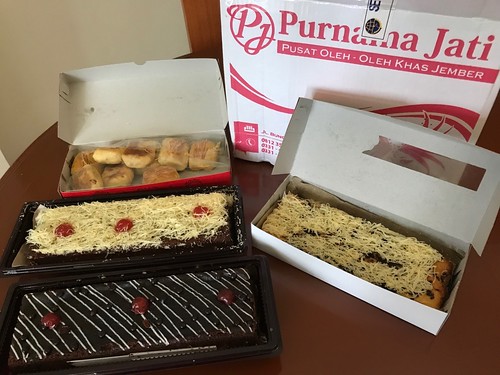
Naturally, I was curious to check out the contents of the sealed boxes once I got home to Jakarta.

IMG_7941
And here it is - what a spread!

First - DO NOT BE FOOLED. Those look like regular cakes right? And that bottom one totally looks like a tray of brownies. Which it is… sort of. All of these treats are made from tape (pronounced TAH-pay, and note that link requires translation). Tape is a fermented product, sometimes made from rice, but here we were dealing with the cassava variety. (Cassava is a starchy root vegetable called manioc or yuca in other parts of the world.) I’ll admit I was having a bit of trouble getting to the bottom of this tape business, mostly because all the websites are in Bahasa and Google Translate can only do so much.

As evidence, I submit:
"Prol Tape is known as food with nano-nano flavor, in it can contain sweet, sour and savory taste. This cassava-based food offers a variety of flavors ranging from chocolate, cheese, raisins and original. Types of food made from wheat flour, cassava tape, milk, butter and eggs it tastes almost like a cake but the flavor of tapenya is very tasty that is sweet, wry and tasty." 
So you can understand why I was confused until I found this You Tube video - which you all really need to watch right now - where the making of cassava tape is detailed in still photos and videos with English subtitles and a backing track of “I will survive”. (It is the video that proves you can find anything on YouTube). For those without the inclination or bandwidth, here are the basics: peeled cassava is partially cooked then sprinkled with a powdered form of yeast, wrapped in banana leaves, and left to ferment for about three days. The end result is a soft, sweet but a little bit sour and slightly alcoholic mushy thing. I can only assume that’s what forms a large part of the cakes from my box of cake.

So there I was with a box full of cake made from fermented cassava. Luckily, I didn’t really understand the whole fermented cassava thing when I first tried the cake and therefore approached it with an open mind. It was a bit heavy and quite moist but otherwise, pretty nice and reasonably cake-like. The thing that really threw me off was the topping.

32F043F6-41BB-472D-B88C-F096446D79C3
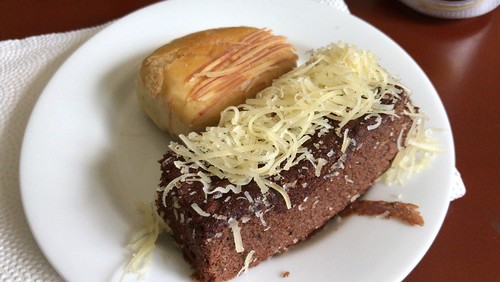
See the stuff on top of the brownie that looks like grated cheese? It looks that way because it is, in fact, grated cheese.

So yeah, it wasn’t just a box of cake made from fermented cassava. I was a box of cake made from fermented cassava topped with grated cheese. There’s no getting around it, that’s just a weird combination. Also, the dry cheese is just sprinkled on top so it gets everywhere when you try to eat it. This turns out to be lucky because it means you can easily brush the grated cheddar off and be left with just the cake made from fermented cassava. Then you can go about your normal business untroubled by cheese where cheese shouldn’t be. (Like here, where you can’t even brush it off.)

IMG_8138
Or here, at Dunkin Donuts. (Yes, they have Dunkin Donuts here. Also Krispy Kreme and A&W, though it’s not A&W as we know it.) Honestly, Indonesia, WTF? A chocolate glazed donut rolled in grated cheese? Ok, we’re talking about a relatively mild cheddar here, but still it’s just not right. I blame the Dutch, who brought their cheese culture here as colonial overlords but clearly did not take the time to explain the finer points before they left.

Finally, there was the delicacy we sampled on the Jember trip on our first day there. After we’d concluded the business of the day we had some time to do a bit of sightseeing and ended up driving half-way up the mountain outside of town to a faded old resort hotel. Along the way there were some nice views.

IMG_7747
And once we got there we had a good look down at where we’d come from.

And of course we stopped to sample the local delicacy as recommended on the TripAdvisor page that directed us up the mountain. One review in particular pointed out that the “banana fritter come up beyond expectation” so of course we had to try that.

IMG_7752
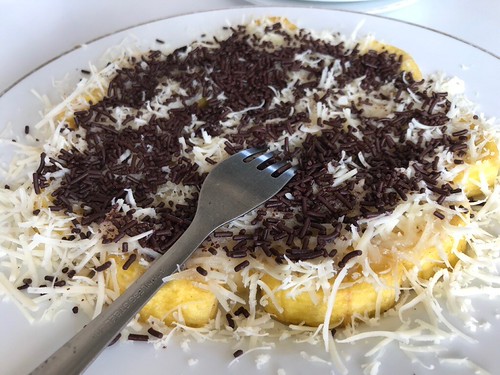
Pisang keju. Literally, “banana cheese”. This has confused-Dutch-mashup written all over it - especially the chocolate sprinkles part.

Sliced bananas, lightly coated in flour and pan-fried, topped with grated cheese and chocolate sprinkles. I think there may have been sweetened condensed milk in there too. It was weirdly ok, but maybe that’s just because I was hungry. Also these bananas are a different variety that the usual Cavendish that we get at home. They were starchier and less sweet and I think that helps. Our lovely local staffer said this is a very common preparation in Indonesia, and one that she even makes at home. However, I can’t help but think it would be greatly improved by removing the cheese, and I say that as a committed caesophile. But think about it: fried bananas + condensed milk + chocolate = undeniable yumminess. Whereas: fried bananas + condensed milk + chocolate + grated cheddar cheese = Huh?

We didn’t finish the whole plate of pisang keju. Too much keju for my taste, and it was also quite filling. Since that trip I’ve seen this weird grated-cheese-on-dessert phenomenon repeated over and over again. I think my "I'll try just about any weird food" credentials are pretty unimpeachable, but I struggle with this. Cheese - at least the firm, salty cheese we're talking about here - is such a very savoury thing. If we were dealing with cream cheese or ricotta or mascarpone or similar then I'd be all over that. But I find this combination a bit like dipping your pain au chocolate in soy sauce or spreading your chocolate cupcake with a nice layer of miso paste. Yes, you could get used to it, but why bother?

In the mean time, work is still busy. I've tried to do some touristy stuff in Jakarta, but have been slightly defeated because it's a very big, very hot, very choked up city so it's hard to move around, and then mostly uncomfortable when you get where you're going. Or perhaps I just had a bad day. Stay tuned and I'll try to find something worth telling you about. And while you're waiting could someone please have a Tim Hortons Sour Cream Glazed donut in my honour? With extra gorgonzola, please.


*P.S. Am I the only one who thinks “Inappropriate Cheese” would be a great name for a band?

GRUB!: Fish Pie

Sunday, February 11, 2018

I had a densely packed day of proper off-the-track hidden London kind of stuff last week, led by my Barbican-dwelling friend Piran. He’s like some kind of London-savant. I'm convinced I could walk  him down any street in Central London and he’d come up with at least three interesting facts about the history, or architecture or some other random London ephemera related to or prompted by the area. I like to think I’ve learned a few off-beat things about London since I’ve been here, but truly Piran is London Yoda to my Luke Skywalker. So having spent a whole day wandering around a geographically tiny but Londonically hyper-dense area of the city with him, it’s going to take me perhaps six months to distill things into a blog or two or ten.

While that all percolates I’ve fallen back on a good old-fashioned GRUB! post. Because it’s been cold and grey and rainy all day and nothing helps warm up the boat and the boater more than getting something hot and filling and lovely in the oven. Something like Fish Pie!

IMG_6892
This is a day that cries out for something involving pre-heating the oven. Preferably for about eleven hours.

Fish Pie falls into that category of not-actually-pie occupied by Shepherd’s Pie and Cottage Pie, being a protein-packed stew-ish base topped with mashed potatoes and baked. Perhaps that’s why it’s sometimes called Fisherman’s Pie. Note that this category is separate and distinct from Real Pie, which must be completely enclosed in pastry on top, bottom and sides. Or at the very very very least covered with a shortcrust pastry that completely seals the top of the dish, like chicken pot pie (but actually even that is seriously borderline). And don’t even get me started on pubs that serve a dish of stew topped with a disc of puff pastry. I have no compunctions at all about grilling restaurant staff unmercifully and pointedly about what appears on the menu as “pie”.  Also note that traditional fish pie is nothing to do with Stargazy Pie, even though that particular dish is, in fact, a more real fish pie than, er, fish pie. Also Stargazy Pie is super instragrammable - check it out:

Stargazy pie
Stargazy Pie - a traditional Cornish dish served on Dec. 23. As you can see, it’s a proper pie with pastry, though perhaps you didn’t notice that because you were distracted by the whole pilchards with their heads and tails sticking out of the top.

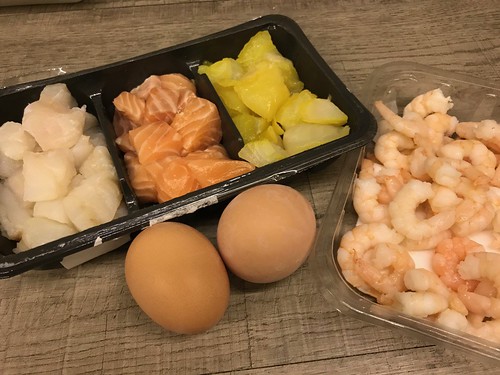
So… fish pie. The base is a mixture of different fish, cut in generous chunks and poached in milk. The milk then goes on to become a white sauce, often with a few other goodies thrown in as well. The topping is creamy mash, which can also be jazzed up in various ways. Because fish pie is quite a traditional dish, some big supermarkets sell packs of fish pie mix so you don’t have to faff about buying a bunch of different kinds of fish. Cod plus something smoked (usually haddock) are most traditional, though the mixes I’ve seen also usually include salmon. And I think it’s nice to mix in some prawns too, for a little extra luxury.

IMG_6893
Tesco’s fish pie mix including cod (left), salmon (centre) and smoked haddock (right), with luxury prawns featuring far right. The eggs feature later in the story.

You probably noticed that the smoked haddock pictured above has a distinctly yellow tint to it. Smoking is, of course, a traditional way of preserving fish. Other notable smoked fish over here include smoked mackerel, the ever-popular kipper (smoked herring), and the famed Abroath Smokie (also haddock, but treated differently). Originally, haddock was salt cured and then smoked over oak. The combination of the natural colour of the fish and the smoke gave it a yellowish colour. When more industrial smoking methods were introduced, some of the colour was lost and it became usual to add it back in with yellow dye - sometimes artificial, and sometimes more natural (based on onion skins or turmeric). Amusingly, when doing the in-depth research that I always undertake for the blog (Note: for “in-depth” read: no less than five concentrated minutes of googling, with breaks for watching tiny house videos on YouTube), I encountered websites that claim the undyed article was traditional, with the garish yellow colour of dyed haddock being emblematic of the worst sort of Un-Britishness. And I also found at least one online fishmonger offering “traditional yellow dyed” smoked haddock for people who grew up with the bright yellow stuff.

And so back to the fish pie. I have to admit this is a bit of a production, with many different processes and resulting in quite a few dirty pots and pans and baking dishes. Normally I don’t go in for that sort of thing, but it was a good excuse to avoid doing anything else on that cold and rainy Saturday, so here’s how it went:

FISH PIE

Ingredients:
4 large red-skinned potatoes, boiled and mashed
2 hard boiled eggs
Butter, milk and salt for the mash
About 450 grams of assorted fish
About 100 grams of prawns
1 large onion, peeled and halved
1 token bay leaf
2 cups milk
More butter
3 tbsp white flour
1 tbsp grainy mustard
1 cup frozen peas
1 tbsp capers
Chopped fresh parsley
Chopped fresh dill
Lemon zest
Yet more butter
(Note: as usual, all of these amounts are a bit approximate. Deal with it. It’s not like any of us in on Masterchef.)

Method:
First, cook and mash the spuds in whatever way you normally make mash. Naturally, this should include a generous amount of butter and milk and salt and pepper to taste. I added some fresh chopped parsley, which I think gives a festive touch. I’ve sometimes made fish pie with a mix of white and sweet potatoes, which is also nice. You could even add garlic, or grated cheese, or both, if you’re feeling particularly wild. For my fish pie I used red-skinned potatoes and left the skin on because it’s good for you and rustic and life is too short to peel potatoes. And to add to the rustic nature, my mash was pleasantly uneven. This is mostly because I was halfway through cooking the potatoes before I realised, for the first time, that I don’t seem to own a potato masher. Happily it turns out that a slotted spoon + fork combination is perfectly adequate for optimally rusticated mash.

One non-standard thing you’ll want to do when cooking the potatoes is to add a couple of whole eggs to the pot in the last 6 or 7 minutes of cooking, hard-boiled eggs being a traditional addition to the filling of fish pie. (Grated hard cooked eggs are also part of Stargazy Pie. Go figure.) Note it’s advisable to removed the cooked eggs from the pot before mashing.

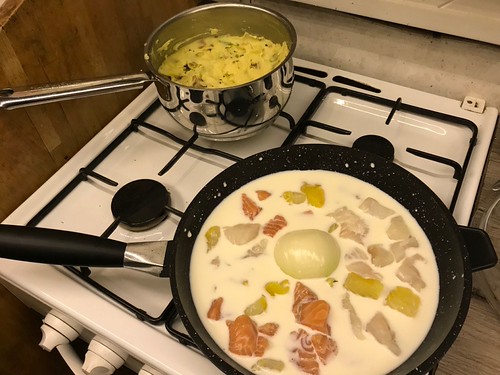
With the mash safely mashed and cooling in the pot, it’s time for the fish. Peel the onion and chop it in half and then make a cut in one half of the onion and insert the token bay leaf. (I did not do this because my bay leaves are apparently stored in the same place as my potato masher. Also I’m not a fan of tokenism, but several recipes I looked at called for this touch, so I include it here, despite the fact that I’m not convinced this onion bit, and especially the accompanying bay leaf, actually bring much to the party.) Place the token onion/bay leaf in a large pan and add the milk and the uncooked fish (if you’re using prawns do not include them here). Bring the milk almost to a boil and then turn down the heat and simmer gently, poaching the fish in the milk. Once the fish is barely cooked, remove it from the milk and set it aside in another dish. (I used the eventual baking dish for this rather than adding to the growing pile of dirty crockery.)

IMG_6896
Mash and poaching fish

Meanwhile, prepare to dirty a third pan by finely chopping the remaining onion and sautéing in butter and olive oil. Once the onion is cooked, gradually add the flour, and continue sautéing until the flour has cooked down. Then start slowly spooning in the poaching liquid, creating a white sauce. I eventually dumped the onion/flour/milk back into the poaching pan, which was bigger, and stirred it all together. Salt and pepper are good here, and I added a nice dollop of mustard to give a bit of zing.

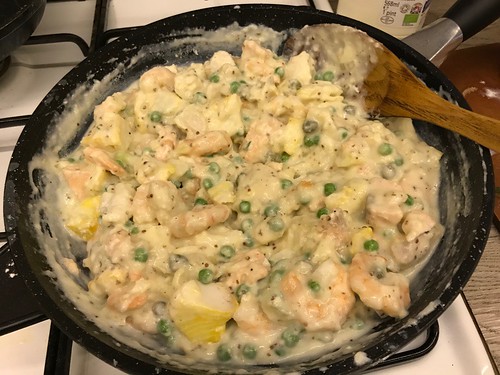
Once the sauce is done gently stir in the cooked fish, prawns, frozen peas, capers and chopped dill. This is also where you’ll add the hard-boiled eggs, peeled and cut into quarters. I say “you’ll add” because I, in fact, did not add the eggs at this stage. I studiously ignored the lovingly boiled eggs until the entire edifice was tucked into the oven and enough debris was cleared for me to notice them lurking on the spoon rest. Do not make this embarrassing error.
IMG_6898
The incomplete filling, sadly lacking in eggy goodness

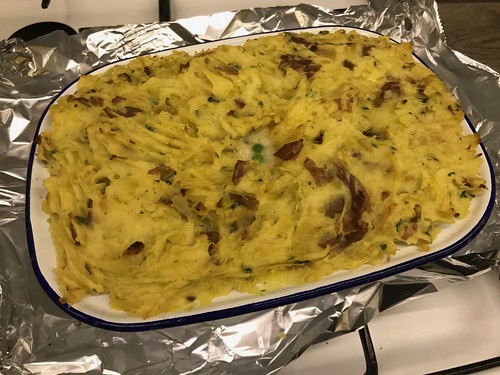
Spoon the filling into a deep baking dish and top with chopped parsley and lemon zest and then dot on the cooled mash. Keep the top of the mash craggy and uneven, and top with more butter before popping in the oven at 190C / 375F / Gas Mark 5 / 464 Kelvin for about 30 minutes, or until it’s warmed through, golden brown and delicious. Lots of recipes add grated cheese on top of the mash, which would of course be very very nice.

IMG_6902
Top Tip! Put the dish on a layer of tinfoil loosely shaped like a bathtub to catch the inevitable gooey spillover.

IMG_6900
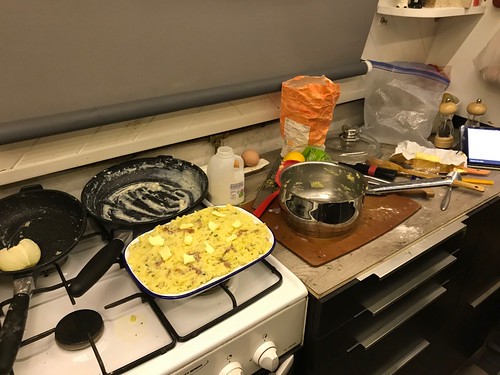
Once the pie is in the oven, your kitchen may look a bit like a bomb has dropped.

I was a bit surprised at how much mess this made, though I was gratified that it didn’t take long for me to clean it up. Perhaps this is due to my unique genetic makeup which combines my mother’s cooking instinct, free-form approach to recipes and amounts, and ability to dirty every pot in the kitchen with my father’s need to wash the dishes in between supper and dessert.

IMG_6901
Done before the pie was out of the oven!

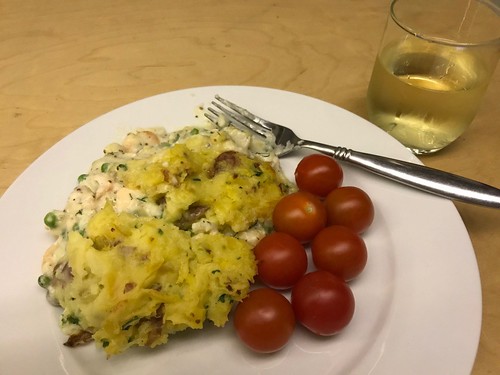
So I sat down to my supper of fish pie with relatively clean kitchen and a glass of cold Pinot Grigio, and a few cherry tomatoes to add to the veg-count.

IMG_6903
As mentioned above, we're not on Masterchef here, so presentation was limited to a mostly unsuccessful effort to arrange the tomatoes. 

So that's fish pie. A nice alternative to similar meaty dishes and good if you need to warm yourself and your environment and dust off an unusual number of pots and pans. Especially recommended if you have a dishwasher.

Next time on Grub!: Devilled Eggs...

GRUB!: Welsh Rarebit

Sunday, September 24, 2017

It’s been a while since I blogged about any local food (a year ago in fact, with Summer Pudding) and the weather has turned chilly enough that I’ve had to get the fire going some nights, which is lovely and cozy. This, coupled with my now work-free lifestyle made it good time to contemplate a nice hearty toasty yummy treat like Welsh rabbit, which you sometimes see spelled “Welsh rarebit” even though it’s always pronounced “Welsh rabbit”.

FOT933397
Note: No rabbits were harmed in the production of the blog post, largely because Welsh rarebit has nothing at all to do with rabbits.

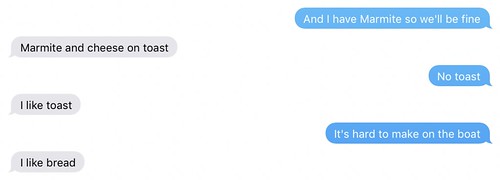
Welsh Rabbit is really just posh cheese on toast, and since I’m a big fan of cheese in any form I figured it was about time to test this out. This is despite the fact that toast is not really a boat-friendly foodstuff, because a conventional toaster draws about nine zillion watts of power, which is not healthy for one’s batteries. I do have one of those folding camping toasters to put on the stove, but it’s pretty crap. And it's possible to toast bread in the oven under the grill (broiler) but that’s not very fun, for reasons which will become clear below, which prompted this exchange between me and Karen when I was attempting to get her to tell me what food to stock up on for her recent visit.

I like bread
She’s flexible, I’ll give her that!

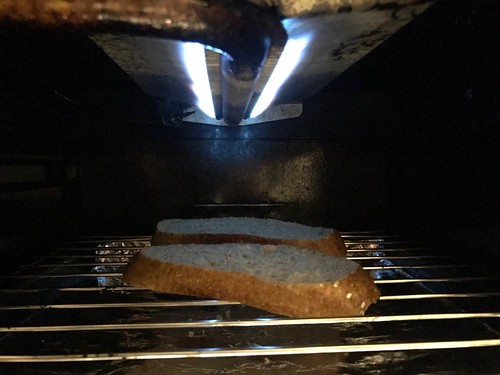
Having a gas stove is great for cooking. Having a gas oven is better than having no oven at all, but not brilliant. Having a gas grill/broiler is the worst of the lot. Mine didn’t work for ages because some kind of thermostat thingy was broken when I first bought the boat, but I've had that repaired. Still, it’s a remarkably temperamental bit of kit. I have to light it with a BBQ lighter (though that’s true for the hob and the oven as well) and then verrrrrry gently release the gas knob, or it will go out. And then verrrrrry slowly close the door, or it will go out. And then when you put the food in you have to verrrrrry verrrrrrrrrrrry slowly open the door, or it will go out. And if you have to relight it the odds of it going out again spontaneously, or at any of the above repeated stages increases dramatically. Basically, you need to be a Grill Whisperer to actually achieve toasting, which is kind of ironic because toast is not exactly Cordon Bleu Level cookery. That’s why I have a general reticence about toasting on the boat. However, I also have a general love of things that are toasted, especially cheese, so what the heck, let’s dive in.

IMG_5086
The grill in one of its rare moments of actually producing heat.

It’s not really clear why Welsh rabbit is called rabbit at all, nor why it is spelled sometimes spelled “rarebit” but still pronounced “rabbit”. The first recorded use, in 1725, was “rabbit”, with the “rarebit” option appearing 60 years later. Probably the alternate spelling was devised by killjoys who kept pedantically and cheerlessly pointing out that "there’s no rabbit in the recipe so really it’s misleading to called it rabbit and while we’re at it would you like a nice bowl of mock tertull soup?”

As for the Welsh connection, that’s pretty tenuous too and seems to boil down to something best expressed as, “Gosh those Welsh sure like their toasted cheese don’t they?” Wikipedia claims that "the notion that toasted cheese was a favourite dish irresistible to the Welsh has existed since the Middle Ages” and recounts a joke about St. Peter tricking all the Welshmen in heaven to leave by claiming there was toasted cheese just outside the Pearly Gates. Ho ho! What a merry jape!

The distinctive thing about Welsh rarebit though is that it’s not just a lump of cheese on toast, it’s grated cheese mixed with other yummy stuff on toast and then melted all together.

Let’s start first with the cheese, which should be a strong old variety, cheddar being the most common. The toast should be made from decent real bread that can stand up to toasting and then being smothered in yummy gloop without melting into pappy nothingness. If grilling your toast (instead of taking the easy way out by putting a slice of bread into some sort of electrically powered device that heats it evenly on both sides at once) it’s best channel your inner Grill Whisperer and toast both sides instead of slacking off and only doing one side.

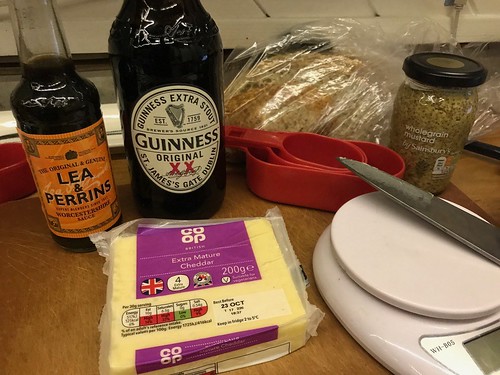
What elevates the Welsh rarebit are the small additions to the grated cheese that loosen up the cheese mixture and add an extra kick of flavour. It seems to be generally agreed that some kind of liquid goes into the mix, with ale or other beer a popular choice. Mustard is also usual and Worcestershire sauce is mandatory.

IMG_5088
For the uninitiated, Worcestershire Sauce is in the orange labelled bottle on the left, and presents an even greater linguistic challenge that “rarebit”, being pronounced “WUSS-ter-sher” sauce, and originates in Worcestershire, obviously. Sometimes it’s even shortened to “Wooster Sauce” because the English like nothing better than leaving out whacking great chunks of words when they pronounce them. In the pantheon of typically English behaviours (alongside queueing, moaning and self-depracating humour) utterly ignoring three-quarters of the letters in a word is an area where the English perform effortlessly at an Olympic level.

Worcestershire sauce lives in the same family as other fermented liquid condiments like fish sauce. Originally formulated by the Lea & Perrins company in the 1830s, its makers did not find it particularly beguiling on first tasting, set it aside, and forgot about it. When the barrels were rediscovered months later it had mellowed into the umami-packed flavour festival we know today. The exact recipe of original Lea & Perrins Worcestershire sauce is a secret but a discarded note from the 19th century discovered in a bin in 2009 features vinegar, molasses, sugar, anchovies, tamarind and spices. A little goes a long way. As well as flavouring Welsh rabbit, it’s also used in a lot of beef dishes and, of course, in Bloody Marys and Caesars (which definitely deserve a mention I ever do a home-grown Canadian GRUB post.)

But back to Welsh rabbit. Here’s how I attempted to make it, with thanks to the Guardian recipes section.

WELSH RAREBIT

2 slices of chunky toast
1 tsp English mustard powder
3 tbsp stout like Guinness (tragically, the recipe uses a very small amount, so you’ll have to find another use for the remaining 26.3 tablespoons)
30g butter
Worcestershire sauce, to taste
175g hard sharp cheese, grated
2 egg yolks

1. Mix the mustard powder with a little stout in the bottom of a small pan to make a paste, then stir in the rest of the stout and add the butter and about 1 tsp Worcestershire sauce – you can always add more later if you like. Heat gently until the butter has melted.
2. Tip in the cheese and stir to melt, but do not let the mixture boil. Once smooth, taste for seasoning, then take off the heat and allow to cool until just slightly warm, being careful it doesn't solidify.
3. Pre-heat the grill to medium-high, and toast the bread on both sides.
4. Beat the yolks into the warm cheese until smooth, and then spoon on to the toast and cook until bubbling and golden. Serve immediately.

Here’s what really happened:

WELSH RAREBIT

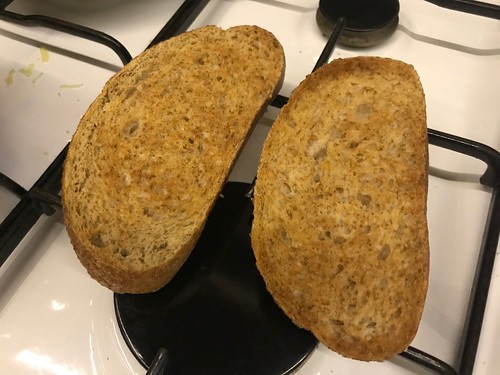
2 slices of chunky toast: I actually managed this! Even with the recalcitrant grill.
IMG_5090
Photographic evidence of perfect toast, made on the boat.

1 tsp English mustard powder. Local grocery lacks powdered mustard so use a dollop of grainy mustard because I’m pretty sure that one recipe I read online somewhere mentioned grainy mustard.

3 tbsp stout like Guinness. No trouble. Tragically, the recipe uses a very small amount, so need to find another use for the remaining 26.3 tablespoons.

30g butter: Think to self, “This seems like an awful lot of butter for two slices of toast”. Use it anyways, because: Butter!!

Worcestershire sauce, to taste: This ended up being a couple of teaspoons.

175g hard sharp cheese, grated: Again think to self, “This seems like an awful lot of cheese for two slices of toast.” Prepare a bit less, and use up random bits of cheese from the fridge including the end of a bit of parmesan.

2 egg yolks: Start separating eggs having carefully set out a dish for the excess whites, but no dish for the yolks. End up leaving each yolk nestled in half an egg shell perched precariously on the counter leaning against random utensils thinking, “This is going to end badly."

1. Mix the mustard powder with a little stout in the bottom of a small pan to make a paste, then stir in the rest of the stout and add the butter and about 1 tsp Worcestershire sauce – you can always add more later if you like. Heat gently until the butter has melted: Mix everything in the pan and think, “This is awfully wet looking."

2. Tip in the cheese and stir to melt, but do not let the mixture boil. Once smooth, taste for seasoning, then take off the heat and allow to cool until just slightly warm, being careful it doesn't solidify: Add cheese and think, “Yes, I was right, this is awfully wet. This is going to be like ladling soup onto toast. I’ll add the rest of the cheese." Add more cheese.
3. Pre-heat the grill to medium-high, and toast the bread on both sides: Success!

4. Beat the yolks into the warm cheese until smooth, and then spoon on to the toast and cook until bubbling and golden. Serve immediately: Beat the yolks into the warm cheese until still a bit lumpy and very very soupy indeed. Spoon onto toast and think, “Yes, this is exactly like covering toast in a very tasty cheese soup full of raw egg yolk.” Put it under the grill. Open the oven door to check and hear the grill go out. Relight the grill. See the grill go out. Swear. Relight the grill. See the grill go out. Swear a lot. Relight the grill. See the grill go out. Give up on the grill and light the oven. Gently warm the proto-rarebit in the oven. Spoon the rest of the cheese soup on top, because the initial covering has congealed enough to support another layer. Monitor cooking and decide the oven is just not getting the job done. Put both slices of toast, soup-side down, in a frying pan on the stove, thus perhaps inventing something called Australian Rarebit.

IMG_5091
You can really see the extravagant butter content start to show itself here.

Sample the remaining 26.3 tablespoons of Guinness and cook until losing the will to continue and turning the whole mess out onto a plate. 

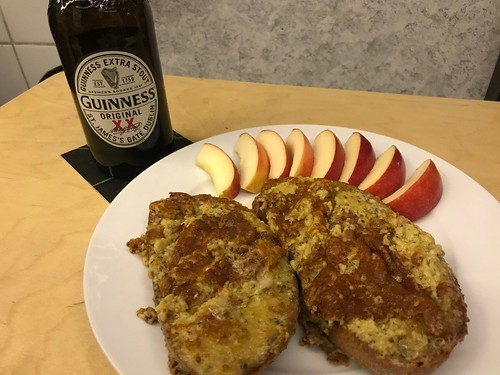
IMG_5092
Jazz things up with a sliced apple, artfully displayed. Nevermind that the rarebit itself does not look precisely appetising. Remember how much butter and cheese were involved and tuck in.

So I did eventually end up with warmed cheese on toast, though the process was arduous. If I ever attempt this again I'll probably need to outsource the toasting to save precious working grill time for the actual toasting of the cheese. Or perhaps I could make the toast the day before, to give the grill a chance to recover. (Though considering this is meant to be a simple and easy recipe, the need to prep a day ahead seems not entirely in the spirit.) And I'll use 90% less butter and probably skip the egg yolks or only use one, since I can't really see what they add to the party. It seems to me the irreducible elements of Welsh rarebit are: toast, cheese, mustard, Worcestershire sauce and a working grill. Perhaps those of you with toasters and working grills could do a bit of experimentation and report back. It's about time you lot started earning your keep anyway.

Thus ended my grand experiment in Welsh Rarebit, which I only embarked on because I thought it would be a quick and easy thing to blog about which then devolved into a messy, sweaty, sweary fight to the death with the grill.

Thank God for the Guinness, that's all I have to say.