Yet another day out: Bristol and Banksy

Saturday, June 18, 2016

I bet you thought you were finished hearing me go on about Bristol, right?  Ha!  How wrong you were.  How many more wonders of Victorian engineering can I tell you about?  How many soaring bridges?  How many big, greasy gears?  How many ground-breaking maritime propellor designs?  None.  That’s how many.  No more Victorians.  Today, we’re rocketing into the very modern world of street art.
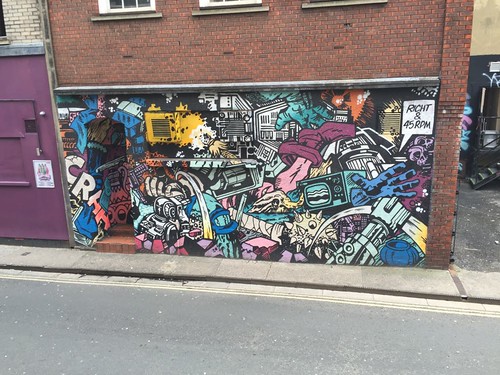
IMG_0677
Is it art? Or is it vandalism?  Read on.

"Street Art?”, you say, "Isn’t that just an apologetic, politically correct term for good old fashioned graffiti?”  Sort of, yes.  Technically, street art is a subset of graffiti.  Because technically, graffiti is "writing or drawings that have been scribbled, scratched, or painted illicitly on a wall or other surface”. (Thank you, once again, Wikipedia.) (And yes, I’m aware that technically, graffiti is plural and so that last sentence really should have been “graffiti ARE” not "graffiti IS” but that would make me sound like even more of an insufferable pedant than usual.)  Opponents might sniffily dismiss street art as unwelcome and destructive, but fans would say it's public art, albeit usually (though not always) unsanctioned.  And Astute Go Stay Work Play Readers will recall we’ve already seen some particularly charming examples of Paris street art from a much earlier Day Out.

As it turns out, Bristol is a hotbed of street art, thanks largely to the most famous street artist in the world, Banksy.  Banksy is the nom de plume of an anonymous Bristol-based artist and political activist whose freehand creations first appeared on Bristol walls starting 1990.  What’s he’s best know for, though, are his now-iconic stencilled works on anti-establishment themes. And yes, I said anonymous.  Despite the fact that he’s now internationally renowned and his work sells for considerable sums, his true identity is still unverified. (Yeah, yeah, people mostly kinda think they’ve figured things out, but let’s not spoil it. )
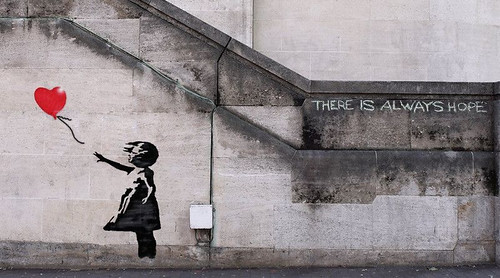
Banksy-–-Girl-and-Balloon-London-2002
Probably Banksy’s most recognisable work, exhibiting his trademark black sprayed stencil, a pop of colour, and a memorable epigram.  This one appeared on London’s South Bank in 2002.

Banksy may be Bristol’s most famous street artist (by a long chalk) but he is certainly not the only one.  Which is why, after a Saturday full of Victorian boats and bridges, I decided to spend my Sunday morning on a guided tour of the ever-changing display of Bristol’s Street Art.  The tour started at College Green in the city’s centre, which is also the city of Bristol City Hall.  Our guide was herself an artist, and she started by talking a little about the scene in Bristol and about the nature of street art.  I guess it’s a particular challenge guiding this kind of tour because street art can be a highly transient medium.  The guide admitted she’s constantly scouting and having to revise the tour route to take in new works and bypass old ones that have been painted over or tagged beyond recognition.

Street art comes in many forms.  Most people will immediately think of the colourful freehand spray painted murals that show up on walls and hoardings.  Spray paint’s big advantage is that it’s fast and easy to transport.  It also dries very quickly, which allows you to layer over it and build up complex work in a short amount of time, and that can be important if you’re working on the edge of legality.

But freehand spraying is just one form of street art.  At the bottom of the hierarchy is tagging, which I’d say doesn’t really constitute art at all.  To give you an analogy, tagging is to street art as living statues are to opera.  Or possibly as balloon folding is to the symphony.  Tagging is that annoying signature-like thing that’s usually done simply with thick felt-tipped markers or spray paint.  Taggers each have a particular design for their tags that they repeat over and over.
IMG_0682
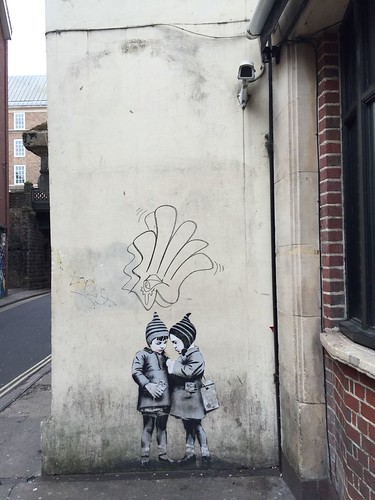
A piece called “The Big Deal” by an artist called JPS.   
The sort of hand-shaped thing above it is a tag.

IMG_0681
And here’s a close-up of that artwork.  Quite clever and Banksian.  

JPS started his career after a very rough past of substance abuse and homelessness.  He saw the Banksy exhibition in Bristol in 2009 and it inspired him to turn his life around.  He’s now a respected street artist in his own right, and this piece is a tribute and thank you to Banksy.  Note the CCTV camera above the two kids, clearly focused away from their deal.  And also note that while the tagger made his mark, he didn’t actually deface JPS’s work.  There tends to be a certain respect paid.

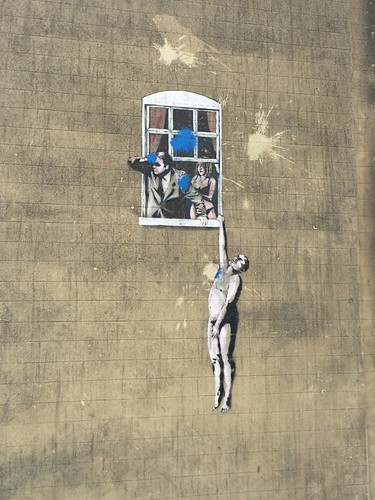
The Big Deal is a good example of stencilling, including different colours and probably some added brushwork and spraying.  This kind of mixed media can be common.  Here’s a quite famous Banksy that we saw at the start of our tour.  It’s located right across the street from Bristol City Hall, and is a bit of a taunt to the council authorities who removed a previous Banksy work showing a scuba diver pulling a giant bath plug out of the fountain in front of city hall.  (A lot of Banksy’s stuff makes very clever reference to existing architecture or textures in the wall surface.)
IMG_0675
This one is sometimes called “The Well Hung Man”.  And the building was once a sexual health clinic.  After the local council bought the building and considered removing the piece, 95% of Bristolians voted to keep it. Sadly, this hasn't stopped wankers from vandalising it with paintballs.

Stencils have the advantage of allowing an artist to carefully plan a work in advance - some stencils are even laser cut which allows for great detail.  And stencilling means a complex piece can be executed quite quickly on site.  Some artists, though, go for the old faithful paint brush.  It’s a much slower method, but allows for more precision than spraying (even with a stencil). Quickest of all, though, is a paste-up, which is precisely what it sounds like - a pre-printed piece of paper or set of papers that’s simply pasted onto the wall.  More complex paste-ups can even be 3D, sort of like the Paris Space Invaders.
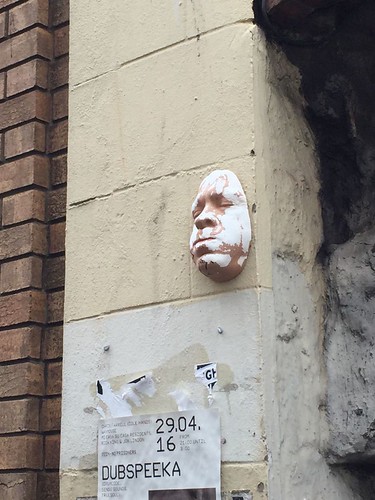
IMG_0699
This guy does plaster casts of his own face and sticks them on the wall.  
Because everyone needs a hobby.

Bristol’s street art scene is established enough that they even held a sanctioned festival in 2011.  Specific buildings were identified, high-angle access equipment hired, and international artists flown in from around the globe.  Our guide showed us several of the giant artworks that were part of the festival, and the most astonishing thing for me was that  they were buildings I’d walked past the day before, utterly obliviously.  If I’d simply turned my face up I might have seen this:
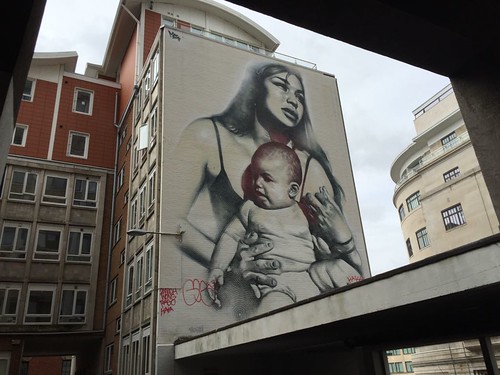
IMG_0700
By an American artist called El Mac

OR this:

IMG_0710
Stik is a well-known London-based artist who only does these funny stick figures.

And once my eyes had been opened, I could see that Bristol is frankly blanketed in street art. Giant murals, tiny paste-ups, witty stencils, and endless tags.  I was particularly taken with a clever sort of stencilling on an old and dirty stone council building.  Rather than painting on top of the stone, the artist created a stencil and pressure-washed his design so that he was, technically, not actually applying anything to the wall.
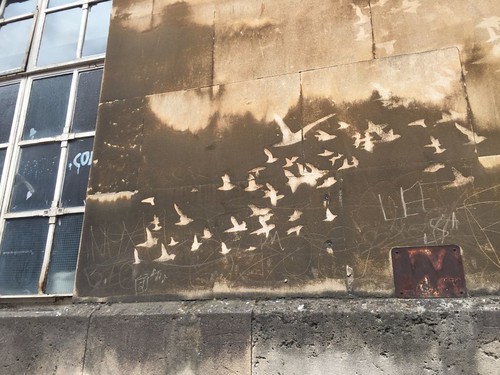
IMG_0714
It’s reverse graffiti!  And is it vandalism at all if you’re actually cleaning the wall?

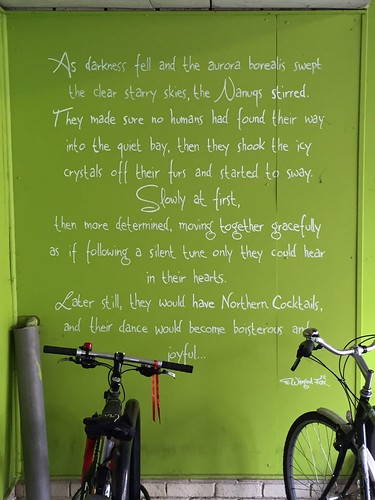
We finished our tour in the neighbourhood of Stokes Croft, which has a reputation for being a rough neighbourhood.  But the building where we ended - Hamilton House - is clearly helping to turn that around.  The building houses artists’ studios, festival offices, radio stations, film and music producers, alternative therapists, dance groups and social enterprises of all stripes. There’s also a café on the ground floor, and that’s where we saw the last works in the tour. Our guide has a studio in the building and she showed us a commissioned work she’d done that I found just lovely.
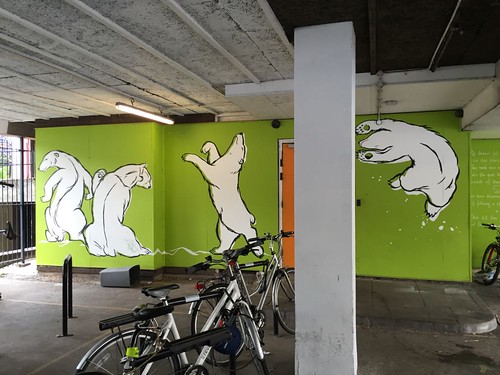
IMG_0718

IMG_0719
Because this was a commission, and is located in a locked parking area, she had time to work and there’s much less chance of the work being tagged or painted over.

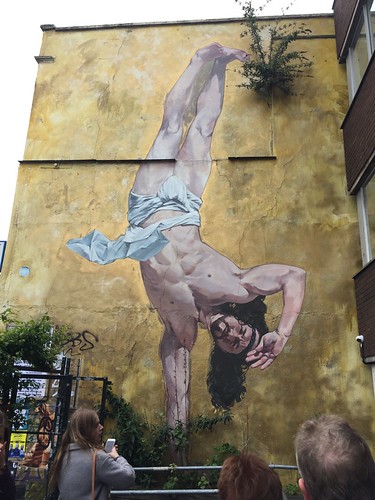
A few local guys were sitting in the outdoor seating area of the café, one of them wearing a Dismaland hoodie.  They bantered with us a bit, clearly aware of why we were there, and implying that one of them might be Banksy himself.  But the whole exchange was tinged with a bitter note that made you think these guys must be very tired of their neighbourhood and community being on display for passing rubberneckers.  This, coupled with the fact that the café didn’t really have any nice pastries, meant that once the tour ended I left quickly for a more welcoming spot.  But not before appreciating this last giant mural.
IMG_0723
It’s a 28’ high break-dancing Jesus.  
And if that’s not a good way to end a blog, then I’m hanging up my keyboard right now.


P.S.  As usual, there are more photos at Flickr.  And even if you rarely bother to click over to my lovingly curated Flickr albums because you can’t stand to look at another set of gears, it’s worth doing so this time, because there’s just a load of fun street art stuff there in the Bristol Album.  And also because I pay twenty quid a year to keep that Flickr account ticking over, so have a go. 

Off the tourist track: Punch & Judy

Sunday, June 5, 2016

I seem to have developed a backlog of blog topics without a corresponding amount of time or desire to actually write blogs about them, which means you may be in for a somewhat haphazard, chronologically challenged next few posts.  Also, the show I’ve been working on has now taken over my life completely, so the fact that I’ve found the time at all to get something posted is a minor miracle. (Actually, it's thanks to the recent Bank Holiday weekend, my disinclination to spend another afternoon elbow-deep in the show, and Blogger's ability to schedule posting in advance.  Like the blog equivalent of a post-dated cheque. Remember those?)

Back about a month ago, on a sunny Sunday afternoon before the show was all-consuming and I had a whole luxurious day of nothing in particular to do, I was reminded of a yearly event that’s been on my list to attend - the Covent Garden May Fayre.

IMG_0777
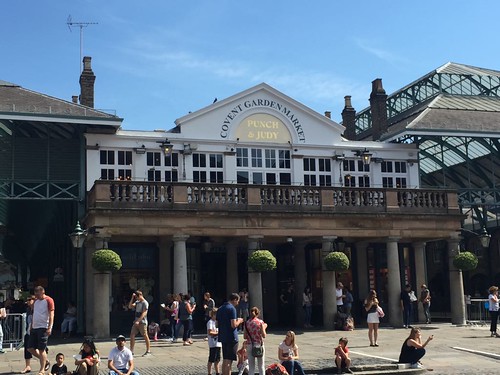
Covent Garden Market.  There's a good reason why this lovely pub above the market has the name it has, as we shall soon see.

I get reminded of these kind of things because I receive an email from TimeOut London that appears in my inbox each evening and lists half a dozen or so interesting things to see and do in London the next day.  It’s an embarrassment of riches, and a constant reminder of what an astounding place this is to live.  For instance, I’m writing this on a Bank Holiday Monday so my TimeOut email for the weekend covers three days worth of events and includes, among other things: a free documentary screening, a vintage fun fair, a “baby disco” for kids under five, a walking tour covering every street in St. James’, a gallery exhibition open until 10pm, a street food festival, a debate among leading female scientists on the latest discoveries in their fields, a pop-up Hungarian-themed bar, a chance to tour the entrance hall of Brunel’s Thames Tunnel, a Miami Vice themed party (in Hoxton, of course), an interactive “enchanted garden parade” (whatever that is), a poetry reading, a picnic (on a Bank Holiday! Folly!) and, of course, a one-night-only Game of Thrones themed comedy night at a pub.  All of which is just to reiterate, again, how totally amazing it is to live in this city, even though right now I have no burning need to attend a Hungarian pop-up bar.

It was particularly nice to be reminded about the Covent Garden Fayre, because its main attraction is a large display of Punch & Judy shows, which is an odd and interesting bit of English culture that I think is perfect for Go Stay Work Play Live.  Punch & Judy is a traditional form of puppet show featuring Mr. Punch (based on the Italian commedia dell'arte character Pulcinella) and his wife Judy, along with a small cast of other stock characters such as the Baby, the Constable, the Doctor, the Crocodile and, oddly, a string of sausages.  Using hand puppets, a single performer known as The Professor sets up in a small free-standing puppet theatre and performs all parts, switching deftly among puppets and voices while acting out a short series of sketches from what must be a very very well-worn playbook.

IMG_0782
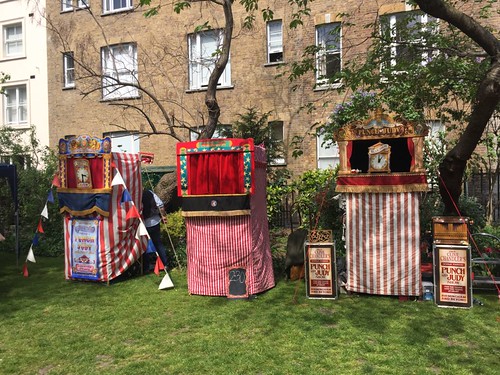
Several Punch & Judy puppet theatres.  
There were no less than sixteen different booths set up for this year’s event.

Punch & Judy shows have a remarkably long history.  The first recorded mention of one is by the famous diarist and cheese-hoarder Samuel Pepys, who saw a show at Covent Garden on May 9, 1662 (hence the name of the pub).  This means that though this was only the 41st Covent Garden May Fayre, it was celebrated as Mr. Punch’s 354th birthday.  And note the olde worlde spelling of “fayre".  I was going to be snide about this until I read about Pepys and realised that this is genuinely an olde worlde thing.

The Fayre was set up in the churchyard of St. Paul’s, Covent Garden - not to be confused with the much much much much much much much more famous St. Paul’s Cathedral.  The churchyard of St. Paul’s is a lovely tiny little patch of green that’s hidden from the tourist-choked hustle of the Covent Garden Market and yet only steps away, down a few different narrow and mostly unmarked alleyways.  It’s a great place to get away if you tire of negotiating the endless living statues and selfie-sticks of the main market.

IMG_0776
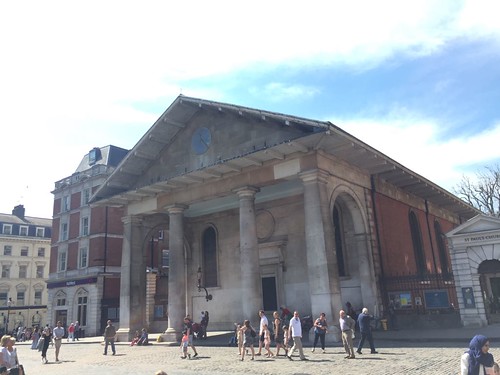
The church’s imposing main portico faces out onto the market square and is a favourite spot for buskers.

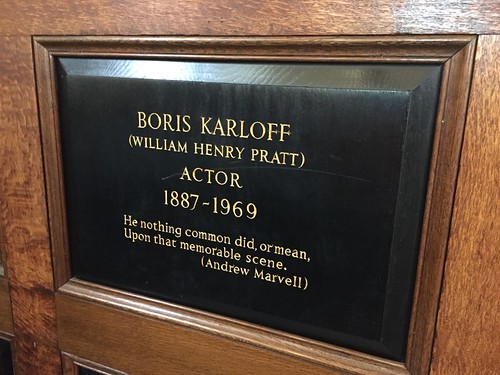
The church’s design is attributed to Inigo Jones and was completed in 1633.  Oddly, the main door of the portico onto Covent Garden is merely decorative, backing onto the altar inside. The main entrance to the church is through the plainer western facade reached through the churchyard.  More interesting, though, is the church’s long association with the theatre community in London.  St. Paul’s is often called the Actor’s Church and inside the walls are lined with modest wooden plaques commemorating famous and not-so-famous actors, directors, playwrights and impresarios of London’s theatre past, including Vivien Leigh, Boris Karloff and Noel Coward.  The church also has a nicely restored interior and a credible looking pipe organ.  And on the day of the May Fayre, Mr. Punch himself participated in the Sunday service at the church

IMG_0812
Boris Karloff’s plaque

IMG_0783
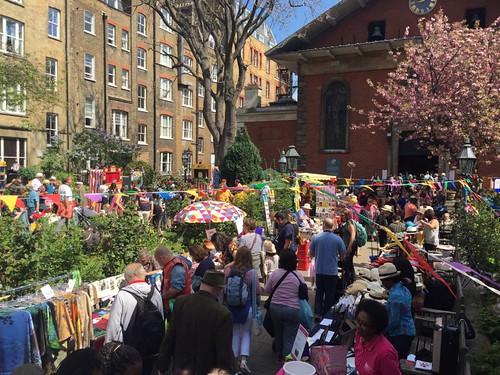
And here’s the much friendlier hidden side of St. Paul’s, teeming with happy fayre-goers.

Because the churchyard is so small, it didn’t take a lot to fill it up with people, puppet theatres, food vendors, and stalls selling Punch-related items like vintage books, hand puppets and paper cutout puppet theatres, which gave things a properly festive atmosphere.  I arrived too late to see what was billed as the “Grand Procession” (complete with brass band), so I contented myself with wandering around waiting for the next show to start.

IMG_0802
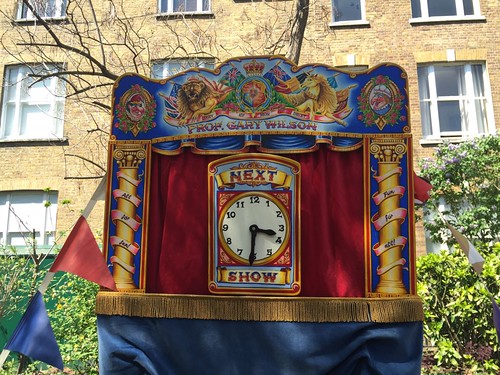
Each little puppet theatre had a sign like this.  I guess it’s A Thing.  Also A Thing?  The red and white striped cloth that covers the bottom half of most booths.  Punch & Judy shows are utterly saturated with tradition, as we shall see.

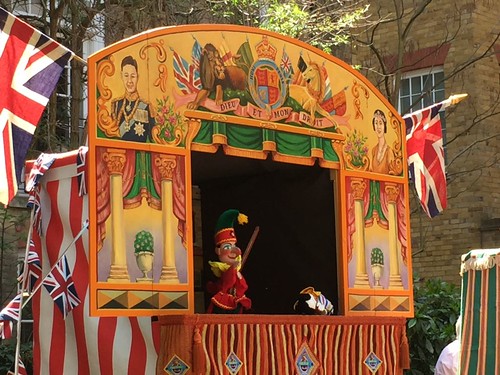
Mr. Punch himself has a very distinctive look - he wears brightly coloured jester-like clothes and a pointed hat and has a long hooked nose that curves down almost enough to meet his pointy chin.  Most distinctive, though, is his voice.  While other characters speak in a natural voice (somewhat higher for Judy, but otherwise pretty normal), Punch sounds like a high-pitched Donald Duck. (Audio recording here)  The puppeteer accomplishes this by means of something called a “swazzle”.  The swazzle is a tiny reed-like device held up against the roof of the mouth.  When playing Punch, the Professor will direct the air through the swazzle, producing a mostly-unintelligible rasping voice that’s very distinctive, if perhaps not entirely effective at conveying key plot points.  Most amazing is that the Professor must also voice the other characters without using the swazzle, meaning they must have very dextrous tongues, in order to move the swazzle in and out of position in their mouths.  This is done while also remembering their lines and using both hands to manipulate the puppets.  I’d love to see behind the curtain during a show sometime.  (Also, I love that I’ve learned such a perfectly excellent new word in pursuit of this blog post.  Swazzle.  Fantastic.)

As most people know, Punch & Judy shows are notorious for their violent slapstick storylines. The basic plots revolve around Mr. Punch being irresponsible and disobedient when left alone and then violently attacking whoever comes back to check on him with a large wooden club. Sometimes the responsible puppet - Judy or the Constable or the Doctor - will get a few whacks in as well, but eventually Punch triumphs over the forces of law and order.  It’s very much a set storyline.

IMG_0798
Punch and his slapstick, having felled some poor puppet now sprawled on stage left (possibly so the Professor could prep another one on his left hand below).

Punch & Judy shows started life as entertainment for adults, and the cast of characters often included Punch’s mistress, Pretty Polly, and the Hangman, Jack Ketch.  And while the Devil still appears in modern shows, those saltier characters are now rare, and Punch & Judy shows have evolved into children’s entertainment often seen at kids parties and associated with traditional English seaside culture.  As might be expected, the Covent Garden May Fayre was very much a family event.  Lots of parents with kids were there, and I’m pleased to report that even in the 21st century, Punch retains much of his politically incorrect soul.

The most basic plot line (and I use the term “plot” loosely) involves Judy leaving Punch in charge of the Baby (Aside: amusing comment from Judy about the Baby: “We called him Bill because he came at the end of the month”).  In earlier days Punch would beat the baby with his bat.  These days he usually just sits on the kid, because, naturally, he is “babysitting”.  The audience is often exhorted to snitch on Mr. Punch when the responsible puppet is called away, yet despite loud shouts from onlookers, somehow they never return in time to catch him in the act.  Eventually, though, all is discovered and the Constable is called, with mayhem ensuing. Punch’s stick gets traded back and forth, and makes a satisfying thwacking noise on various hard puppet heads. Often the amount of thwacking necessitates calling the Doctor, who will also inevitably get knocked about a bit as well.  And at some point a string of sausages - inexplicably called "squashages" - will appear for supper.  Despite their previous experience, the sausage owners will leave the food in the care of Mr. Punch, with strict instructions not to dangle them out the window.  Of course it doesn’t take a PhD in dramaturgy to deduce what happens next.  Though I was actually a bit surprised when Punch got his comeuppance from, of all things,  a passing crocodile, who snatched the sausages away in his pleasingly slapstick-like jaws.  All in all, though, it’s not exactly “King Lear”.

Nevertheless, it was clear the crowd enjoyed the show, in that sort of way you enjoy seeing something you remember from childhood carried on for your own kids.  And there was food and ice cream and bright sunlight and opportunities for children to pester their parents to buy them stuff and have little fits when they didn’t.

IMG_0788
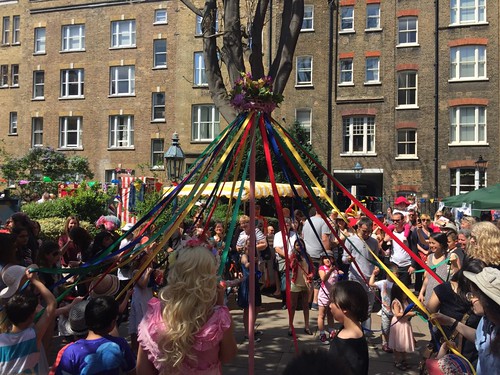
And just to prove that they could not be more English without actually colonising a nearby designer shoe shop, there was, naturally, maypole dancing.

I stayed to watch enough different versions of shows to understand that there was nothing more to understand, and then, unsurprisingly, went for coffee.  And as I walked I tucked away my thoughts on the day for some future blog post, which, happily, is now complete.


P.S. As usual, though I tend to forget to mention it, there are more photos at my venerable Flickr account.

Another Day Out: Bristol and a bridge

Saturday, May 21, 2016

When last we left our hero, lo those many weeks ago (sorry about that) it was early afternoon in Bristol and she was full-to-brimming with the kind of satisfaction that can only be engendered by completing a highly bloggable visit to a well-presented and diverting site involving lots of Victorian engineering and gears, all before lunch time, and with the promise of more to come.

After leaving ship, I continued walking along the harbour but the weather turned and what started as a light rain - the kind that those familiar with UK weather will usually not even bother opening an umbrella for - quickly became something that while not quite torrential still required shelter of some kind.  Luckily, just as this was happening, I was passing by another lovely little site - the last surviving Fairburn steam-powered crane in the UK.

IMG_0628
Designed by William Fairburn and patented in 1850 - the salient feature of the Fairburn design is the elegantly curved jib that allowed it to reach further over the gunwales of increasingly large ships.  The strength of the jib comes from its construction as a series of box girders.

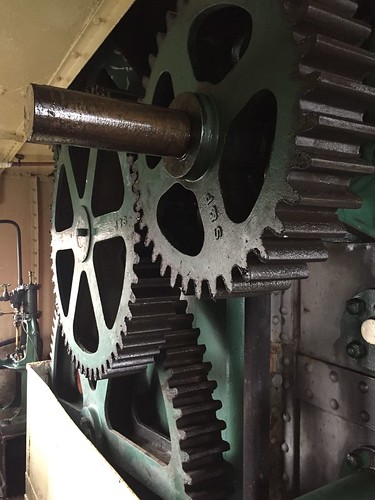
It's rarely open to the public, and in fact wasn't really open on that Saturday either.  But luckily, as I was passing and the rain was pelting down, I saw the door open and was invited into the small cabin along with another damp pedestrian, by a young man who was there as a volunteer cleaning out the boiler for the next time they planned to fire it up.  He proudly informed us that the crane is still safety certified to lift 35 tons.  And he let me take some pictures of lovely big, greasy gears.

IMG_0626
Big, greasy gears.

It wasn't long, though, before the weather cleared and I left the young man to finish mucking out his crane (or whatever it is one does to prepare a steam engine for use) and ventured into central Bristol for coffee and lunch.  Bristol is a university town, so it is frankly bursting with small independent restaurants and coffee shops.  And in the kind of coincidence that restores one's faith in whoever or whatever one has faith in, there was also a food festival going on that weekend, so I kept stumbling into open public spaces filled with stalls selling artisanal charcuterie or fresh local produce or patisserie or ice cream or handmade donuts.  Really, the whole downtown of Bristol seems quite lovely, and the sun was shining, and I thoroughly enjoyed walking around while I gradually made my way north-ish and westward towards the next big Brunel site on my list: the Clifton Suspension Bridge.  The bridge was one of the things that drew me to Bristol in the first place, so I was keen to see it up close.  Little did I realise what a brilliant and fantastic thing it is.

IMG_0649
The Avon Gorge.  It's even more impressive in person

The bridge spans the Avon Gorge, a dramatic geological feature that's more than 700 feet wide and 300 feet deep at the site of the bridge.  It’s the (eventual) result of a sponsored design contest to devise a bridge that could span the gorge but also allow the passage of tall-masted sailing ships below it (a problem that Astute Go Stay Work Play Live readers will recall was solved in a much different way in London).  The contest elicited designs from 22 entrants, including no less than four from our man Brunel, never one to do things by half measures. Unfortunately, the contest was judged by the Scottish civil engineer Thomas Telford, who decided that none of the submitted designs were suitable, but was happy to provide one of his own that he naturally deemed ideal for the circumstance.  How lucky!

Luckier still, officials decided the cost of Telford's design was too great, and sought revised plans for a wrought iron suspension bridge, eventually choosing a design by Brunel (after what has to be admitted was a bit of jiggery-pokery-like strong-arming on Brunel's part).  Though perhaps he can be forgiven considering the estimated cost of his design was £10,000 less than Telford's stone towers.  Construction started in 1831, but was halted only days later by the Bristol Riots, which left the city's commerce struggling to recover and dried up funding for the bridge.  Work began again in 1836, but faltered once more and continued in an on-again-off-again fashion until it was finally opened in 1864.  However, Brunel was unable to attend the opening of the completed bridge, owing to the slight inconvenience of having died 5 years previously.  Some even assert that after the numerous revisions and compromises to the structure by other consulting engineers Brunel shouldn’t really be considered the bridge’s designer.  Or at least not its sole designer.  Nevertheless, it is a truly stunning structure.

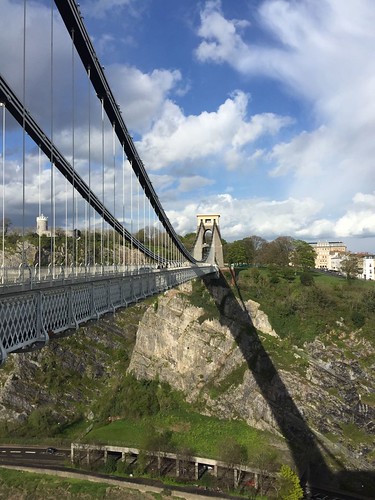
IMG_0653
The rain continued in fits and starts but at this point the sun came out and this was the result.  Gorgeous. 

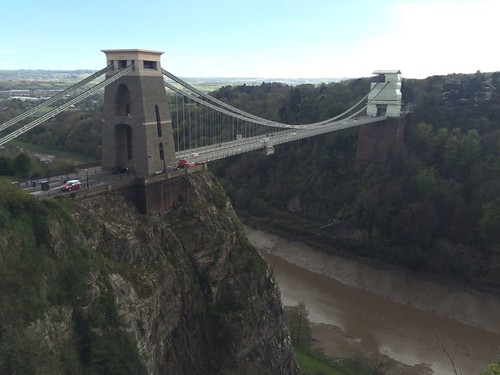
IMG_0663
Brunel's original design was a sort of faux Egyptian thing that called for the towers to be topped with sphinxes, but they were never added.  Boo!  
(Also boo to the fact that the whole south tower was swaddled in scaffolding.)

I took that second photo from the rocky crags near the Clifton Observatory.  The observatory looked like a very worthy site to add to my schedule because it's got a big camera obscura that shows a 360 degree image of the view from the top of the tower via a series of mirrors.  And there's a tunnel from the observatory to a cave on the side of the cliff where you can look out onto the gorge.  Sadly, it was closed by the time I got there.  Sadder still,  I never made it back the next day.  But on a happy note this means I'll probably have to go back to Bristol, because in addition to the camera obscura and the tunnel/cave combo there are also 371 coffee shops I never made it to.

What I did see, though, was a bizarre local landmark simply called the rock slide.  Don't be fooled, though, into thinking I'm talking about a place where rocks have slid off the side of a hill.  Certainly not.  The rock slide is a place where people go to slide down the rocks.  Of course.

IMG_0662
As the Guardian put it:  "this natural slide is nothing more than a sloping band of rock polished to shiny slipperiness by decades of dedicated bottoms".   As one who grew up tobogganing on proper snowy hillsides, my heart goes out to all the generations of Bristolians who've had to content themselves with this sliding experience.  Especially the early pioneers.  ("Come on Derek, let's hit the rock slide.  If we just keep at it, in 75 years our great-great-grandkids might be able to achieve yawningly boring speeds with only minor bruising!")

And that was about it for the day.  Considering the precipitous height of the gorge, you can imagine that there was some fairly significant uphill trekking involved in getting there from sea-level, where I started.  So having spent most of the day on my feet, I was pleased to realise that the sun was well and truly over the yardarm and quickly found a convivial pub where I had a well deserved gin and tonic (artisinally served with a sprig of rosemary, of course) and rested my feet before having supper and a passable sticky toffee pudding.  And then just to top things off I walked all the way back to the house, by which time my feet had just enough left in them to get me upstairs to bed.

A Day Out: Bristol and Brunel

Thursday, May 5, 2016

It's not the top tourist destination in the UK.  Not by a long chalk, and not with the over-hyped and over-crowded Bath Spa just down the road.  But I was looking for an easy place to spend the May Bank Holiday weekend - somewhere cheap and quick to get to, big enough to be diverting for a few days, and unlikely to be overrun by Bank Holiday tourism.  Having realised that many of the trains I've been getting on to take me to my current far-flung-ish mooring locations have had, as their terminus, Bristol Temple Meads station, I thought it was worth checking out.  And when I discovered that the city is home to a quite famous suspension bridge (A cool bridge! Wahoo!) AND to the first ever iron-sided, screw-propellor-driven passenger ship (designed by Brunel! Wahoo!) AND also the home to a highly rated walking tour of street art, including a bunch of Banksy (Banksy! Wahoo!) it wasn't long before I was booking a train ticket and making plans.

I know it's been a long time since the last blog.  I can only put it down to a potent combination of work and life distractions, coupled with an utter lack of inspiration.  Never mind all that though, because Bristol was positively packed with blogworthy stuff. So much so that I think I'll need to tackle it in two instalments.  So let's start where I started.

When I first decided on Bristol, I quickly fell down the Internet Hotel Booking Black Hole.  You knew the one where four hours later you look up from your computer having viewed 753 sites and booked nothing.  What part of town?  How much to spend?  How many stars?  This one is close to the centre, but doesn't include breakfast.  This one charges for wifi.  This one has some bad reviews.  It never ends. I did find somewhere in the trendy Clifton area, and then, on a bit of a whim, I thought I'd just check out Airbnb.  What a revelation (and yes, I know I'm late to the party here...).  I found what promised to be a "lovely room in Victorian terrace", which included breakfast and was a short walk from the historic harbour.  For £35 a night, plus a £10 fee.  Whaaaaa?  Are those prices from 1975?  Figuring I had little to lose, I quickly requested the reservation, hoping the host would accept me - an-reviewed, unknown quantity. Luckily I got the OK and I Ubered my way from the station mid-morning on Saturday.  (Check me out with my super modern sharing economy lifestyle!)

Jude and her housemate Rosemary were friendly and welcoming right from the beginning. Really, it was more like being at the Bristol branch of the Friendly House in Brixton.  The room was clean and bright and had all I needed.  And the first thing they did was invite me for a cup of coffee.  Five minutes after arriving I was sitting in the the kitchen and chatting away as if with old friends (but - crucially - old friends who hadn't already heard all my stories...) And they set me up with a good local map, and directions, and even had a free ticket to see the S.S Great Britain, which was going to be my first stop.  And it was sunny out.  So far, Bristol was scoring very very high indeed.

IMG_0654
The Avon Gorge, looking towards central Bristol

A bit of background now, since a lot of this weekend is going to be about sites related to one remarkable man - Isambard Kingdom Brunel.  First of all: awesome name (Also, Isambard is pronounced IZ-em-bard.  Not EYES-em-bard).  Second: Astute Go Stay Work Play readers will recall Brunel as the younger of the father and son team responsible for the Thames Tunnel.  In fact, Brunel the younger is widely regarded as "The most famous engineer in history." And a new biography I bought claims "Brunel's originality was matched by his breadth of mind: excelling as architect, surveyor, civil engineer, mechanical engineer and ship designer."  In 2002 he came second in the "100 Greatest Britons" poll, losing out only to Sir Winston Churchill and besting, among others, William Shakespeare, Charles Darwin, Isaac Newton and John Lennon.  Heady company indeed, but, as we shall see, every accolade is well-deserved.

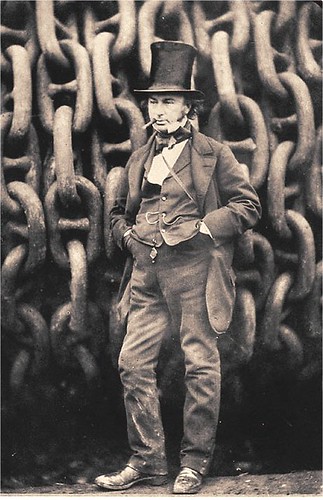
IKBrunelChains
This is the iconic photo of Brunel, 
posing in front of the launching chains from the S.S. Great Eastern

When I started writing this post I had no idea how much of Brunel's work I'd already taken advantage of just in getting me to Bristol to begin with.  To start with, Isambard Kingdom Brunel was the chief engineer and driving force of the Great Western Railway running from... you guessed it: London to Bristol.  The train I boarded on Saturday morning originated at Paddington station, which was designed by Brunel.  Every mile of the tracks it ran on were surveyed by him, passing over viaducts and through tunnels he designed, and ending at Bristol Temple Meads Station, also a Brunel creation.  At which point I got off the train and went to visit a ground-breaking trans-Atlantic passenger liner he also designed and then finished the day at a spectacular suspension bridge also designed by Isambard Kingdon Brunel.  Tunnels, bridges, railways, building, ships… the man was a legend.

IMG_0620
Brunel's S.S. Great Britain.  Err, obviously.

The S.S. Great Britain was not the first ship designed by Brunel.  The first was the P.S. Great Western - a wooden-hulled paddle steamer.  The Great Britain was intended to be another wooden paddle steamer, but this is where it gets interesting.  By the time the ship was commissioned around 1839 Brunel’s reputation allowed him greater control over the design, into which Brunel incorporated two major innovations, which we’ll get to later.  The ship itself is now the star attraction of Bristol’s harbour, an extensive network of natural and man-made channels, locks and islands all dating from Bristol’s days as England’s second city and hub for maritime trade and travel.  The S.S. Great Britain is held in dry dock there - the same dry dock in which is was built - and is restored and open to the public inside and out.  There’s also an accompanying museum (and gift shop, natch) and the whole site is done up really well.

IMG_0563
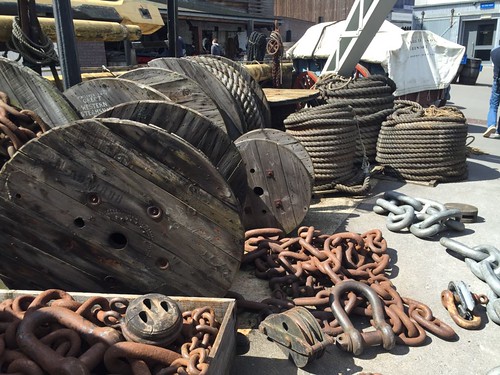
Picturesque giant chains and such-like, strewn artfully about the dockside

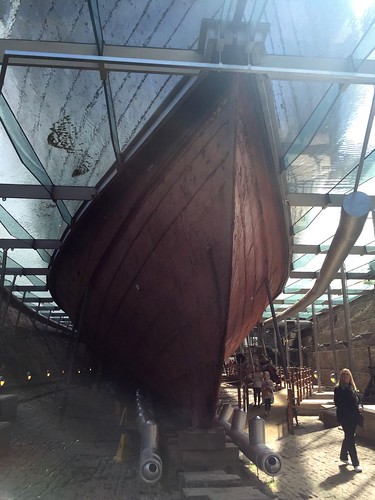
When you get to the ship you’re first directed into the dry dock itself, which is very cleverly presented.  The ship is held in place by big metal braces, and at the level on the hull that would match the waterline, a transparent glass roof is installed all the way around the boat, leaving the area underneath protected from the elements and allowing visitors to walk all the way around the ship.  And to add to the effect, the roof is covered with a shallow layer of water that gives the illusion the ship is floating, and makes lovely dappled reflections below while also insulating the space below, resulting in 10-20% lower energy costs.

IMG_0566
Not-great photo of the ship in the dry dock.  You get the idea.

But keeping rain off precious tourists’ heads is not the main reason for the glass roof.  That’s related to the first of those innovations I mentioned earlier.  Rather than building the hull of the ship with wood, as was traditional, Brunel decided to switch from wood to iron.  This may seem counter-intuitive, since we tend to think of iron as A Very Heavy Thing, but due to it’s massive structural strength an iron-hulled ship is actually lighter than a wooden one.  Iron hulls can also be built much longer and bigger, because they’re more resistant to the flexing forces of the waves under the hull. (Which is, interestingly, called “hogging”.  Or am I the only one who finds that interesting?)  Anyway, switching to iron allowed Brunel to make the ship much larger.  In fact, it was the longest passenger ship in the world from 1845 to 1854. However, after 150 years, the iron in the hull is in rough shape.  Having the lower hull protected protected from rain helps stop the rust.  What helps even more is a massive system of heaters that lower the humidity of the surrounding air to 20%, virtually stopping all corrosion and making it perhaps the dryest dry dock in the world.

IMG_0569
Not happy metal.  Above the water line, the iron hull has been scraped and painted to protect it and make it pretty and shiny.

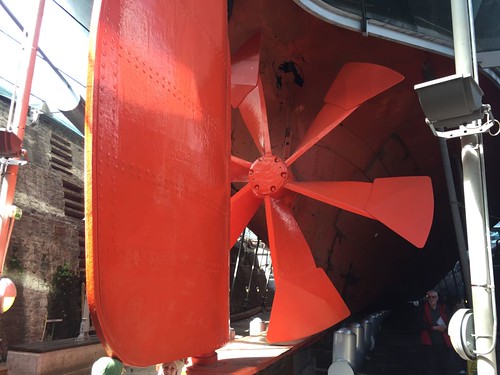
Brunel’s second big innovation was to scrap the paddle wheel and add a screw propellor. Paddle wheels had long been the favoured technology for steam driven ships, but having seen a wooden-hulled ship with a propellor, Brunel was convinced of the advantages and pressed for this new design.  In brief, propellors are cheaper and more efficient, and give the ship greater stability and manoeuvrability.  (Sadly, though, they greatly lessen the chances of attracting interesting characters like riverboat gamblers and spiritual-singing stereotypes.)  Thus, the Great Britain became the first propellor-driven, iron hulled steamer to cross the Atlantic.

IMG_0579
The six-bladed propellor.  Oh, and Brunel tinkered with the rudder too, adjusting the position where the tiller control was attached to make it much easier to steer.

After seeing the dry dock visitors are directed to a nice museum with some interesting displays that takes one only slightly too long to get through before you’re allowed up on the deck of the boat itself, and then down through the whole ship.  Again, it’s all presented really well.  You can poke your head into the first class cabins and dining hall, walk through the galleys and engine rooms (where the engines are actually moving!) and then see how the “other half” travelled in the lower class compartments and bunks.  You can even visit the hold of the ship where the cargo was stored.

IMG_0612
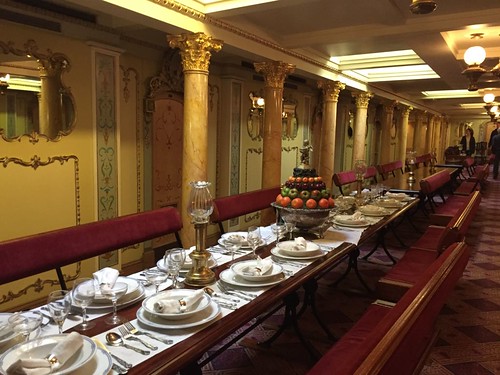
Check out the benches at the tables.  They’re stuck to the floor, but the backrest is double-sided and swings back and forth so you can face the table or flip it the other way and face the room.  I can’t figure out who invented that system, but it’s devilishly clever and has Brunel written all over it.

IMG_0609
These bunks are super skinny.  About 18” wide.  Interestingly, the First Class ones are the same width, and also double-stacked.  They're just in bigger, nicer cabins, with fancier bed linen.

The story of the ship’s life is fascinating.  It started out as a posh passenger liner crossing the Atlantic, then spent years delivering immigrants to Australia.  In 1882 it was converted to a sail-driven vessel and used for the transport of coal and other cargo but a fire on board damaged the ship beyond repair on a journey to the Falkland Islands in 1886 and it then became a floating coal bunker used for storage in the Port Stanley harbour.  The ships’s fortunes continued to fall until it was eventually towed to Sparrow Cove and unceremoniously scuttled in 1937.

And there the story might have ended, except that in 1969, naval architect Ewan Corlett, recognising it as a unique naval artifact, organised a campaign to save it from deteriorating beyond rescue in the waters of Sparrow Cove.  Corlett surveyed the ship and decided that despite years of decay and abuse - including having holes drilled through the hull to scuttle it, bits chopped out of it to repair a British warship during WWII, and a rather alarming and massive tear in the side - it could be saved.  They chartered a submersible pontoon and successfully re-floated the boat, while divers patched the ruptured hull with timber and old mattresses donated by local Falkland Islanders. (Really.  Donated mattresses.)  They then slowly made their way back across the Atlantic and two months later the ship returned to the dry dock in Bristol where it was built and restoration work began.  The museum goes into a lot of detail about the rescue, and it’s actually quite touching, showing old film of crowds gathered on bridges and waterside watching and cheering as this ship returned home.

I thought the while thing was absolutely excellent.  The story of the ship, the connection with Brunel and the engineering brilliance behind it (and yes, Karen, there were GEARS!), the restoration, the surrounding museum and shipyard… it was all top notch.  And better yet, but the time I’d had my fill of the boat it was only about one o’clock in the afternoon, which left me most of the day to explore more of Bristol’s attractions.  You however, will have to wait to hear about those because this post is long enough, and my out-of-shape blogging muscles need a break. Stay tuned and I'll try to get the next post out before July.

IMG_0592
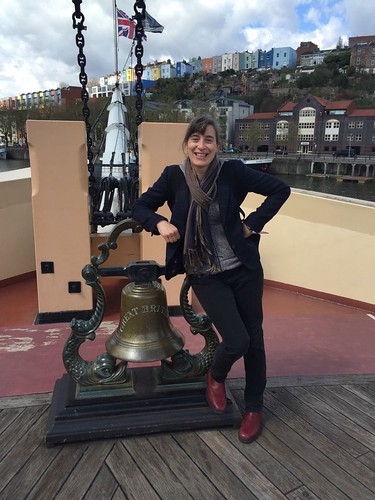
Happy Pam on big boat

Roses and Castles... Not!

Sunday, March 20, 2016

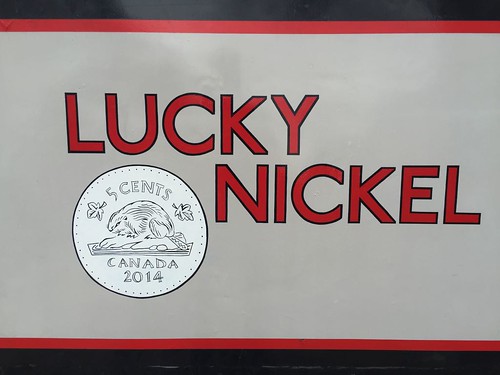
It’s an exciting time here at Go Stay Work Play Live World Headquarters, aboard the "Lucky Nickel".  This week, I engaged the services of a talented young woman to paint the name and logo on the side of the boat!  Astute Go Stay Work Play readers will recall that when I bought the boat it was named “Dragonfly”, which one might think is a nice name for a boat.  And if one did think that one would certainly not be alone in one's thinking because a quick search reveals that there are over a hundred boats registered in the UK called “Dragonfly” or some derivative of that.  It is surely one of the most common boat names in the country.  So it didn’t take me long to decide that along with repainting, my boat was going to be renamed, and I settled on the new name more than six months ago.  Sure, there's a superstition about it being bad luck to change the name of a boat, but I hold no truck with such things.  Besides, records that came with the boat indicate that it started life as the “Lisa Jane” and was changed to "Dragonfly" at some point along the way, so really the damage was already done.  Also there’s a school of thought that if you’re going to change the name you should do it when the boat is out of the water being painted, which I did, so I think I’m covered.
The question then became one of how to get the new name properly displayed on the boat. I’ve been on the canals full time for more than two months now I’m a little surprised at how many boats I see with no name visible at all.  I find this odd and a bit sad.  I suppose different boatowners have different priorities but honestly, have some pride, people!  For a long time I’d planned to simply have a custom vinyl sticker created from an online company like this one.  It seemed like a reasonably economical way of achieving the effect I was looking for, and they even promised they could take a digital image file of the nickel and create a sticker of that, along with the lettering.  Job done, I thought.

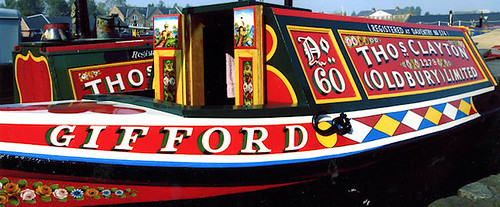
First, though, let’s have a little sidebar and delve into the rich and colourful history surrounding the painting and decoration of narrowboats.  And when I say “colourful history” I am definitely not speaking metaphorically.  Traditionally, working narrowboats operated and inhabited by bargemen and their families were be heavily decorated in what’s come to be known as the “Roses and Castles” style, which AGSWPLRs might suspect runs heavily to… er… roses and castles.  And of course they’d be right.

gifford1
I told you it was colourful.

At the peak of the working canal system - when narrowboats moved the raw materials and products of the Industrial Age along England’s canals, most bargemen were well-paid enough to hire on help and keep their families on dry land in canal side cottages.  However, the arrival of the railway brought a new way of moving cargo and a consequent decrease in the demand for and the earnings of bargemen.  As a result, many a bargeman was forced to give up his paid help and move his entire family into the cramped and dirty cabin at the end of his boat. This had the twin advantage of reducing living costs and providing free labour to help in working the boats.  But life with no fixed address made it difficult to keep children in school or develop community ties, and barge families gradually came to been seen as “apart” from normal society.
"Their response to this situation seemed to be to develop an even stronger trade mystique, to brazen out the common perception with a display to confound their critics. These 'dirty bargees' turned their boats into models of ostentatious cleanliness with polished brasswork and woodwork scrubbed to snowy whiteness, and their squalid little box cabins were transformed into domestic palaces of lace edged curtains and china plates. If they could not impress with quantity on their tiny floating homes they would dazzle with quality, and every surface was painted, every moulding picked out with strong colour, and every tin utensil smothered in painted roses and romantic landscapes.”
(From Canal Junction
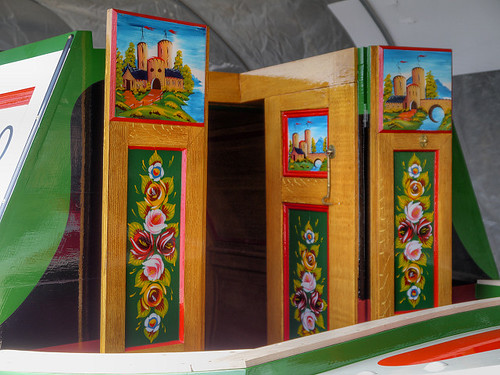
2967994_5472cd90
One can certainly imagine that it might be nice to be surrounded with such colourful and romantic images given that life on a working boat was hardly a bed of roses.  
Or even a bed of castles, for that matter.

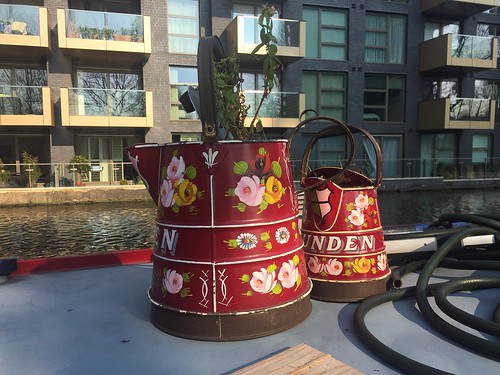
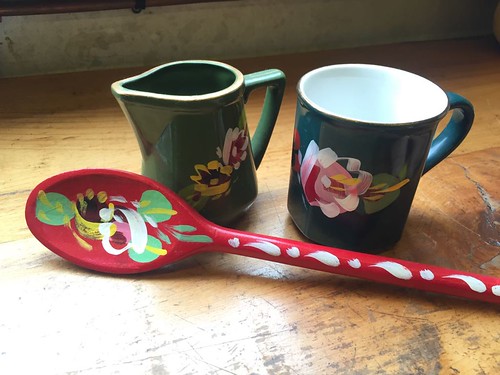
Heavily decorated boats are not as common as they once were, but there is still a significant part of the boating community that carries on the Roses and Castles tradition to a greater or lesser degree, and chandlers that serve the canal trade often stock painted canalware like mugs, creamers, spoons and the ever-present Buckby Can.

Bucky cans
Before the modern era of us pampered boat dwellers with our giant below-decks water tanks and hot water heaters and such-like, clean water was stored in a metal tin called a Bucky Can, normally stored on the roof of the boat and refilled at infrequently located towpath standpipes. (Actually, the infrequently located towpath standpipes are still the only source of clean water…)  Just as with everything that wasn’t nailed down (and many things that were) Bucky Cans were also heavily decorated.

I suspect no one reading this will be surprised to learn that Roses and Castles is not exactly the aesthetic I’ve been trying to achieve on the “Lucky Nickel”.  It’s clean and tidy and modern, and I like it that way.  Then again, if you were fortunate enough to be invited on board you might glimpse one or two nods to the old traditions tucked away.

IMG_0321
The "Lucky Nickel" collection of canalware

And now back to the “Lucky Nickel” and the question of how to properly adorn the boat with its proud new name.  Even if I was to order the vinyl sticker I’d still have needed to pay a graphic designer to do a proper high resolution cartoon of the nickel image, and that was going to add to the cost of the vinyl option.  Then I happened to pick up a business card for a London-based sign writer who specialised in narrowboats and decided to check out her website.

Hannah’s gallery features some traditional styles of narrowboat decoration of course, but it also shows a large variety of modern fonts and styles that I thought looked really smart, so I got in touch to ask about prices.  Of course anything done bespoke and by hand is going to be more expensive than something spit out of a large format printer, but I was actually surprised that the costs were reasonable.  Sure it was more than the graphic artist + vinyl sticker option, but not crazy more.  And it promised to be a much nicer job.  I’m not against new methods. I've got solar panels and LED lighting and streaming Netflix, so this is a thoroughly modern boat.  But getting this done properly, by hand, somehow just felt right.

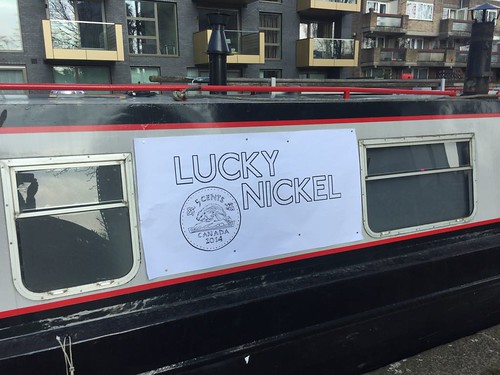
Many emails were exchanged that eventually resulted in the lovely Hannah arriving on Monday morning with a small backpack containing the tools of her trade.  We’d already agreed on the design, and she’d hand drawn a new image of the nickel that was absolutely perfect.  She then had the whole layout printed in full scale so we could spend a bit of time faffing around positioning the printout on the side of the boat, debating whether it should be half an inch higher or lower, until I finally agreed and disappeared to let her get on with it.

IMG_0309
The paper layout in position.

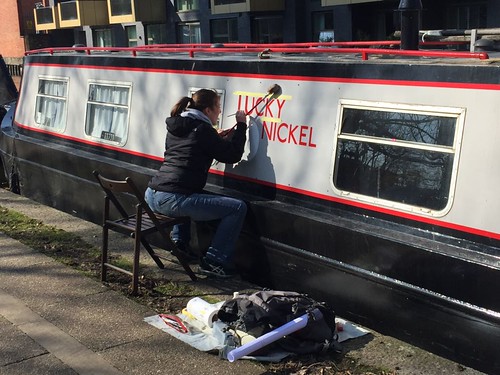
The process itself was interesting.  She used a piece of carbon paper sort of stuff and a straight edge and a steady hand to press through the printout and transfer the outline onto the side of the boat.  After that, she simply sat on the towpath with her tiny pots of paint and her even tinier brushes and meticulously filled in the whole thing.  And she never even went over the lines!  It took a bit more than two days, with a short break on Day Two for me to fire up the boat and turn it around so she could do the other side.

IMG_0317
Hard at work.  At least it was sunny the first day.

The end result is fantastic.  I’d originally thought the lettering should curve around the nickel, but this layout was one of Hannah’s suggestions and it’s much much better.  Astoundingly astute Go Stay Work Play Readers may recognise that font as a knock-off of the one used on all Transport for London signage.  It’s the tube font!

IMG_0324
This is NOT photoshopped!  This is just pure, un-re-touched, hand painted awesomeness.  I can’t tell you how excited this makes me.  It’s like the boat is finally properly reborn.

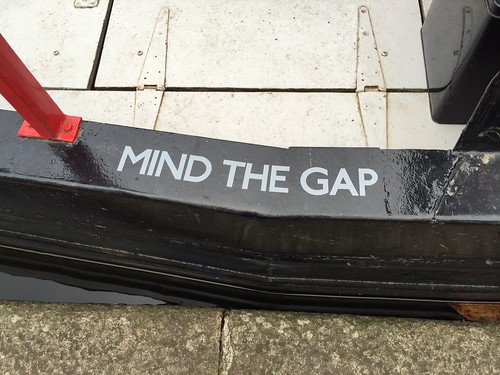
Mind the gap
And I couldn't resist this bit of fun.  After all, I did say I was using the tube font!  
And this is definitely not a gap you want to ignore!

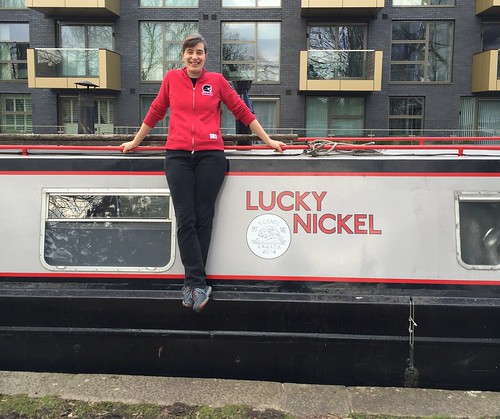
Boat
Me and my colour coordinated boat.  Happy happy.

Off the tourist track: Dennis Severs' House

Wednesday, March 9, 2016

"Aut Visum Aut Non!” ("You either see it or you don’t!”)
- motto of Dennis Severs' House
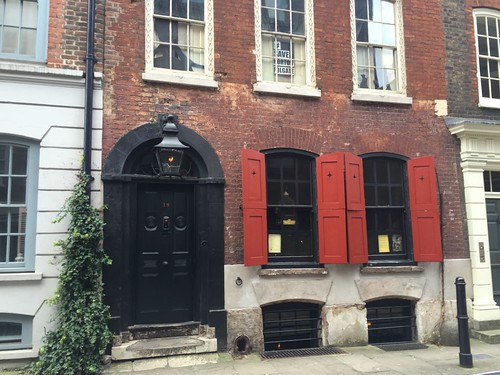
Dennis Severs’ House is… unique.  Outwardly unremarkable except for the gas lamp burning above the door, it’s an early 18th century Georgian terraced house in the Spitalfields area of London’s East End.  More remarkably, all five levels of the house - from basement to top floor - have been painstakingly dressed with period furniture and props to replicate life as it might have been for several generations of a family of Huguenot weavers in the 18th and 19th centuries.  More remarkably still, and much less prosaic, the house is often described as a “still life drama”.  It’s the work of Dennis Severs, an American born ex-pat who relocated to England in the mid-sixties and subsequently bought and moved into the house on Folgate Street in 1979.

IMG_0291
The outside of the house

At the time Severs bought the house it had not been modernised, lacking electricity service or contemporary plumbing.  But rather than renovating or restoring the house Severs decided, in his own words, to “… bring it to life as my home. With a candle, a chamber pot and a bedroll, I began sleeping in each of the house's 10 rooms so that I might arouse my intuition in the quest for each room's soul...  Then, having neared it, I worked inside out from there to create what turned out to be a collection of atmospheres: moods that harbour the light and the spirit of various ages in Time.”  As you might be able to detect, Dennis Severs was not, by any means, a conventional anthropologist, social historian or museum curator.  And the work he created in the house lies somewhere between museum and performance art, albeit without actors, hence the term “still life drama”.

With such an unconventional patron it's no surprise that a visit to Dennis Severs’ House is not intended to be as simple as pitching up, staring at some artefacts behind glass, reading a few carefully researched explanatory cards, and then finding the nearest pub.  Severs intended the experience to be much more.  Visitors are admitted in small groups, told to turn off their phones, and asked not to speak at all during the visit.  No photography is allowed. (Meaning that all the interior photos in this post are from the official Dennis Severs’ House Instagram page.)  The rooms are lit only with candles, firelight and whatever sun filters in through the windows (though I think it would have been improved if the curtains had been closed to block out the modern views outside).  Visitors are thus encouraged to enter into the world of the Huguenot weavers I mentioned earlier: the Jervis family, a creation of Dennis Severs’ imagination.

The house’s website explains this best:
"The game is that you interrupt a family of Huguenot silk weavers named Jervis who, though they can still sometimes be heard, seem always to be just out of sight. As you journey off into a silent search through the ten rooms, each lit by fire and candlelight, you receive a number of stimulations to your senses.  It is the smell of food that first aligns your imagination with the faces around you in portraits. Then… Mr. Jervis’ wig, is it not the very same one that hangs over the back of his chair? His meal is only half eaten; did he abandon it when he heard us arrive?"
As you might expect from the above quote, there are none of the usual explanatory cards I just mentioned.  You simply wander through each room, starting in the basement and moving up, and spend as much time as you want absorbing the incredible detail of each space.  And the detail is impressive.  Real coal fires burn in the grates.  A half-drunk glass of sherry sits on a side table.  A book of prayer lies open to the correct day’s date.  And the flowers in vases are real and fresh.  As a person who sometimes deals with historically detailed props in a professional context (and no slouch in the coal fire department either) even I was impressed. Add to that there’s the evocative smell from those fires and a very subtle soundtrack playing in each room.  Considering it's the work of one man with a very limited budget and no formal training it's frankly astonishing.

Close up
Table close up

Starting in the basement, you first enter the kitchen.  It’s crammed to its very low ceiling with the kind of detail that gradually becomes familiar as you move through the house.  There’s a bowl of flour with fresh egg shells on the table, and a plate of sugar mice on the sideboard. Dishes are stacked and waiting for use, or sit waiting to be washed at the sink in the corner.

1_Kitchen Wide
Every surface is full and worthy of examination.

Basement
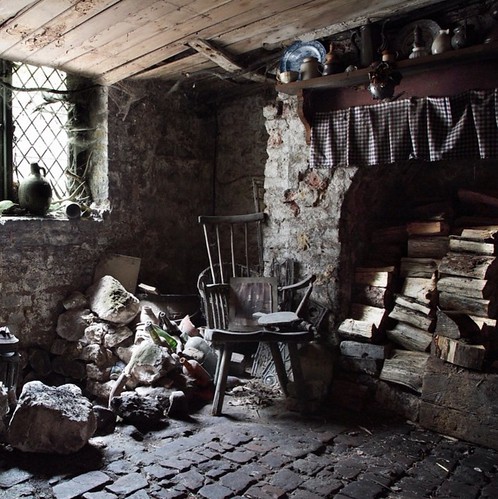
Next to the kitchen is a bare and cold cellar with cobbled floor that’s partially torn up allegedly showing the archeological fragments of St Mary’s Spital, AD 1197.  The tableau is striking.

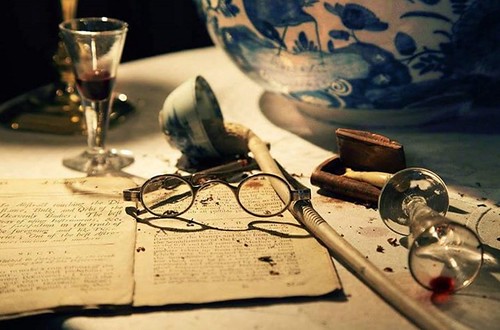
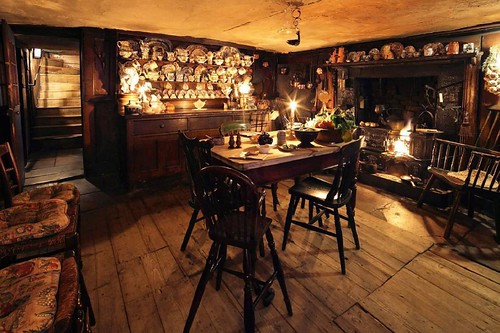
The ground floor consists of a front sitting room and dining room, where a pomegranate lies split open on the table, alongside other delicacies like whole glace oranges and items of everyday life - correspondence sitting open near a pair of reading glasses.  The next floor holds the Smoking Room, portraying a three dimensional copy of the Hogarth painting on the wall above the mantle “A Midnight Modern Conversation”, depicting a drunken party with chairs pushed to the floor, bottles overturned, and wine spilled on the table.  The main bedroom features a large fourposter bed and bed curtains but the bed itself is unmade as if the occupant just woke up.  Near the window a lady’s dress stands on a dressmaker’s dummy with a small note pinned to the bodice reading “Let out here”.

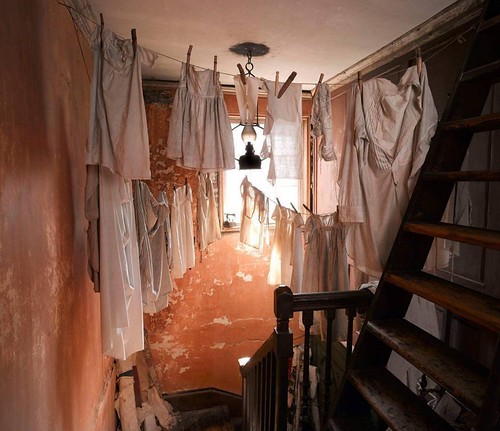
Perhaps most startling is the top floor, made up as a pair of very rundown lodging rooms rented out by the Jervis family, who, like the house itself, must have fallen on hard times.  It’s hard to tell what’s staged and what is evidence of the structure literally crumbling around you. Laundry hangs drying in the stairwell, and areas of the ceiling have collapsed exposing the wooden beams behind.  And if it gets quiet enough you can hear guns firing steadily on the soundtrack.  They’re a salute to the dead King William IV, signalling the accession to the throne of Queen Victoria.

1_Laundry
Peeling paint and photogenic laundry

1_Cat
I genuinely thought this was an exceptional work of taxidermy until it moved.  
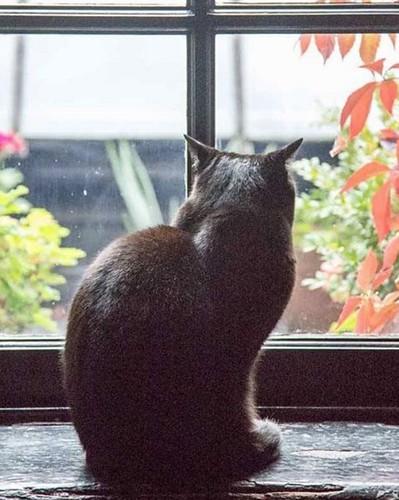
Apparently Madge the cat lives in the house!

The effect of all this, floor after floor, could be remarkable.  I say “could be” because this kind of thing always exists on a knife edge.  You really need to buy in, as does everyone in the group, for it to have the effect Severs intended.  I visited in the middle of the day, but they also run what are called “silent nights” when the house is open in the evening, which I think would enhance the experience. And if you want to pay £50 instead of the £10 I paid you can attend an Exclusive Silent Night, where you enjoy the standard silent wander and then are allowed to ensconce yourself in the room of your choice, next to the fire, whereupon you will be served a glass of champagne and allowed a free conversation with a member of the curatorial team. (Plus there's mulled wine and mince pies at Christmas!)

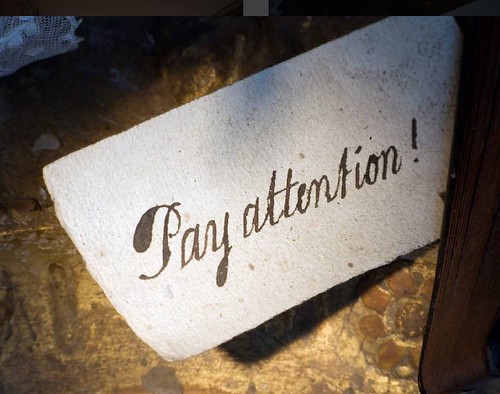
All of that would help, but in reality it is difficult to tune out the others in the group, most of whom arrive with companions and generally find it impossible to not make small comments to each other from time to time.  And there’s an inevitable amount of noise that comes from ten or twenty pairs of feet clomping around on very old floorboards.  And of course at some point someone’s phone will ring.  And sadly, almost every room had a handwritten note with some version of this text:
"Reminder. Every object in the house should be seen as part of an arrangement.  Each array tells a story.  To pick up an object in a shop is a risk, in a museum it is impossible; in a private house, particularly this one, it is simply insensitive - numb to Mr. Severs' vision."
1_Pay Attention
These notes are scattered around the house, tucked into tiny corners.  Another near the front door says: "Make no mistake... In this house it is not what you see, but what you have only just missed and are being asked to imagine."

Unfortunately, I fear I simply don’t have the temperament to make the most of this sort of thing.  This is not to say I didn’t find my visit worthwhile and enjoyable, though there are a few off notes.  For instance, despite the espoused time period of the house, there was a coronation portrait of Queen Elizabeth II above one mantle.  And I cannot fathom why there was a modern bottle of micro-brewed beer, complete with UPC coded label, on a shelf in the front sitting room.  I was so puzzled that I actually asked a staff member about it as I was leaving, thinking that perhaps some even less reverential guest than myself had left it there as a joke. The only answer I got was, “I don’t know.  Dennis was…”  Yeah.  Fill in that blank. Though whatever one might think of Dennis Severs, you have to give him credit for creating a remarkable time capsule.  And you have to be grateful to the Spitalfields Historic Buildings Trust, an architectural preservation charity, to whom Severs bequeathed the house shortly before his death in 1999.

So I did enjoy my visit, though it was short.  The whole tour, even taken at an appropriately contemplative and leisurely pace, only takes about 45 minutes.  By that time I was feeling thoroughly chilled by the effects of lingering in an old draughty house heated only by less-than-roaring fires and was very ready for lunch.  Luckily, the nearby Spitalfields Market has such an array of food choices it was slightly overwhelming.  I’d planned to simply hit a café and fill up on coffee and pastries, but was so hungry that I got a single meatball slider from a food truck, just to take the edge off.  And that slider... it was beyond good.   It was amazing. It was transcendent.  Eating that meatball slider was like looking into the face of God.

And I did eventually find a café, and after that even paid a short visit to Christ Church Spitalfields, a Nicholas Hawksmoor church from the 18th century, which turned out to be really nice.  They recently completed a very thorough renovation and it’s in fine fettle these days and well worth seeing.  Even the crypt is open and is now warm and bright and tidy and has a café and free wifi and public toilets.  Well done CCS!

And then I found my way back to Liverpool Street Station (which, by the way, has overtaken Oxford Street Station in my personal league table of Tube Stations Most Likely to Disorient You Upon Exiting).  And in a supreme act of willpower the level of which is usually reserved for hunger strikers and Leaf fans, I did not stop for eleven more meatball sliders.