Specialist Subject for the week: Words!

Sunday, August 10, 2014

Life is ticking over fairly pleasantly these days. The show I production managed on my return from Russia has finished its run, but I’m back at the same theatre doing some relatively low-key administrative work over the summer months.  It’s an undemanding way to spend my days while still keeping a bit of money coming in.  I’m also zeroing in on the next big international job too, but you’ll have to wait to hear about that one.  And I'm looking at canal boats...  In the mean time, I thought it’s been a long time since we talked about words, so today I’m digging out a few fun phrases that we haven't covered yet, starting with one that's got particular resonance for me, considering the show I just finished.

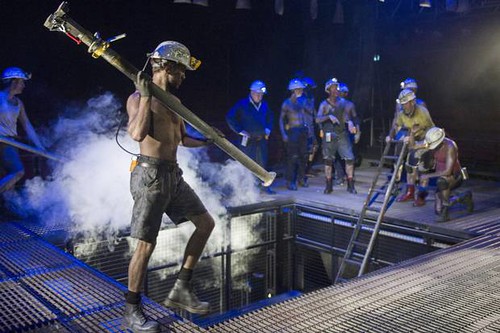
"On the coal face" = Similar to "on the shop floor". Refers to doing the actual work involved in a job, as opposed to planning or talking about it. Construction workers are at the coal face; architects are not. But it can also be used more broadly when standing around the water cooler, as in "That new CEO is a right wanker. He's got no idea what it's like for those of us on the coal face."
81WONDERLAND0207A
My boys on the coal face in "Wonderland"

"Putting the boot in" = Kicking someone when he's down. As in, "Too right about the new guy, mate! Did you see that last memo he sent out? Closing the canteen, after they announced pay cuts? That was really putting the boot in!"

"Swings and roundabouts" = Shorter form of the complete phrase "What you lose on the swings, you gain on the roundabouts." Describing a situation when there are as many advantages as disadvantages. Somewhat similar to "six of one, half a dozen of the other". Our disgruntled boys at the coal face might not like the fact that the canteen has closed, but if it means they eat fewer plates of pie and chips it might just do them some good so, you know, it's all swings and roundabouts.

Swindon Magic Roundabout
The Swindon "magic roundabout". Gordon Bennett! What twisted freak devised this abomination?

"Gordon Bennet!” = A mild expression of surprise, used in polite company to replace earthier expressions. Similar to saying “Taking the mickey” or “Taking the Michael” instead of saying “Taking the piss.” There’s much debate about which historical Gordon Bennet is immortalised in the saying. The two most popular candidates are a Scottish-born journalist and his playboy son, both of the same name. Then again, it’s quite possible the phrase doesn’t actually refer to a real figure and is simply a drawn out and sanitised version of “God” or “Gawd.” Indeed, a study of the etymology of the phrase would really require someone for whom English idioms was a Specialist Subject.

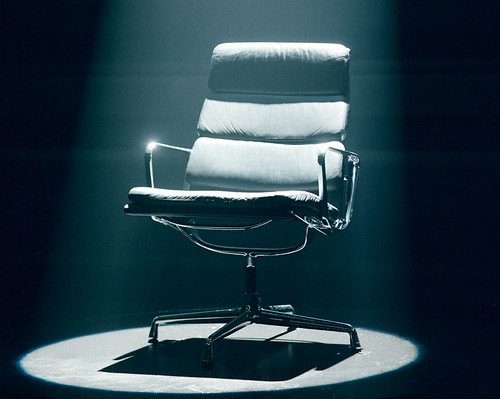
“Specialist Subject” =  Ooooooo! This is some classic modern British pop culture this is, coming from the long-running BBC tv quiz show “Mastermind”. (Not to be confused with the popular board game with coloured pegs from the 1970s). BBC’s version has been running since 1972, and is known for its challenging questions, intimidating aura and big black chair. In the first round of the show, each of four contestants takes a seat under a bright spotlight in the famous chair to answer a series of questions on a topic of their choosing, called their “specialist subject”.  A point is awarded for each correct answer given in a set period. In the second round contestants answer a series of general knowledge questions and the person with the highest score after two rounds wins. Winners go on to compete in later shows, and must nominate a new specialist subject for each new show.

The range of topics covered by peoples’ specialist subjects is vast and eclectic and has included Flag of the World, The Life and Works of Gilbert and Sullivan, the History of Lancashire Cricket Club, the Lifecycle and Habits of the Honeybee, the Franco-Prussian War, Doctor Who, and the Films of Jim Carey, the last of which produced the worst score in the history of “Mastermind, a shatteringly dismal ONE POINT, scored by Simon Curtis of West Yorkshire. (Though in fairness this was the second appearance by Mr. Curtis, who won a previous show answering questions on the rock band The Jam.) In any case, the phrase “specialist subject” has passed into the vernacular and is now used most often in a tongue-in-cheek way, as in “Oh yes, I’m quite good at opening beer bottles with my eye socket. It’s my specialist subject.”
Mastermind-chair
The famous black chair, where Simon Curtis blotted his copybook.

"Blot one's copybook" = To tarnish one's reputation. As in, “She really blotted her copybook with me when I saw her staggering up the train platform in a miniskirt and bare feet last Tuesday morning. She’d obviously been out on the tiles.”

“Out on the tiles” = One in a long long long list of phrases to do with drinking and being drunk. To be out on the tiles is to be out drinking at pubs, parties, night clubs, etc… (See also “on the lash”, “on the piss” etc…) Possibly from Ireland, where pubs are often tiled, but really who cares?  Used thusly: “I've been out on the tiles all night and I’m bursting! I need to spend a penny."

“Spend a penny” = Use the toilet. In fairness, this is an old euphemism that’s not really in use anymore other than by ladies of a certain age (who are unlikely to have been out on the tiles, but give me a bit of poetic license ok?)  It derives from the fact that it used to take a penny to open the locks on public toilets for women. Men’s urinals were free; I suppose the authorities realised that attempting to force men to pay to use a public facility would be the barest folly. As for the phrase, its death knell was tolled in 1977 when prices went up and the Daily Telegraph headlined an article “2p to spend a penny”. And that was in new money, not old money.

Spend_A_Penny
Naturally, they also took ha'pennies.

“What’s that in old money?” = Referring to the decimalisation of the pound sterling, which took place on February 15, 1971. Prior to that date, a pound was made up of 240 pence, with 12 pence in a shilling and 20 shillings in a pound. Of course. And don’t get me started on farthings and crown and guineas. Ok, too late. A farthing was a quarter of a penny (or half a ha’penny). A crown was 5 shillings, and a guineau was one pound and one shilling. Bloody hell. They might as well have been dealing in brass knuts and silver sickles. In any case, it was a cause for great debate and consternation when they decided to do away with all that malarky and simply divide the pound into one hundred pence and be done with it. Thus, the question, “What’s that in old money?” Everyone’s pretty much got the one hundred pennies thing figured out these days, so the phrase is now applied in any situation when unfamiliar units of measure are used. For instance, “What a gorgeous day! It’s supposed to get up to 31 degrees!” “31 degrees? What’s that in old money?” Or, “150 grams of flour? What’s that in old money?"

And that’s all I’ve got for you this week. Stay tuned for news on upcoming work, and to find out whether I buy a canal boat!

Messing about in boats

Sunday, July 27, 2014

“Believe me, my young friend, there is nothing - absolutely nothing - half so much worth doing as simply messing about in boats. Simply messing”

- Ratty to Mole, in The Wind in the Willows by Kenneth Grahame
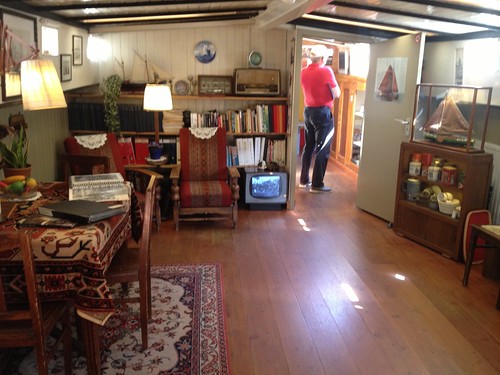
I seem to have been spending a lot of time around water and boats these days.  Obviously, Amsterdam was chock full of them, and I even went to the Houseboat Museum there, which was tiny and charming.  Closer to home, I recently re-visited the utterly fantastic curling bridge (which I've blogged about before) in order to show it off to a friend who had never heard of it despite having moored his own boat right across from the bridge a week earlier. Lately it all seems to be about boats.

Untitled
The houseboat museum interior

You might think that most of the messing about in boats that happens in London happens on the Thames, what with its international container port, fabulous bridges, and ancient seafaring history dating back to, well, long past the beginning of dating.  However, to confine London's boating scene to the river alone is to overlook the whole beguiling, charming, and sometimes well-hidden world of canals and canal boating.

Untitled
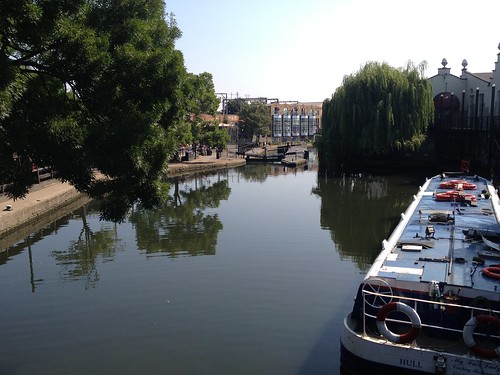
Regent's Canal, near Camden Locks

Canals, of course, are man-made waterways mostly constructed for the movement of cargo on barges.  Certainly you can move barges on rivers, but rivers have a habit of twisting inconveniently, or rushing over inhospitable precipices, or hiding big jaggedy rocks, or flooding, or running dry or, most importantly, NOT being where you want them to be in the first place.  Hence for a few centuries, people have been creating canals.  In the UK the first ones were built by... Who? Three guesses and the first two don't count... Yep.  The Romans. Of course.  But the Roman ones were mainly for irrigation.  The first industrial canals were built in the mid sixteenth century.  Sometimes canals are created by redirecting and taming existing rivers, but often it's simpler just to dig them where you want them.  London is home to quite an extensive canal network, though Google has failed to deliver to me the actual total length of canals in the city, so let's just say more than 3 miles and less than 300 and move on.

Sensing that a canal blog was becoming inevitable, I nosed around a bit and discovered the London Canal Museum.  They offer a downloadable walking tour of one section of the Regent's Canal, starting at Camden and ending at the museum near King's Cross.  This seemed a perfect activity for a sunny Saturday morning, so off I went.

Here another key difference between canals and rivers.  Rivers run; a river is constantly fed from its source with the water moving to its outlet.  Canals, on the other hand, stand; a canal is a closed system with water supplied in a controlled fashion from an outside source at the top of the canal, usually a river or reservoir, and held in the canal by gates at the other end. And where natural rivers simply tumble down over changes in elevation, canals can't do that because then the water would all flood out over the gate at the other end.  All canals are made up of flat level sections of water linked together with locks where the elevation changes. A lock is a set of gates that create a small chamber that allows you to let water in through the upstream gate to raise the boat in the chamber up to that level, or release the water through the downstream gate to lower the boat to that level.  It's a simple and elegant solution, and the canals of London are dotted with locks at regular intervals.


Since you are reading this blog you are clearly of above-average intelligence, and I don't really need to explain how locks work, but I'm going to include this video of a rather condescending and shouty man anyways, because locks are inherently Clever Things, and we here at GSWPL World Headquarters are always happy to promote such things, especially if they might include GEARS. (Which canal gates do.  Gears help open the trapdoors that allow water through the gates.  Go gears!)

The locks on London canals are operated by hand, requiring the boater to operate the gate paddles and move the big gates themselves.  And the gates are designed to meet at a mitre pointing upstream, so that the pressure of the higher water level on the opposite side pushes them tightly shut.  (Incidentally, the mitre gate design was invented by Da Vinci.  Clever boy.)

Before the railways, canals were the most efficient way of moving large volumes of cargo around the interior of England, and they became a key part of the Industrial Revolution because barges are especially well-suited for carrying the heavy cargo - coal, stone, gravel, timber, lime and cement - that fuelled the Industrial Revolution.  And because this was before the advent of motorised transport, the barges were usually towed by horses.  This is why canals always feature wide paths on one side or the other called towpaths. It's also why canals are so great for running along; towpaths are always dead flat, and it's pretty hard to get lost, because you can really only go in one of two directions.

Untitled
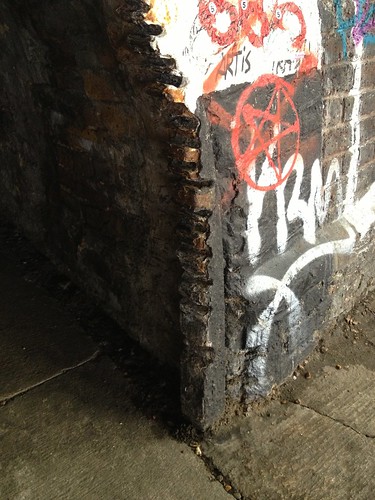
The ropes used for towing used to get so saturated with abrasive mud that when horses pulled the barges around the corners of bridges they wore grooves in the iron coverings.  See?

Untitled
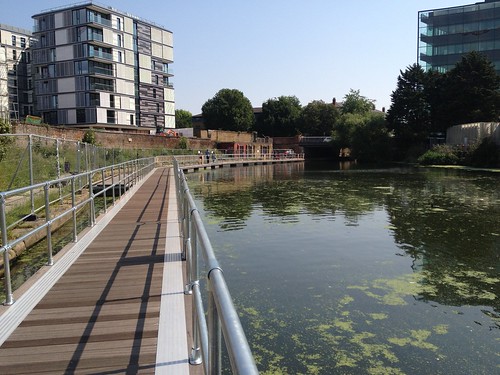
And here’s a temporary floating section of towpath near King’s Cross that's used because they’re doing building work on the towpath itself.

At one time families of bargemen lived aboard their barges in tiny little cabins at the stern of the barge.  The most iconic type of barge is a narrowboat, so named because of its narrow beam ("beam" is the boaty word for width).  A narrowboat is a bit less than 8 feet wide, but usually between 50 and 80 feet long.  This means that even in narrow canals and locks, two narrowboats can usually pass by each other.  (There are also wide beam boats that get up over 14 feet wide, but they're not as cool.)  The canal museum houses part of a narrow barge, including the living quarters of the family that would have operated it  They are decidedly cozy, even for me, a long time fan of tiny living spaces.  Imagine housing a family of four in a space about the size of the bed of a quarter ton truck, with a ceiling about six feet high, half of which is filled with cabinetry and stoves and such.  Suffice it to say that a bargeman would want to concentrate his spare time on hobbies like needlepoint or carving scenes inside human hairs rather than, say, HO gauge model railroading or breeding Irish Wolfhounds.

Untitled
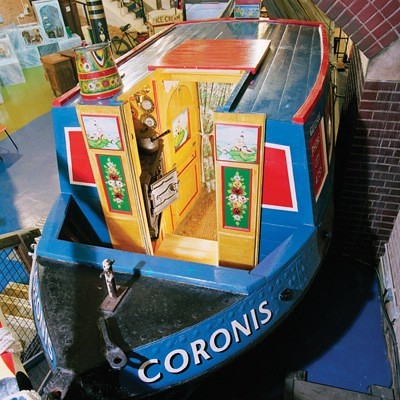
The barge in the museum, showing the hatch into the living quarters

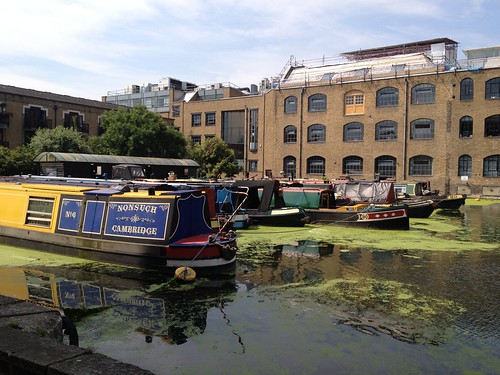
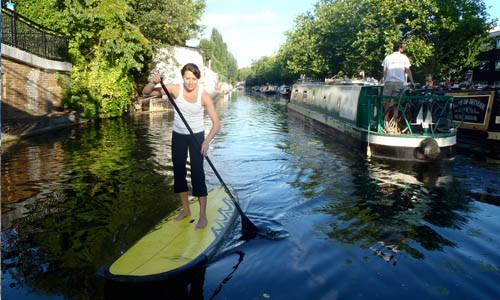
The advent of railways (and then trucking) effectively killed the industrial use of canals, and a lot of them were forgotten and fell into disrepair.  However by the mid 20th century people began to see the potential for canals to be used for leisure and recreation.  Holidaying on converted barges became popular, and gave local canal preservation societies the clout they needed to push for the refurbishment of England’s canals and locks.  Now London's canals are bustling with small boats, kayaks, and people standing on those ridiculous paddle board things, and the towpaths are full of walkers, cyclists, runners and the occasional rough sleeper in a tent tucked into the undergrowth.  More interestingly, they're also home to about 15,000 people in the UK who live aboard canal boats.

Today's narrowboats convert what used to be cargo space into living space and are often kitted out to quite a high standard with all the mod cons.  Some stay at permanent moorings where they can plug into power and water supplies and access wifi and such, but others do what's called "continuous cruising" which is not actually continuous at all, because really it's usually long stretches of staying in one place, punctuated by brief periods of moving to another place.  Depending on what part of what canal you're on, a continuous cruiser might be allowed to stay moored in one spot for up to two weeks, or might be required to move along in just a few days.

Untitled
Boats moored outside the Canal Museum.

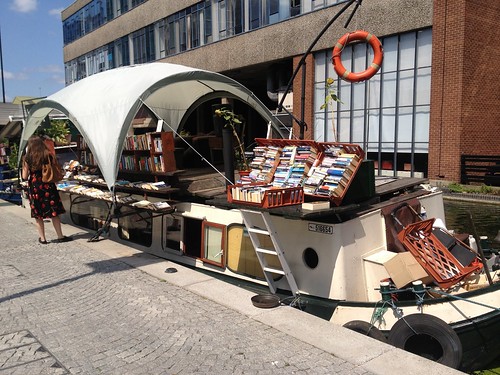
Popular mooring spots include an area near Paddington Basin, called Little Venice.  It's a gorgeous spot close to the aforementioned magic bridge, and even has some charming local amenities, like a cafe on a narrowboat and the narrowboat book shop!  There are also service barges that run up and down the canals delivering compressed gases, and pumping out septic tanks.  And there are tugboats to haul you to the nearest service station when something goes wrong.  There are even big scooper boats that go up and down skimming the inevitable layer of trash that accumulates on the water.

Untitled
The book boat!
For someone like me, with a unfulfilled longing for her own living space in Central London and a desperate sense that owning something on dry land is a far distant dream, a narrowboat is a particularly alluring option.  Never mind that my knowledge of diesel engines is confined to the notion that fuel goes in and (hopefully) a sort of chugging humming noise comes out.  I’m sure I’d be fine…  Also never mind that leaving a boat to swan off for an eight-month international gig may not be quite so simple as having your mail re-directed and remembering to get someone to feed the goldfish.*

Untitled
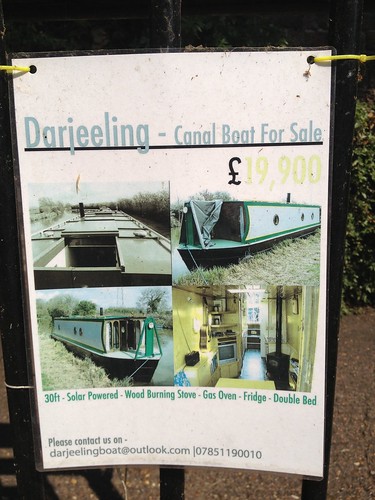
Consider this ad that I saw for a live-aboard boat.  A self-contained living space in Central London for under £20,000.

For now it's all just a dream, and my time messing around on boats is confined to boats owned by other people.  Still... why not?


* This just in... Apparently it's actually quite easy and inexpensive to have your boat put safely into dry storage for extended periods.  Hmmmm...

A Day Out: It's not just wooden shoes and windmills

Sunday, July 20, 2014

It's broken record time here at GSWPL:  London is great.  So is leaving London.  So I left.

To be more specific, I took a few days off to visit my friend Gerald in Amsterdam, which has been on my list since Gerald and I parted in Sochi at the end of our Olympic gig/ordeal.  When I did a bit of digging and realised that a flight and hotel combo deal could be had for a very reasonable cost, I took the plunge and booked myself five days away.  So I got to pal around with Gerald and see the sights with a Dutch-speaking* tour guide and you get another blog that's NOT about London. (*Though in fairness the Dutch-speaking bit was just a bonus because basically everyone in the Netherlands speaks English.  I discovered this when I was traveling and met a very nice Dutch couple in Luang Prabang.  When I asked them why the Dutch speak such good English their reply was simple: "Because nobody else speaks Dutch." They generally have their heads screwed on straight, those Netherlanders.)

Untitled
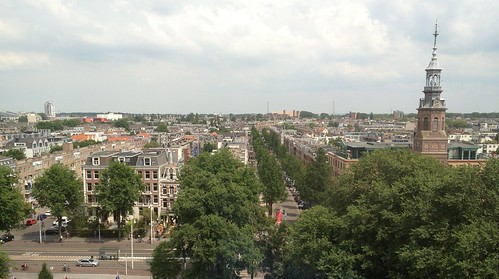
The view from my hotel

First, let's address a few terms and stereotypes.  The Netherlands is a small coastal country in north-west Europe.  The people are called Dutch and they speak a language we call Dutch but is called Nederland in Dutch. (Or, as Gerald says; "In Nederland spreken de Nederlanders Nederlands.")  And Holland?  It doesn't really exist, except as North Holland and South Holland, two provinces that contain the biggest cities, Amsterdam, Rotterdam and The Hague. (Confused? This should make things clear as mud.)

Here are the things people think of when they think of the Dutch: wooden shoes, windmills, bicycles, permissive drug laws, Amsterdam's Red Light district, tulips, Rembrandt, Van Gogh, Gouda cheese, and a particularly bloody-minded and steadfast attitude to water management.  As the saying goes, "God may have made the world, but the Dutch made Holland."  In fact, about 17% of the land in Holland has been reclaimed from the sea and only 50% of the whole country is more than a metre above sea level.  They really are clever about these things.

Untitled
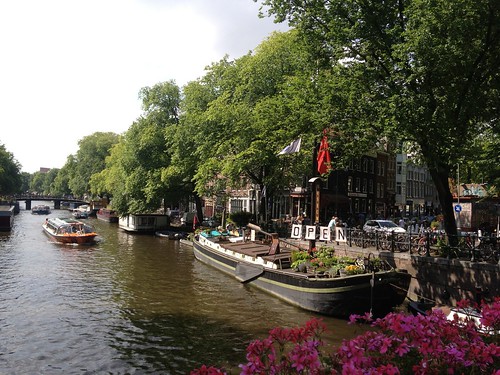
Naturally, being such masters of the water, they have a lot of canals.

Of course there's more to the country than the stereotypes.  The Netherlands is a very socially tolerant place.  They were the first country to legalise same-sex marriage (in 2001) and also have legalised prostitution, abortion and euthanasia.  And though they do have laws about consumption of drugs, they're famously sensible about not enforcing them unnecessarily.  And despite being more densely populated than anywhere expect Bangladesh, Taiwan, and South Korea, they are also the world's second largest exporter of agricultural products (after the US).

So, despite claiming that there's more to Holland than wooden shoes and windmills, what am I going to talk about?  Wooden shoes and windmills!  Because while I was there I saw a lot of both, and in fact they’re both kinda cool.

First the shoes, called klompen in Dutch, which I think is wonderfully onomatopoeic.  One of the fun things Gerald and I did was to the small town of Volendam and the (former) island of Marken.  I say "former" island because Marken is now connected to the mainland with a long skinny dike that forms part of the coastal defences that keep Holland's feet dry.  The island is a popular tourist spot because some of the locals still wear typical Dutch clothing and wooden shoes.  Wooden shoes are apparently quite practical. (Of course they are.  They're DUTCH.) Made of poplar, the raw materials are cheap, they're easy to slip on and off at the door, they're waterproof and they're even classified as safety shoes equivalent to steel-toes. Proponents also claim they're comfortable, though I tried on a few different pairs and didn't decide to toss out my hush puppies.  Nevertheless we did see an old guy pedalling around Marken in his klompen, and Wikipedia claims that more than three million pairs are made every year, not all of which are sold to tourists, so obviously people wear them.

Untitled
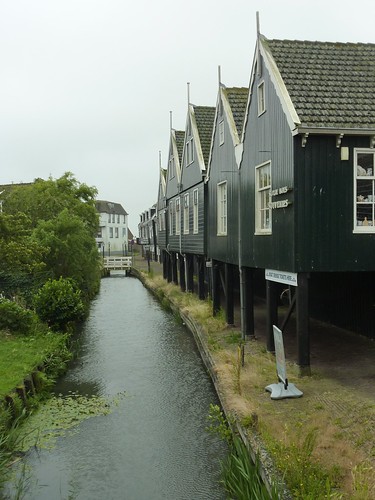
Another oft-mentioned feature of Marken is that the fishermen's houses were built up on stilts to escape periodic flooding, though now that they have the water more or less under control, most people have closed in the lower level of their houses, probably for ping pong tables and klompen storage. (Ok, I made that last part up.  They might also store cheese and reefers.)

The weather on the day that Gerald and I went was somewhat nasty, but we persevered and made our way to the main attraction on Marken, the wooden shoe factory, which turned out to be quite excellent.  Mostly this was because it was full of machines-that-make-interesting-things-out-of-wood, which are one of my favourite things, after gears.  The woman at the wooden shoe factory gave a little demonstration of how they make the klompen, though even I, with my greater-than-average knowledge of machines-that-make-interesting-things-out-of-wood, had some trouble grasping how some of it worked, which I guess is a testament to Dutch cleverness.

Untitled
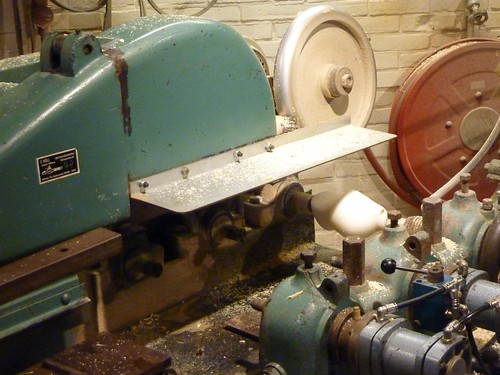
This is the first machine, which shapes the outside of the clog.  

The machine works a lot like a key-cutting machine.  A model shoe is put on one side of the machine on a spinning thingy, and the blank bit of wood is put on another spinning thingy on the other side. (Stop me if I'm getting too technical...) Then an arm follows the contours of the spinning model shoe, causing a blade to carve away at the spinning blank.  (I know what you’re thinking.  You’re thinking “Hang on, that thing is spinning like a lathe, so how can it make a shape that’s not rotationally symmetrical?”  Answer: because it actually spins relatively slowly.  See this helpful Youtube video.)  The shoes then go onto a similar machine equipped with digg-y sort of drill bits to hollow out the shoe, using a similar technique to the shaping machine, with a model shoe determining the shape of the hollow.  The making of wooden shoes creates a LOT of wood chips, which the pragmatic Dutch then use to smoke fish, particularly eel.  (I tried the smoked eel, called paling, for my lunch in Volendam and found it quite delicate and pleasant.)

Untitled
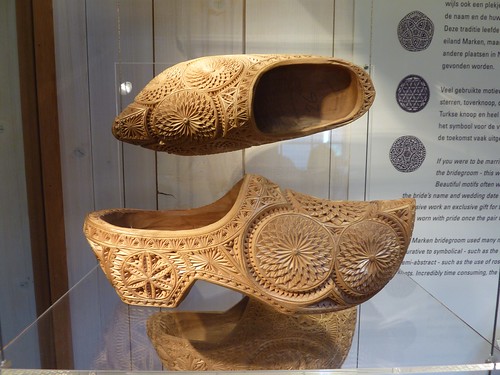
The most charming thing about the wooden shoe factory was the story the woman told about this particularly fancy style of klompen called wedding shoes.

Unsurprisingly, fishermen from Marken used to spend a long periods of time at sea, and would fill the long hours when they weren't actually fishing by decorating a very special pair of klompen to be presented to their sweethearts when they got back to port.  Traditionally the shoes would be left outside the woman's home over night and if they were gone the next morning, that meant the woman had accepted the fisherman's proposal and a wedding would follow.  If they were still there the next day then the poor guy was out of luck.  This is what happened to our heroine's father, who made a pair of wedding clogs for her mother only to be rejected.  He tried again, but was rejected again.  Finally, he tried a third time and yet again he was rebuffed.  However, he did not give up his quest.  He did, however, give up on the fancy wooden shoe thing and made a trip to Amsterdam, where he bought a diamond ring which he presented to the woman in question.  She finally accepted this token and thus, decades later, there came to be a woman operating the klompen machines on the (former) island of Marken.  Awwww.

But enough about the wooden shoes, because what’s even cooler than wooden shoes? Windmills!  Not content to simply slouch around Amsterdam drinking coffee, Gerald and I took in another tourist spot just outside the city, the charming historic area of Zaanse Schans. (For those of you from Calgary, think of it as the Dutch equivalent to Heritage Park.)  Zaanse Schans is a small cluster of historic houses, barns, workshops and windmills a short train ride from Amsterdam Central Station.  It’s a bit oversupplied with souvenir shops selling wooden shoes, cheese, tulip bulbs, Delft-ware and more wooden shoes, but it does have ten working windmills, one of which we visited.

Untitled
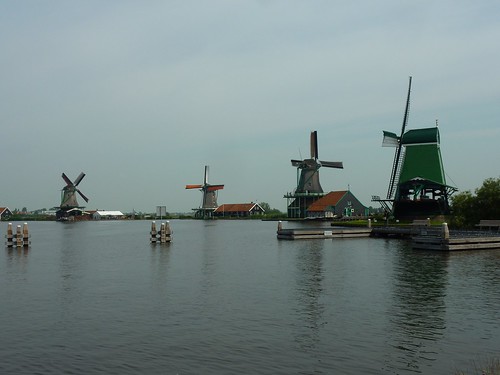
Mandatory picture of windmills

Of course windmills are used for milling grain, hence the term windMILL, but they're also used for a number of other tasks. In Holland, wind power was often used to operate pumps for keeping reclaimed land dry and arable. (Though in this case they should really be called windpumps because no actual milling takes place).  Mills can also be used for grinding nuts and seeds for oil, threshing, processing pigments for paint and sawing wood.  The mill that we visited in Zaanse Schans was a sawmill, and was unique in that it was built only seven years ago, from plans taken from an old mill that was demolished in 1942.  We got to watch a lovely video about the construction of the mill, which started, naturally, with the reclamation of a bit of land on the waterfront on which to build.  (I loved that.  It’s soooooo Dutch.  No room for a new windmill?  No problem.  We’ll just make a new bit of land.)

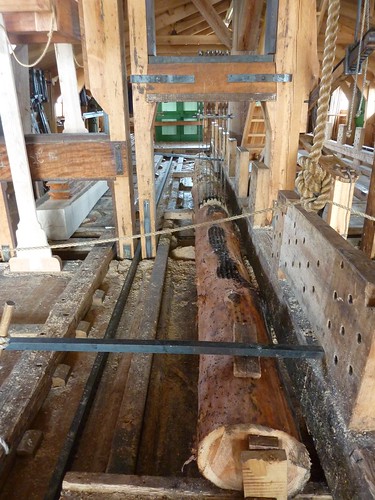
The sawmill was gorgeous, full of the scent of fresh sawdust, and pleasingly deserted when we visited. This meant that the miller was very happy to chat indefinitely about the workings of the mill (in perfect English).  The wind was still, so we didn’t get to see all the machinery moving, but this did mean we could get right up close and see all the parts.

Untitled
And take pictures. Hilariously, when I asked the miller if it was ok to take pictures he said, “Of course it is.  We’re not in Russia!”

The logs bound for the mill get floated up to a dock just outside the doors where they’re then hauled into position (by the power of the mill) onto a sliding sled.  The sled then moves the log slowly forward (again powered by the mill), with the speed governed by an adjustable ratchet system.  When the log moves forward, it passes through the saw frame, which is equipped with a number of saw blades that move up and down, powered by a large and smelly diesel engine out back. (Not really.)  It takes about 3-4 hours for a large log to be completely sawn with wind power, so they’re not breaking any speed records, but they do still operate commercially, selling the beams and planks they produce to help keep the mill running.  It’s staffed entirely by volunteers, and if I lived nearby I think I would very much like to spend a few days a month learning how to operate a wind-powered sawmill.  I might even get myself a pair of wooden shoes to do it in.

All in all, the Amsterdam visit was great.  Of course we did a lot more than just muck about with wooden shoes and windmills.  We went to the Rijksmuseum and the Van Gogh museum, both of which were excellent.  And we wandered the Red Light district at dusk (a bit depressing).  And we ate a lot of fun Dutch food, like poffertjes and kroket and patat oorlog and drank lashings of strong Dutch coffee.  And we watched a crushingly boring and disappointing World Cup semi-final match that resulted in there being a lot of very sad orange-clad people and decorations hanging about.  And we visited a house boat and cruised on the canals.  (All of which appear in the Flickr album called "Amsterdam Redux".)  I think I pretty much ticked all the boxes for visiting Holland, but that doesn't mean I won't go back. It just means that when I do I can concentrate on the more important things.

Untitled
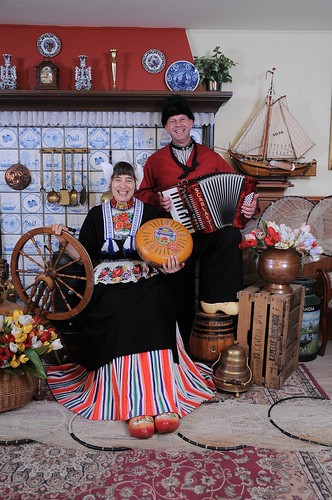
Like eating and drinking and having my picture taken dressed in traditional Dutch clothing while holding a giant wheel of cheese.  Of course.

GRUB!: New York City Style

Sunday, July 13, 2014

It’s the height of summer in London and the weather is fine and I’m between jobs so I’ve got some time to put my feet up, sip a glass of Pimm’s, and get a bit of back-blogging done. (That’s blogging about something that happened months ago because you don’t have the energy or motivation to go seek out something new.)  Some of you may recall that I spent a few days in New York City right after I got back from Russia.  (I’m really getting around these days, aren’t I?  Vacation in New York City, wedding in Italy, oh, and did I mention I just spent a week in Amsterdam?  Yeah, life is good.)  But back to New York... it was a great vacation, made even better because it was my first ever trip to New York, and I got to share it with my good friends Karen and Steve, who astute Go Stay Work Play Live readers will remember from multiple posts, most recently about Afternoon Tea.


photoY059AA63
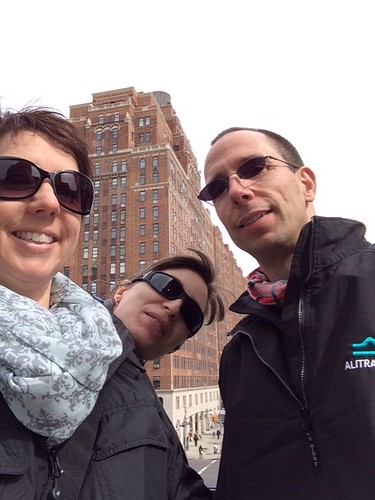
See?  We were really there!  That huge brick building in the background is the massive London Terrace apartment block which covers an entire city block in Chelsea and contains more than 1,700 individual apartments.

So yeah… New York City.  It’s actually a bit weird that I hadn’t visited before.  I flatter myself that I’m pretty well travelled by this point so to have missed one of the greatest cities on earth seems a bit of an oversight.  No matter, I’ve been there now and it was definitely worth the wait.  And it was great to be there with Karen and Steve, who’ve been before and so had a bit of local knowledge.  They also had a lot more time to prepare than I did, considering I was coming straight off a big gig in a weird place.  I managed to acquire a guidebook for New York and dig out the appropriate plug adapters from my now-impressive arsenal, but that’s about as much prep as I had.

No, wait, I did have one very important document, provided to me by a friend and colleague from Sochi gig, Anne.  She lives in New York and sent me her personal guide to New York City, which turned out to be a highly useful document full of expert tips, mostly to do with what to eat and how to find it.  Thus armed with Anne’s insider info and Karen and Steve’s exhaustive research, we proceeded to eat our way across the island of Manhattan.  Here’s a little sample of the highlights:

1. Doughnut Plant

Thank you to Anne for this one.  Her guide included a walk through the Flat Iron / Chelsea area, which included a recommendation to visit Doughnut Plant on 23rd Street, between 7th and 8th Avenue at the famous Chelsea Hotel.  One of the original gourmet doughnut shops, Doughnut Plant is justifiably famous for its sophisticated flavour combinations, innovative square jelly-filled doughnuts, and use of fresh seasonal fruit and freshly roasted nuts in their glazes and toppings.

Untitled
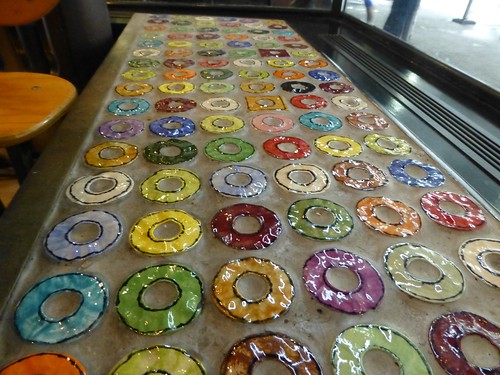
They also have fun decor, including this glazed doughnut bench.

Untitled
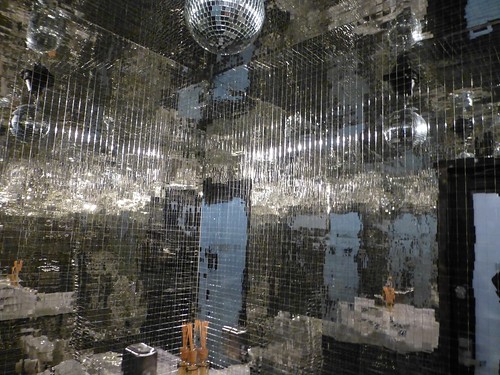
And the trippiest bathroom I've seen in a while...

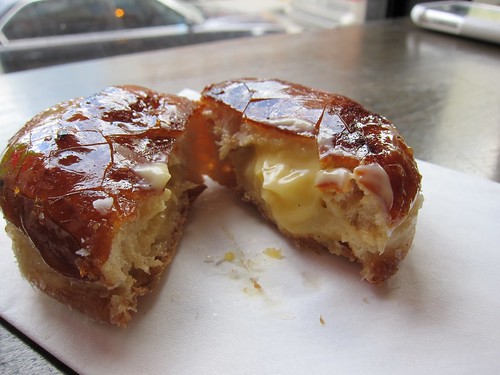
We sampled a few varieties: a cream-filled, glazed tres leches cake donut, a stunning peanut butter and jelly and their signature crème brûlée doughnut with a perfect hard sugar topping and custard filling.  Along with a good cup of coffee, it was special enough that I went back again a few days later with Anne.  Don't judge me.  You would have done the same thing given the chance.

Creme Brulee Donut
Crème brûlée doughnut!

2. Soul Food

One of the things on Steve's To Do list for this trip was a walking tour of Harlem, followed by a soul food supper.  The Harlem tour was interesting, sure, but I think we all agreed the highlight was supper at Sylvia's Restaurant.  Sylvia's is a Harlem institution, first opened in 1962, so while there were other options close by, we figured we might as well go straight to the source.  It wasn't what I was expecting - I figured on a more diner/ greasy spoon vibe, but Sylvia's is a proper sit-down restaurant with super-friendly attentive table service.

Karen was keen to try the chicken and waffles combo, which has always struck me as an unlikely combination.  I'm curious as to how it arose, and wonder why no one has ever suggested, say, Roast Beef & Pancakes or perhaps Fish 'n' French Toast.

Chips
I figured I didn't need to bother with the waffles since we'd already sampled this delightful offering from the good people at Lay's.  They were weirdly tasty.

Steve and I opted for the traditional Southern fried chicken which came with a dizzying choice of side dishes including buttered corn, okra and tomato gumbo, black-eyed peas, candied yams and pickled beets.  We both opted for collard greens and mac & cheese, and we were not disappointed.  The fried chicken also comes with a "smothered" option, meaning the whole lot is covered in gravy.  I was uncertain.  Gravy is, of course, an inherently Good Thing, but the term "smothered" was potentially alarming, leading to visions of lovely crispy fried chicken losing all it's crunchy yumminess under a coating of stodge.  I needn't have feared because our helpful server simply suggested I have the gravy on the side, which was such a clear and brilliant thought that my problem was solved and her tip instantly rocketed into the lavishly generous zone.

Soul food
Fried chicken, greens and mac & cheese.  And beer, of course.  The portions were generous, but it was America after all.

Fried chicken has never been a favourite food of mine; I'm not overly fond of anything that required you to separate meat from bone at the table, especially if it involves active gnawing. However, I'll happily make an exception the next time I'm in Harlem and visit Sylvia's again, I'll just need to make sure to fast for three days beforehand, or simply run there and back from Vermont.

3. Black and White cookies
Jerry Seinfeld: "Oh look Elaine, the black and white cookie. I love the black and white. Two races of flavor living side by side in harmony. It's a wonderful thing, isn't it?"
Elaine: "You know, I often wonder what you'll be like when you're senile."
Jerry: "I'm looking forward to it."
Elaine: "Yeah, I think it'll be a very smooth transition for you."

- Jerry and Elaine, in "The Dinner Party"

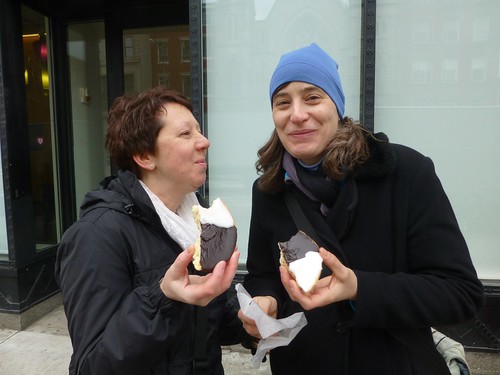
The famous black and white cookie, a nice little pitstop encountered at a random bakery during a random walk, on a day when we must have covered about 15 miles on foot.  (No, really.)  They're plain but classic - a simple, soft sugar cookie covered with half vanilla and half chocolate icing.  Great for sharing, and for a nice photo op:


Untitled
Clearly Karen loves my blue toque

4. Chopped Liver

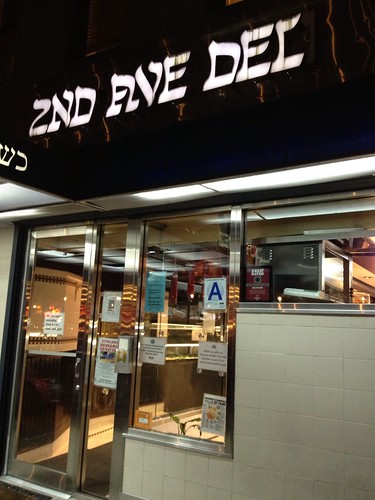
I saved this for last because honestly, it was life-changing.  Along with soul food the other thing on the To Do list was a meal at a real New York deli. Most visitors to New York will opt for Katz's, the most famous deli in New York.  Instead, we decided to try to find a more local, neighbourhoody place. Karen exercised her Googling skills and found Second Avenue Deli, just a short walk from our hotel (though, paradoxically, not actually on Second Avenue).

Deli
It fit the bill exactly.

You could tell right away this was the kind of place that locals frequent.  Across from us two young guys in yarmulkes were putting away an astonishing volume of food with a sort of grim determination that made their meal seem more like a chore than a pleasure.  And a young family sat not far away introducing their little boy to the joys of matzo ball soup. Karen opted for a bowl of the same, along with a pickle juice martini.  We also got a complimentary dish of dill pickles, half sour pickles and coleslaw, which made for a very promising start.  (Pickles are something of an obsession for Karen, which led us, on an earlier night, to sample the deep-fried pickles at a local brew pub.  Surprisingly not bad.)

Deli
Karen, happy with her soup, which was served with lovely slices of challah.

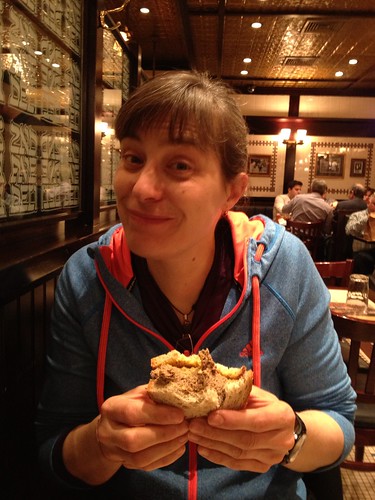
I've always been a fan of chopped liver, so I took the road less travelled and ordered potato latkes and a chopped liver sandwich.  I would not be disappointed.  My latke/chopped liver benchmark was set some decades ago at The Main restaurant in Montreal, where the latkes are generally sublime but the chopped liver has always been a bit dry.  Not so at Second Avenue Deli.  (The Main, incidentally, always plays second fiddle to the much more popular Schwartz's just down the block, much like the Katz's-Second Avenue scenario...)  My sandwich arrived and turned out to be a typically out-sized New York offering.  I'd estimate there was at least 3/4 of a cup of chopped liver on EACH SIDE of that sandwich.  And when I tasted it... Oh. My. God.  I made a sort of "Are you kidding me?" face because it was unbelievably good.  Smooth, creamy, moist and positively singing with the flavour of caramelised onions.  It was transcendent.  I was completely floored.

Deli
Soooooo good.  And soooooo much.  If we'd been staying in NY another day I would have taken some of this back to the hotel for later snacking.  As it was, I just ate it all.  It was much much too good to leave behind.  Plus, apparently that's what you do in New York.  You eat until you're begging for mercy, and then you have a hot dog.

As evidence of the heavenly nature of Second Avenue Deli's chopped liver, I offer this anecdote:

Steve is a great guy to travel with because he's got that naturally gregarious sort of nature that means he can strike up a friendly conversation with just about anyone, and frequently does.  So after the determined young men across the aisle finally departed and were replaced by two women - obviously tourists - Steve ended up chatting with them as they contemplated the menu.  Still in the throes of ecstasy over my chopped liver sandwich, and gamely making my way through the second half, I quickly suggested to one woman that she must try it. "Seriously, it is life-changing." I said.  She demurred... She liked chopped liver, but her friend was not a fan, so she was wavering.  Quickly the waiter offered her a small taste on a plate and her face when she sampled it was exactly the same "Are you kidding me?" face I'd made just minutes earlier.  "See what I mean?" I said.  And she ordered the chopped liver.  I rest my case.

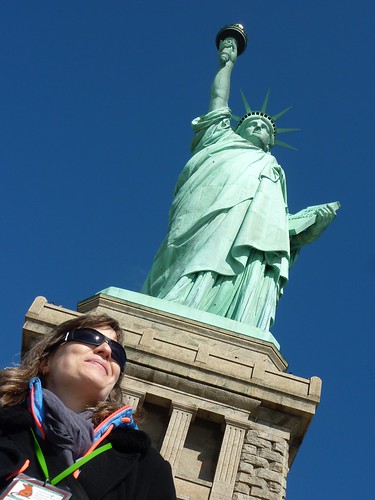
So yeah, New York was great.  And I didn't even tell you about Papaya Dogs (No papayas are harmed in the making of Papaya King Hotdogs), or the oyster po' boy at Chelsea Market, or the crazy good concrete from Shake Shack (A concrete is frozen custard mixed with awesomeness, in this case a heady combination of chocolate frozen custard, peanut butter sauce, chocolate covered pretzels and marshmallow sauce.  Better still, Shake Shack now has a branch open at Covent Garden! Yay!).  Of course we also did all the mandatory tourist stuff: we saw a Broadway show, went up the Empire State Building, walked the Brooklyn Bridge and explored newly trendy DUMBO, strolled the Guggenheim, visited Tiffany’s, saw Wall Street, sailed to the Statue of Liberty, and visited Central Park.  Maybe I'll even blog about that some day.  For now, you can check out some photos at the NYC Flickr album, and start to plan the menu for your next visit to New York.  Just remember to save room for the chopped liver.

Untitled
Mandatory New York-y photo of Pam.

The Italian Wedding

Friday, July 4, 2014

Insert standard blah blah blah about lack of bloggage here...  I've actually been working!  I just opened a challenging show that kept me busy through all of June, hence the radio silence. Though truthfully, I wasn't busy for ALL of June.  I did take a quick break at the beginning of the month.  'Cause you know how sometimes you just need a few days on the Italian Riviera? Of course you do.  After eight months in Russia, I'm very happy to be back in London, that's certain.  However, one of the lovely things about living in London is how easy it is to get OUT of.  A two hour flight from Winnipeg will get you perhaps to Toronto or Calgary or maybe Chicago if you're feeling daring.  A two hour flight from London will get you most of Western Europe.  France, Belgium, Netherlands, Germany, Switzerland, Czech Republic, and, of course, much of Italy.

I was pretty excited when I got my friend Jeremy's save-the-date email while I was still up to my eyeballs in Russia.  The notion of jetting off to attend a weekend wedding in Italy reminded me that there was a better life waiting for me to dive back into it when I got home and was a much needed pick-me-up that helped get me through those last hard months of hard graft in Sochi.  And what better excuse than to witness the happy union of my good friend Jeremy and his lovey Italian fiancé Paola?  (Astute Go Stay Work Play Live readers will remember Jeremy from previous posts about cheese and football.) (Those were two different posts, thankfully.  The mind reels at the notion of combining the two in any kind of cohesive way... "And here comes Wayne Rooney up the middle challenging for the net... But wait, what's this?  He seems to have slipped on a large wheel of Camembert and he's lost control of the ball.  Such a shame since he'd already negotiated the Gouda and the legendarily devilish Port Salut...")

As I'm currently enjoying a freelance (semi-slacker) lifestyle, I booked myself and extra extra extra long weekend, found a reasonable hotel in Santa Margherita Ligure - Paola's home town and the base for the weekend's festivities - and got a cheap flight to Pisa.  After a reasonable train ride from Pisa, I was happily ensconced in the very friendly and eminently pleasant Hotel Minerva, which I highly recommend the next time you've got a wedding to attend in the Porto Fino area.

Untitled
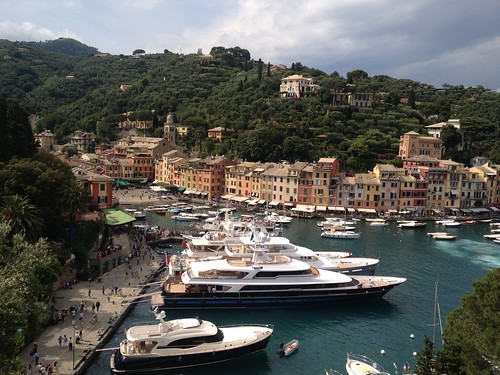
Portofino, playground of the rich and famous.  Most of the guests stayed in Santa Margherita, where hotels were more reasonably priced, though there was a much lower chance of bumping into George Clooney.

Understanding that people would probably want to see some of the area while there, and keen to make their guests feel welcome, Jeremey and Paola organised a walk on Saturday, for which we were warned to bring sturdy shoes, plenty of water, and swimming clothes.  It all sounded quite promising.  Especially the part where we took the bus to the starting point at the top of the ridge, instead of slogging all the way on foot.

Untitled
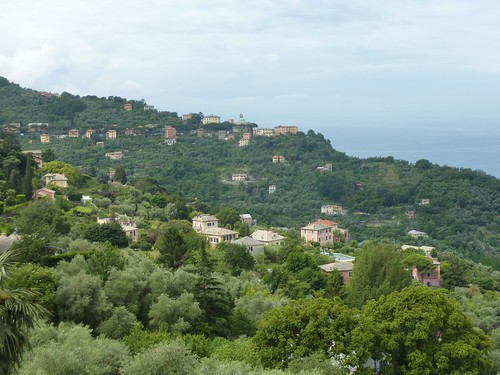
Here's the view from our starting point in the village of Ruta.

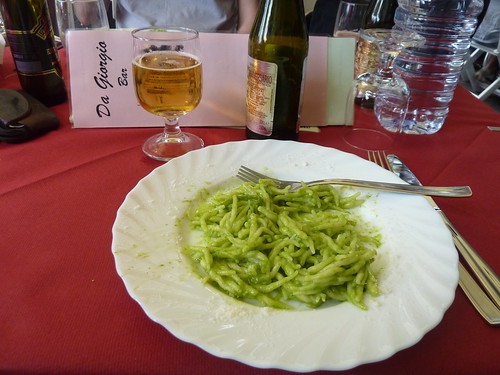
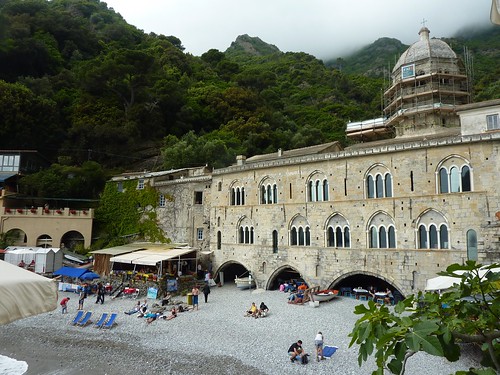
The scenery was undoubtedly lovely, and about a dozen of us set off from Ruta around 11am, heading down to the coast at the Abbey of San Fruttuoso, which is only accessible by sea or on foot.  However, on a continuum starting with "pleasant amble" and ending with "Bataan Death March", this walk was rather uncomfortably farther towards the Death March end of the spectrum than I think many of us were expecting.  Especially those who had ignored the advice about wearing sensible shoes.  Luckily the Abbey proved to be a worthy target, if only because there was time for a swim and, more importantly, a choice of cafés serving beer and lunch.  I had the local Ligurian specialty, trofie with pesto.  They're a little twisty shaped pasta not miles from fusili served with basil pesto (which originates in the region) and small bits of cooked potato.

Untitled
One of many pictures of food from the trip.  View that all at the Flickr set, here.

Untitled
Oh yeah... and the abbey

After the Abbey we climbed back up over another ridge and descended again into Porto Fino, then on to a swimming spot a bit further on for a quick dip, and then finally dragged ourselves back to Santa Margherita with enough time to shower and rest a bit before seeking out supper.  Unsurprisingly, great food was a bit of a theme for the weekend.  Despite the fact that we wandered around town Saturday night for a disspiriting amount of time before finally finding a restaurant with an open table, the fare when we were finally fed was fantastic.  I developed a real taste for the local anchovies, which are nothing like the super salt tinned variety (though those are good too).  Served fresh and marinated in a squeeze of lemon, oil and vinegar, they were light and lovely.  Equally excellent was the other local pasta speciality, pansotti with walnut sauce.  And the gelato.  Oh, and I was introduced to cantucci vin santo, a dessert sort of thing that involving little crunchy biscotti that you dip into a glass of strong dessert wine.  And... well I could go on and on.  Suffice it to say that basically nothing that passed my lips that weekend was less than memorable.

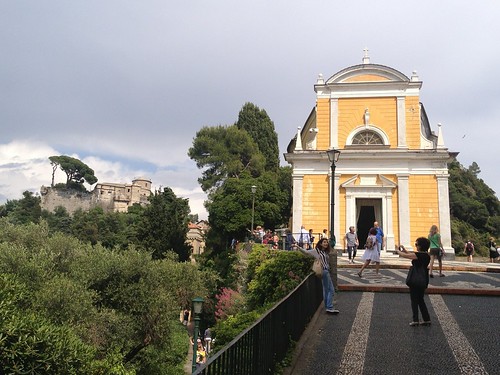
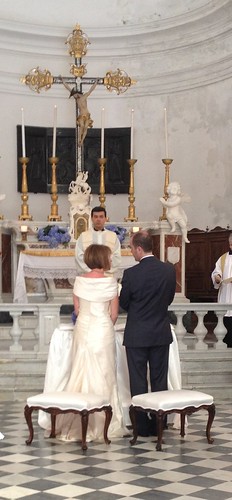
Despite dire weather forecasts, the wedding day turned out warm and sunny.  The church of St Giorgio is impossibly picturesque, perched on the peninsula at Portofino.  It's tiny, a bit rundown in a wonderfully appealing wabi-sabi kind of way, and utterly perfect.

Untitled
See what I mean?  And that castle you can just see further up on the left?  That's Castello Brown, site of the reception.

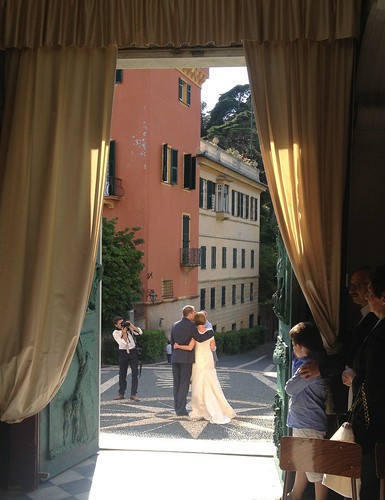
The ceremony itself was simple and bilingual, conducted by a tag-team duo that included the local Italian priest (who looked a bit like a sexy Mr. Bean, especially after the ceremony when he took off his vestments and put on sunglasses) and an imported vicar from London who could have come from Central Casting.  Jeremy even said part of his vows in what sounded like very credible Italian.

Untitled
Obligatory wedding photo.  See what I mean about Mr. Bean?

The reception was at the aforementioned Castello Brown, further up the hill.  In fact, climbing up and down hills was a consistent theme of the weekend, and the wedding day was no exception.  (People who live their whole lives in the area must have thighs of steel...).  It was a casual reception which allowed the guests to mingle and chat and linger for unseemly amounts of time at the tables of food, which was (broken record time) excellent.  Prosecco was served, of course, along with a really pleasant sparkling red wine. (Yes, sparkling RED. Though Jeremy has pointed out that it's actually called frizzante.) And there was a table of local proscuitto, served in that European way where the whole leg of the pig is displayed on a stand and paper-thin slices are carved off one by one.  And of course there was a whole spread of cheeses which culminated, late in the evening, with the unveiling of a particularly brilliant and decadent form of mozzarella called burrata.  It's made from regular fresh buffalo or cow's milk mozzarella that's formed into a sort of pouch and filled with more mozzarella scraps and fresh cream before being closed up again. This turns it into a rich gooey mess to be scooped up with bread and it is amazing.  Really, you should all go seek out some burrata right now.  Go ahead.  I'll wait.

Pesto
There was even a demonstration by the head catering guy, who made a fresh batch of traditional Ligurian basil pesto with a mortar and pestle.

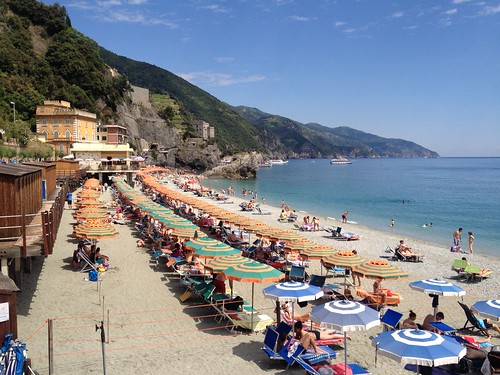
Monday, the day after the wedding, was a quiet one in which I tried unsuccessfully to visit the Cinque Terra.  I say unsuccessfully, though I did actually get to Monterosso by midafternoon. I got a late start not because I slept in, but because I faffed around uncertainly for far too long before finally getting on a train, then arrived late enough that I was worried about making it back to Santa Margherita in time to meet up with the gang for pre-dinner drinks.  So there I was, on a sunny day in Monterosso preparing to do the hike to the next town along the coast. But really was quite hot and it was quite late, and the place was positively crammed with tourists because it was a holiday in Italy.  And so, despite the effort of getting there, and the absolutely unforgivable notion that I would come all the way to Italy and make it all the way to the Cinque Terra and then think "Meh, not today", I did in fact think, "Meh, not today", got back on the train, and went back to Santa Margherita.  (Arguments, abuse, death threats, etc... from anyone who's not been to Italy, let alone to the Cinque Terra can be addressed to gostayworkplaylive@gmail.com.)

Cinque Terra
Here's what I missed. Meh.

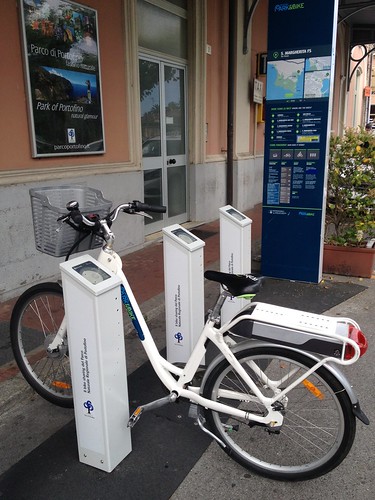
Then again, I did have a pretty cool evening, which started with a ride across the hills above Santa Margherita on an electric bike.  They have an excellent cycle hire scheme in the area which includes not just standard issue tank-like hire bikes that you see all over, but also a good number of bikes equipped with electric motors that assist you when you're pedalling.

Pedelec
Pedelec!

It's disconcerting at first, since the motor kicks in automatically, so you've got to be on your toes.  Nonetheless, it's really the only way to go in such a hilly area.  This was brought home to us after we'd breezed across the ridge to a cliff-side bar to watch the sun set over the Mediterranean.  A couple of drinks in we wondered what had happened to one of our number when he finally arrived, late, sweaty-faced and worn out, because his particular hire bike turned out to have a bad motor and he'd had to cycle all the way there under his own steam. We were all heartily impressed with his fortitude and didn't even blink when he ordered two beers at once and settled down to take in the view.

Untitled
Which was not bad.  And was followed by the longest downhill cycle EVER.  I think I pedalled three times in about 5 km.  And then we went for dinner.  Of course.

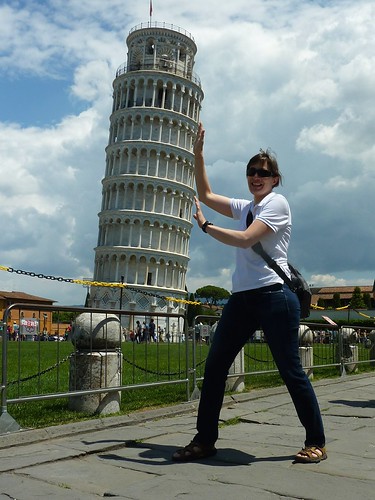
Tuesday morning it was back to real life in London, but not before a quick pitstop on the way to the airport in Pisa.  I may have missed the Cinque Terra, but at least I can tick this one off the bucket list:

Untitled
There's an interesting sociological study to be done at the Leaning Tower having to do with the division between people who have their picture taken holding the tower up and those who appear to be pushing it over.  Fascinating.

After that I had just enough time for one last scoop of gelato before getting the bus to the airport and diving head first back into work, from which I've just resurfaced.  It really was a great weekend: a real treat to see a part of Italy I've never visited before, a chance to hang out with good friends and eat fantastic food, and, most importantly, an honour and a pleasure to be part of such a happy event.

fab28384-04af-4308-9e04-aa1e53bb700a
Congratulations Jeremy and Paola, and best wishes for a long and happy life together, filled with love, smooth sailing, and mozzarella.

Off the tourist track: Brockwell Park

Saturday, June 7, 2014

A stunning, warm sunny Sunday and a curiously empty (or, more accurately, "steadfastly ignored") To Do list meant that a little while ago I dusted off my sandals, put on short sleeved shirt, and made the five minute walk to enjoy one of Brixton's gems: Brockwell Park.  If Windrush Square and Brixton Market are the bustling urban heart of the neighbourhood, the Brockwell Park is its leafy alter-ego.  And the fact that it's one of London's lesser-known parks means that unlike Hyde Park, Regent's Park, Hampstead Heath, or even Clapham Common, I'd venture to say the Brockwell Park is used and enjoyed almost exclusively by people who live in the area, which makes it feels kind of like our little secret.

photo.PNG
It's big! And look, there's a swimming pool!

The park is a an unexpectedly large green space - about 125 acres in total.  I run through it regularly - in sun, rain and snow.  A couple of laps of the 3-ish km outer loop is hilly enough to be a workout, but close enough to home to feel like no big deal.  I’ve hashed through it, done cycle safety lessons there, attended a big top circus, and even raided the gardeners’ rubbish heaps for branches to become part of a very low budget show.  It's also the site of numerous community events, like the Lambeth Country Show, free outdoor film screenings, an annual dog show and frequent fun fairs of various sorts. (It's a charming feature of life here.  In Canada those low-rent itinerant fairs that feature spinning rides, bouncy castles, whack-a-moles games and deep-fried food tend to pop up in suburban shopping mall parking lots.  Here they spread out in parks, which makes the same tired attractions infinitley much more appealing.)

(null)
The park, with views north to the Shard.

The history of Brockwell Park dates back to at least the fourteenth century when it was part of St. Thomas' Hospital, then a monastic establishment.  After Henry VIII had his little hissy fit and seized church lands it became part of several private estates, finally settling in the hands of the Tulse family around 1650.  The Tulses are important because they lent their name to the adjacent neighbourhood, Tulse Hill.  (Oh, and Sir Henry Tulse was Lord Mayor of London at one point, but that title changes hands every year so I think that eventually everybody who's really posh gets a crack.)  More important in the history of Brockwell Park is John Blades who eventually came to own the land and who built Brockwell Hall in 1811, and landscaped much of the current park.

Brockwell Hall, at the top of the hill in the middle of the park, has some pretty reasonable views over the city - north at the aforementioned Shard and the City, northwest to Battersea Power Station, and south to the Crystal Palace radio tower.  It also has ice cream!

Brockwell Park was officially opened as a public space in 1892 by the Earl of Roseberry, who actually had a pretty stirring little speech to give at the dedication.  It's remarkably appropriate even today, so I excerpt it for you here:
Now what have you gained in Brockwell Park? There is a negative advantage and there is a positive advantage.  The negative advantage is this - that if we had not been able to preserve Brockwell Park it would soon have been built over.  

We cannot afford to lose any of the large spaces in the metropolis. We have many parks, perhaps more parks than any capital in the world; but every day, gradually and by minute fractions, the process of building over small open spaces, the suburban gardens which are attached to the villas which are every day being pulled down, every day the process of destroying these is going on, and therefore, it is the duty of that vigilant County Council that you have so recently elected to take care that, whenever a neighbourhood shows that it places a due value upon a space by contributing its own share, the Council shall not be remiss in contributing on the part of the general inhabitants of London in securing that open space for ever.

What is the positive gain? Whatever revolution may occur, whatever political change may take place, the face of nature may be transformed; but, whatever happens, this is preserved to you and your descendants for ever as an open space. No landlord can take it from you, no building society can take it from you, no Monarch can take it from you; you are safe for ever and ever. It is with this consideration that I rejoice to be with you today.

Now I formally declare this park open for the enjoyment of the inhabitants of London for ever.  (Here here!)
I spend most of my visits looping around the outside of the park on the perimeter pathways, which go past the Brockwell Lido (pronounced here as LYE-dough).  The lido is one of London's few remaining outdoor swimming pools and is naturally very popular in the summer.  The day I was there people were queued up outside the entrance.  There's also a gym and health club with the mandatory assortment of Pilates, spinning and yoga classes.  The Lido is also home to the Lido Café, which has semi-legendary Sunday brunches and really good burgers, the beef in which has been praised by my sister, who lives in ALBERTA, where they take their beef pretty seriously.

Running between the Lido and the decorative gates at the Herne Hill end of the park is the Brockwell Park Miniature Railway, a 7-1/4 gauge miniature railway running regular services on sunny Sundays in the spring and summer.  (Return tickets £1 each, under twos travel free, first train 11:00am, last train 4:00pm, Oyster cards not accepted.)  They also have the BEST network map ever, showing exactly two stops, which I think they should sell as a fundraiser because I would TOTALLY buy one of those.  I can't find any pictures of it, so you'll just have to take my word for it.  The network map is way cooler than the wooden train sets and battery-operated plastic engines and other miscellaneous stuff they sell now, and they could probably be marked up about 900% and local hipsters would still snap them up.  (If anyone from the BPMR is reading this, there's no charge for that advice, just send me a poster.)

The train... Cute!

I made a quick detour to The Herne Hill farmer's market to pick up a cup of coffee and a satisfyingly large oatmeal raisin cookie, and then found my own little patch of the park to relax in.

Aaaaahhhhh... It was the first time those toes have felt green grass in quite some time.

Despite living so close to the park, it's rare for me to take the time to really explore the whole thing, so I took advantage of the lazy day to discover a few of the parks more hidden spots, which include a walled garden, the existence of which I was previously utterly oblivious to. It's a lovely little spot, and even on a day when the park was as busy as it was, the walled garden was quiet and calm, with benches and gazebos occupied by people happily ensconced with a book or a copy of The Guardian (of course).

The well-hidden gates to the walled garden.

It really was a great day to be in the park.  Every open space was dotted with people spread out on the grass enjoying the sun, including the requisite ration of men with their shirts off.  (A sad and curious habit of the English male.  When the mercury rises above about 15 degrees and the sun comes out they seem incapable of keeping their shirts on, despite the fact that 97% are so pale they are basically translucent, which lasts for about 11 minutes of exposure to the unclouded rays of the sun, after which most turn the colour of a post box.)  There was also a gratifying number of small children with perfect English accents, which I always find charming but also catches me off guard every time.  There's something about an English accent that just seems very grown-up to me - as if it should be acquired later in life. Brockwell Park also boasts a lawn bowling club, a BMX track, a duck pond, an adventure playground, and several public toilets.  There was even - inevitably - a group of people drumming under a large tree.

Seriously, how cute is this?

I took the trouble to have my picture taken in front of the recently restored clocktower at the top of the hill near Brockwell Hall, rested on a bench in the shade where I was gently hit on by a nice but unexciting man named Omar (who has a scrap metal business, an ex-council flat in Chelsea and a beautiful mastiff-like dog named Caesar) and then gradually wandered home, warmed through, relaxed, and feeling quite pleased that I'd had just the sort of Unplanned Nothing Day that always feels particularly rare and delicious.

For RobH


P.S.  As usual, there are more pictures over at Flickr.