Off the tourist track: Fantastic Machines

Sunday, November 19, 2017

It’s been a busy time here at Go Stay Work Play Live World Headquarters aboard the Lucky Nickel. For the last month I’ve been doing some quite extensive interior renovations on the boat, which has taken up 99.4% of my time and energy. I’m quite pleased with how it’s all going, and will unveil the results in a post soon. However, even the most committed renovator (and I am certainly not the most committed renovator) needs a day off every once in a while, especially when living in the same 200 square foot space one is renovating (the logistics… oy!). So I was very pleased to take up an invitation from my friend Piran who’s a regular blog reader and a Jedi Master in the field of Quirky London Things To Do. When Piran invited me out to see a mysterious, recently opened “cog and gear (kinda) museum", followed by more fantastical machines at another mystery location, I happily hung up my tape measure and blew the sawdust out of my hair to meet him at Pinner Station, not sure of what to expect but primed for a Grand Day Out.

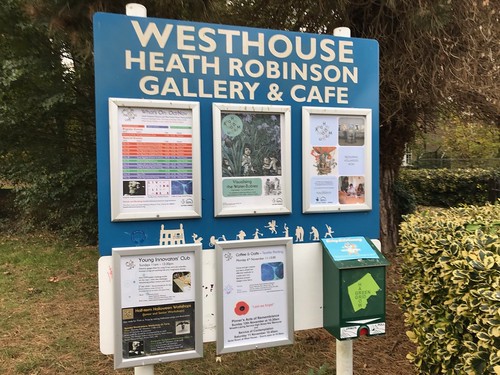
It was a short walk from the station to a nearby park, where all was soon revealed:
IMG_5749
I think I may have done an involuntary “happy clap hands” sort of gesture when I saw this sign.

Astute Go Stay Work Play Live will remember a short entry in our humble glossary on the Heath Robinson Device:
"Heath Robinson Device = Rube Goldberg device.  An absurdly complicated and overdesigned machine to achieve a simple result, named after the British cartoonist.  I imagine these to involve lots of old boots on the end of levers knocking over buckets of water... that kind of thing.  And I love that they have a whole different guy for that over here. (Except that I keep mistaking myself and saying "Heath Ledger Device" which is not right at all.)”

And of course I was entirely right. Heath Robinson was an illustrator and cartoonist born in 1872 in London (Finsbury Park). As I said in the glossary, he’s best know for his drawings of absurdly complicated devices designed to achieve simple tasks. They generally involve a lot of pulleys and bits of knotted string, and are surrounded by chubby bald men in overalls who tend the machines with great solemnity. There are, however, two things I didn’t realise about Heath Robinson. First, I didn’t know that aside from his best-known black-and-white cartoons, Robinson was a talented illustrator and a trained artist. And second, for some reason I sort of thought there would be actual machines, which in retrospect is a bit stupid. Because if you spend approximately one nanosecond properly contemplating any of Heath Robinson’s fantastic machines it becomes apparent they were never meant to leave the page.
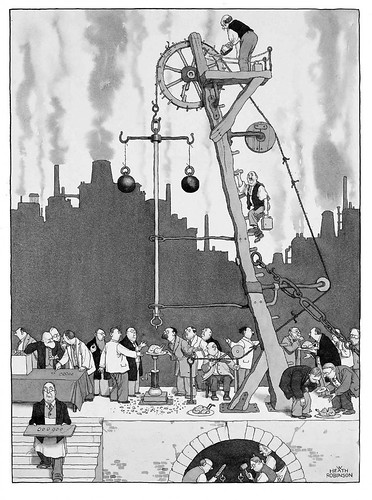
Tooth Tester
Not entirely practical Tooth Testing Machine. Ingenious, overly complicated and makeshift - the hallmarks of a Heath Robinson Device

The Heath Robinson Museum (great logo!) is tiny, and it’s in Pinner because Robinson lived in a house on nearby Moss Lane. And, despite my assertion that it’s not really possible to build any of his devices, there is actually a fairly impressive Heath Robinson Device on display at the museum.
IMG_5730
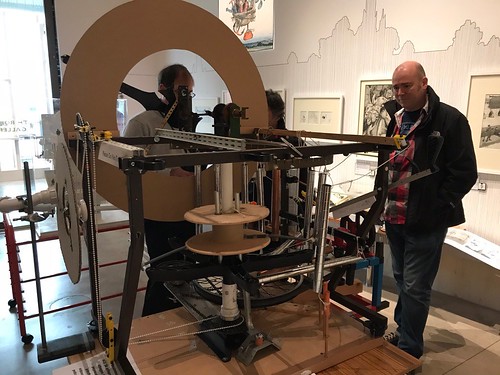
Piran contemplating the Ribbon Cutting Machine, which definitely fulfills all three of my above criteria, and was built by members of the Heath Robinson Club at St. Helen’s Girls School. (Why did my school not have a Heath Robinson Club? Come to think of it, why doesn't every school have a Heath Robinson Club? Imagine how much mayhem could be avoided if kids spent more of their time devising ways of making a cup of tea using a water balloon, a clothes peg, an empty yogurt pot, 50 popsicle sticks, a rubber band and a half mile of knotted string.)

This device not only cut the ribbon for the official opening of the museum in 2016 (eventually, with a guillotine-like blade on the right) it also moved the hands of a large clock and (sort of) played the Harry Potter theme tune. Or at least that was the idea. As anyone who has played Mousetrap will know, you almost always need a helping hand to get things moving somewhere along the way. One of the volunteers at the museum demonstrated the machine for us, and had to employ a few judicious nudges to keep things moving, as was the case during the official Ribbon Cutting Ceremony, depicted here.

But back to Heath Robinson. The museum is small, and displays examples of Heath Robinson’s work on the walls of one room, arranged in chronological order working through his time as an illustrator of children’s books and moving on to his very popular First World War cartoons. These mostly depict the Germans employing dastardly but absurd means of attack, and illustrate the sort of gentle satire that typifies Heath Robinson’s work. As Robert Endeacott said, "He took a stand against war by taking the piss out of Germany's horrendous war machinery"

Laughing Gas
"Huns Using Laughing Gas to Disable British Troops before an Attack"

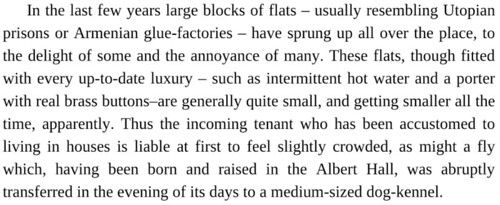
It was during WWI that Robinson started drawing the outlandish machines that would literally make his name an entry in the dictionary. Generally poking fun at modern living, his plans for a wart removing chair, pancake flipping machine and potato peeler led on to the first in a series of “How To” books, entitled “How to Live in a Flat”. As more and more people began moving into less and less space, Robinson (as illustrator) and K. R. G. Browne (as author), presented an utterly engaging handbook for life in tiny spaces. No wonder then, that as a tiny-space-dweller myself, I snapped up my very own copy in the museum gift shop and devoured most of it on the tube ride home later that night.
Screen Shot 2017-11-18 at 8.24.34 pm
A sample of Browne’s sparkling prose.

Screen Shot 2017-11-18 at 8.46.05 pm
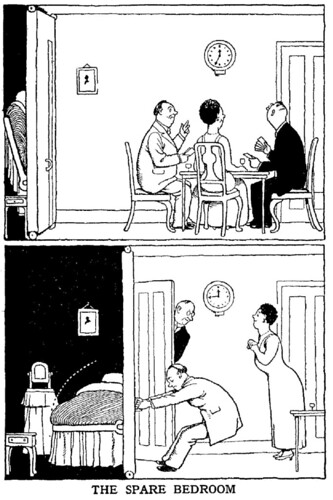
Robinson’s combination Dining Room Bedroom, the Dibedroom. Perhaps I should consider this handy device while I’m doing renovations! (Actually, this is not so crazy...)

After a thorough examination of the permanent collection, a spin through the temporary exhibit about illustrations for the children’s classic “The Water Babies”, and a polite ransacking of the gift shop, Piran and I retired to a nearby cafe for lunch before the long trek into the centre of town for Grand Day Out, Part Two. In fact, it turned out the Part Two was a time-sensitive event, so Piran deftly directed us through an impromptu interval at Somerset House that involved an engaging video installation, and then through a very large exhibit over many many floors of an empty building on The Strand that would take a whole other blog to talk about, so let’s skip lightly over that, pausing briefly for a nice bowl of noodles, and fast forward to the next instalment of fantastic machines.

IMG_5793
Oooooohhhh… this is going to be good!

Astute Go Stay Work Play Live Readers will remember I once visited a tiny seaside town called Southwold and encountered the fantastic Under the Pier show of wacky coin-operated machines. Novelty Automation is the London outpost of the Southwold show. Unlike the usual coin-operated arcade machine like the claw-grabber, novelty automation machines have their mechanical tongues planted firmly in their greasy little cheeks, which made this visit a perfect companion to the Heath Robinson Museum, both being sort off-beat but warm-hearted mechanical offerings. Sometimes clunky, always home-made, and an utterly engaging antidote to our current slick digital existences

The Novelty Automation arcade is open every day, but only opens in the evenings once a month, so timing for the visit was crucial. (In the evening events they serve beer!) We arrived not long after opening and invested in a couple of drinks and a handful of tokens and then hit the machines.
2017-11-02 20.12.37
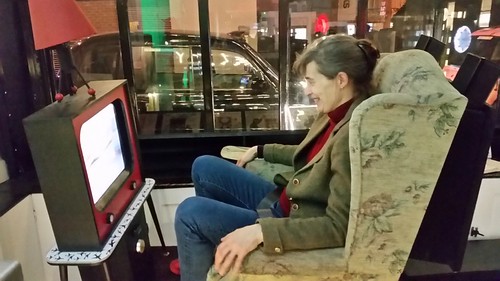
Here's me having a mini vacation, which involved sitting in an armchair while a video screen in front of me displayed a fast-forwarded trip through an airport, flight, hair-raising hotel transfer, 5 seconds of beach time and then the reverse journey, while the chair bumped and rocked along with the video.
Fantastically, most of the machines there were invented and built by one guy, who was there in the shop that night. Tim Hunkin is an engineer and cartoonist who's probably best known for drawing a long-running series in the Observer called "The Rudiments of Wisdom".  It wasn't until I started looking into Tim Hunkin to write this post that I realised how perfect the link was between our afternoon trip to see classic cartoons of fantastic machines and the evening visit to see fantastic machines made manifest by a cartooning engineer. Well played, Piran!

Many of Tim Hunkin's machine's had a familiarly wry bit of social commentary served up alongside the fun. For instance, "Pet or Meat" depicts a tiny papier mache family and a little lamb, and a spinning needle determines whether the lambs is... well you get the idea. And appropriately for London, there was a money-laundering game involving high-rise real estate.

IMG_5788
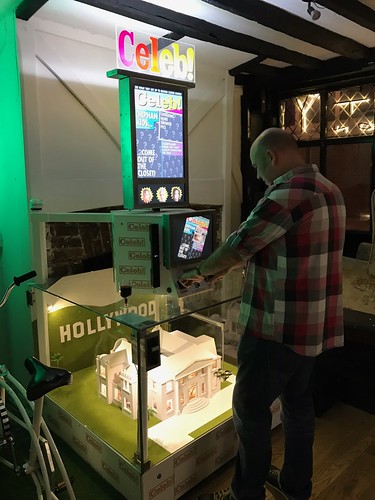
Piran played one that had him flying a "drone" camera around a model mansion snapping candid pics of celebrities that then appeared on a video tabloid front page. (The drone actually reminded me of the old Verti-bird toys from the 70s!) 

Along with the wry social commentary, there were some games that were just fun, and almost all had an unexpected twist.

2017-11-02 20.17.17
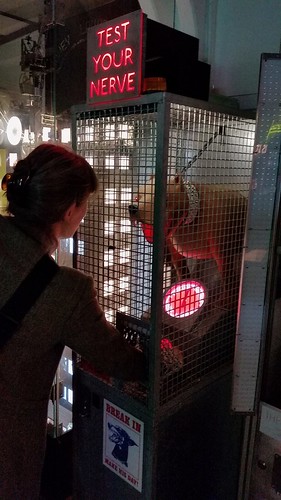
This one required you to hold onto the handle for as long as possible while the vicious dog snorts and pants and dribbles spit on your hand. It's more fun than it sounds like, really.

One of the more clever machines was called i-Zombie. After placing your phone in the designated spot on the machine, you're confronted with a never-ended parade of tiny phone zombie characters endlessly advancing towards you (very clever use of the classic "Pepper's Ghost" effect). Handles allow you to move your mechanical avatar back and forth to avoid them, but eventually they speed up too much and run you over. Once you're run over and the game is done you reach down to recover your phone only to discover it's gone! I was seriously taken in by this, genuinely thinking someone had nicked my phone while I'd been totally engaged in dodging plastic zombies. Then the machine informed me I'd been judged to be an i-Zombie and it had confiscated my phone for three hours! It was just the kind of unexpected twist that typified the machines at Novelty Animation. And equally typically, the machine gave me an out and produced my phone after I'd admitted to my addiction.

I could go on and on - the photo booth whose seat lurched unexpectedly as the shot was taken to capture your expression of shock, the personal nuclear reactor that dispensed a little boiled sweet as a prize for successfully containing all the spent fuel in the reactor, the Cycle Pong game that made you ride an exercise bike forwards and backwards to move your pong paddle up and down on the screen. I was complete rubbish at this, though I did get pretty good at safely storing the spent nuclear fuel, (which I think is a far more important skill, plus I got a candy.)

By the time we'd had a couple of drinks and tried all the machines we were some of the last people to leave the shop. I was utterly charmed by the place, and though it had been long, the whole experience really had been a Grand Day Out which is actually very appropriate, since Wallace and Gromit certainly belong in Endearing and Eccentric Inventor's Club, alongside Heath Robinson and Tim Hunkin. All that, and we still had time for a quick pint. Perfect.

Remember remember the 5th of November

Sunday, November 5, 2017

“Remember remember the fifth of November,
the gunpowder, treason and plot.
I see no reason why gunpowder treason
should ever be forgot.”
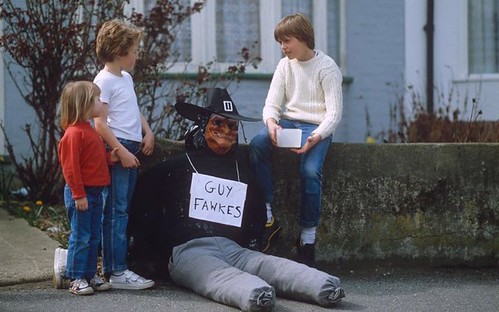
Halloween has mostly caught on over here, though it’s not really an English tradition. Halloween is an import from America, like McDonald’s instead of Wimpy’s. These days it's common to see people dress up in Halloween costumes and have parties and you even get the occasional trick-or-treater. But the truly English autumnal festival is Guy Fawkes day, now generally called Bonfire Night. I’ve been here for for seven years now and finally this year, for the first time, I managed to take part in a proper bonfire for the occasion.

First, for less-astute Go Stay Work Play Live Readers, a primer on the eponymous character. Guy Fawkes was part of a group of English Catholics who planned the famous Gunpowder Plot, a plan was to blow up the House of Lords on the opening of parliament on November 5, 1605, thus killing the king and paving the way for the installation of a Catholic head of state. Led by Robert Catesby, the scheme involved placing 36 barrels of gunpowder in an underground cellar below parliament. Because of his military experience, Guy Fawkes was put in charge of the explosives, which left him guarding the barrels. However, the entire plot was discovered through an anonymous letter and Fawkes was found during the resulting search of the parliament buildings. Interestingly, the Houses of Parliament are still searched once each year to make sure no modern-day Fawkesian miscreants are hiding in the cellars. Yeomen of the Guard conduct the largely ceremonial search before the State Opening of Parliament. (One can only assume that there are also more frequent and diligent searches conducted with slightly more rigour and less silly looking outfits.)

XJF107425
How nefarious he looks! He's also the inspiration for the Guy Fawkes mask, popularised by the movie "V for Vendetta" and those hacktivists at Anonymous.

Guy Fawkes (and any conspirators who fled and survived a later battle) were put on trial, convicted and sentenced to be hung, drawn and quartered. With anti-Catholic sentiment running high, and to celebrate the foiling of the plot, parliament declared a public holiday on Nov. 5 by passing the catchily named “Observance of 5th of November Act” (see what you can do with that one, Hallmark!).

As you might guess from their origins, the celebrations historically had a strong anti-Catholic tone, with Fawkes becoming a bogeyman and a pretext for Catholic repression for hundreds of years. Thankfully, that’s mostly gone now. In modern tradition, the 5th of November is commemorated with a bonfire and culminates in a fireworks display, apparently to reference the “fireworks” that failed to destroy Parliament. Effigies of Guy Fawkes - complete with pilgrim style hat and ruffled collar - are processed to the site of the fire and thrown onto the pyre for burning. However, while a Guy Fawkes-like “Guy” may be traditional, these days any reviled public figure is fair game. Donald Trump pops up frequently, and this year Harvey Weinstein made at least one appearance.

The biggest Bonfire Night events in the UK (and, therefore, the world) happen in the small town of Lewes south of London, which has six different Bonfire Societies that each hold elaborate processions of Guys and light their own fires and attracts thousands of people. So many attend that they shut down some roads and all train service to the town for the day, making it a bit of a mission to participate. I thought it would be fun to go see Bonfire Night in Lewes, but had nothing like the level of commitment needed to travel the day before, find lodging in the over-crowded town on the busiest night of the year, and fight through the teeming throng. Instead, accompanied once again by the Intrepid Raul, I attended a very nice little community celebration in the bucolic suburb of Barnes, southwest London, which turned out to be just the right combination of tradition, size, and ease of access.

The Barnes Bonfire Night is a bit special because they actually have a bonfire. This may seem to the uninitiated like a prerequisite (the clue is in the name…) but actual bonfires are dishearteningly rare these days. Fireworks displays are a-dime-a-dozen (or perhaps I should say ten-a-penny?). Honestly, it seems like every night for the last two or three weeks I’ve been able to hear fireworks going off somewhere (this is partly because it was just Diwali, but honestly I’m so over the fireworks these days. I can hear fireworks right now as I write this.) But a bonfire? Bring it on! I suppose modern safety regulations make it more and more difficult to construct an enormous pile of tinder dry fuel and set it ablaze while hundreds of people stand around watching. In the days before “Elfin Safety Gone Mad” it was common for families or neighbourhoods to have their own bonfire and set off a small display of fireworks. Children would make their own Guys and parade them through the streets, soliciting donations to buy fireworks from passers-by with the phrase “A penny for the Guy?”. Raul confirms that as a child he remembers making a Guy in school and once even getting together with friends to construct and light their own bonfire. Innocent times indeed.

Penny
Apparently "the penny for the Guy" tradition lasted right into the 1980s, when children were banned from buying fireworks. Now it’s mostly died out, which is too bad because it is adorably instragrammable.

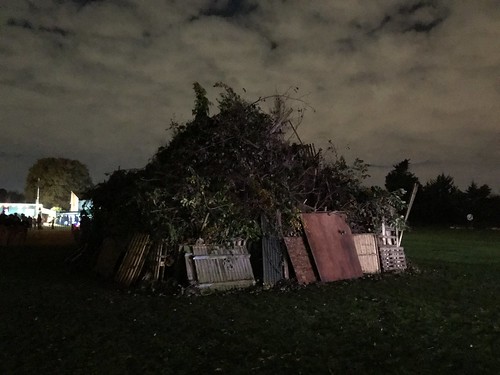
While it certainly wasn’t the massive all-out effort you’d get in Lewes, the Barnes Bonfire Night was just excellent. The weather was crisp enough that it felt properly autumnal, and the event was held at a community sports ground, where they’d assembled an impressive pile of fuel for the bonfire to one side of the cricket pitch. There were lots of families participating, and the whole thing had just the right home-grown vibe, with lots kids running around and overly friendly announcers on microphones with just a touch of feedback, and the season’s first mulled wine. It was, in a word, charming.

IMG_5814
Here’s the giant pile of fuel. I estimate it was about 25’ in diameter.

There were also few carnival style rides and games and a couple stalls of food and drink and lots of vendors selling different light-up LED toys and sparklers. Again, sparklers are traditional, but I guess LEDs cause fewer life-changing scars, so, you know, swings and roundabouts. It was heartening to see a few sparklers at least.

IMG_5821
Blurry Arty shot of kids with light-up toys

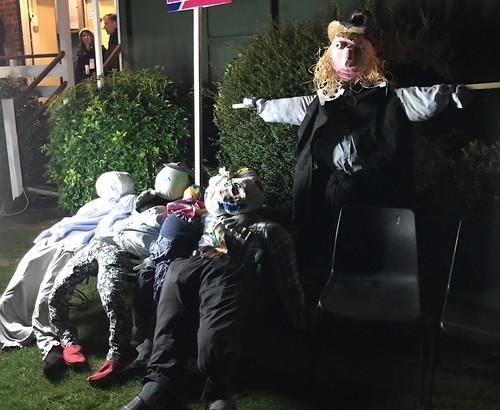
Barnes also had a contest for the best Guy - several families had made effigies and they were all set up on a park bench to be judged by a local councillor. The family who won had clearly made a real effort and their Guy, including requisite pilgrim hat with comedy-sized buckle, was quite rightly judged the winner. After the winner was declared, all the Guys were processed to the bonfire area and placed on the pile. Even better, the family who made the winning Guy were given the honour of lighting the bonfire.

IMG_5825
The Guys, including the clear winner standing literally head and shoulders above the others.

The bonfire itself was bloody impressive. It was lit from a series of pyrotechnics buried in the pile and contained a lot of tree branches with dried leaves that burned ferociously at first, sending plumes of sparks into the air like an erupting volcano.

IMG_5838
The volcano effect.

There was a ring of fence surrounding the bonfire to keep people back, but the heat was so intense that people instinctively backed away more and more as the flames grew. You just couldn’t be that close.

IMG_5845
The bonfire in all its glory, with the winning Guy silhouetted against the flames.

Watching a real fire is always a bit hypnotic, and the scale of this multiplied that effect. Raul and I just stood in the crowd feeling the waves of heat and the brilliant orange light and chatting and occasionally checking to make sure any outer clothing was not melting.
IMG_5844
And taking a selfie of course!

IMG_5856
Here’s the crowd, lit by the glow of the fire. It's truly the only light source in this photo.

The fire went through stages - first the sparking volcano, then the intense leaping flames, then the flames died down some and you could start to see the outline of the blackened fuel in the pile, and then the heaps of glowing coals. Periodically, some local committee member with a hosepipe would creep forward to spray down a patch of grass that had caught light around the periphery, though I think that the poor Barnes Sports Club cricket pitch will be quite worse for wear for some time.

IMG_5859
Outlines

IMG_5876
Coals

And of course there were also fireworks, an impressively lengthy display that we turned to watch with our right sides still baking from bonfire heat.
IMG_5864
Photos of fireworks taken on an iPhone are even worse that photos of a bonfire taken on an iPhone.
And then the fireworks were done and we turned back to the fire, which had progressed to the heaps-of-coals stage. Apparently with smaller bonfires it’s traditional to put potatoes in the coals to bake. I  realised that I regularly have lovely coals in my stove and tried this trick myself which did result in a potato that was basically edible, though half the skin had to be abandoned after turning into something with the consistency of a roofing tile and the colour of Donald Trump's heart. Other traditional Bonfire Night foods include Bonfire Toffee (made from black treacle) caramel apples, and gingerbread-like Parkin, none of which were in evidence in Barnes (damn). I briefly considered trying to make Parkin cake the next day, but decided to spend the time blogging instead. Lucky you.

The bonfire looked set to burn on for hours longer, so Raul and I finally left the sports ground and walked along the Thames back to the station. The boat is parked back at my marina mooring these days which is pleasant but about as conveniently located as the dark side of the moon so I was keen to start the long trek home. When I got there the stove seemed to be filled with the spirit of Bonfire Night, lighting easily and quickly progressing to the glowing coals stage, so I went to bed in warmth and comfort, with the smell of the bonfire in my nose and the satisfaction of finally having ticked that little item off my list. Next year: Parkin!

Off the tourist track: Swaminarayan Mandir

Sunday, October 22, 2017

There are a lot of things you expect to find in the suburbs of northwest London: Wembley Stadium. Ikea. The North Circular. Street after street of mostly unremarkable houses. What you emphatically don’t expect to find is a huge, opulent Hindu temple made from white marble.

1920px-London_Temple
Swaminarayan Mandir - at the time of its construction in 1995 it was the largest Hindu Temple outside of India. (Photo credit: original uploader was Nikkul at English Wikipedia)

I’d been vaguely aware of the existence of the temple, but only because I’d walked past it on the long trek to Ikea (Of course.) It’s surrounded by high walls so while might have thought, “Hmmm, that’s quite large” not much more than that really sunk in to my brain. For me to really stop and appreciate the site I needed the assistance of The Intrepid Raul who Astute Go Stay Work Play Live Readers will remember from various Bakuvian adventures, including frozen waterfalls and mountains on fire. Raul recently returned to UK soil after a three year exile contract in Azerbaijan and suggested the visit when we were catching up over a curry. I was keen on this idea partly because Raul is a pleasant companion, but also because he’s got the distinct advantage of growing up in a bi-cultural household where he might spend Sunday mornings at church then proceed to temple for the afternoon, which he claims seemed perfectly normal. In any case, I was not going to pass up the chance to see the temple with a somewhat native guide, so we agreed to meet one Tuesday at Stonebridge Park Underground for the short walk to the site.

And now, a little terminology and history. “Mandir” simply means temple, and this particular temple was the first traditional Hindu temple in Europe (being the first purpose-built traditional stone building, as opposed to an adapted pre-existing structure.) The BAPS Shri Swaminarayan Mandir - to give it its full name - is part of the BAPS organisation. (And BAPS stands for Bochasanwasi Akshar Purushottam Sanstha so let’s continue to use the abbreviation, shall we?) BAPS is a global Hindu organisation within the Swaminarayan branch of Hinduism, based, unsurprisingly, on the teachings of Swaminarayan. And here, with great relief, I revert to Wikipedia:
"Swaminarayan (3 April 1781 – 1 June 1830), also known as Sahajanand Swami, was a yogi, and an ascetic whose life and teachings brought a revival of central Hindu practices of dharma, ahimsa and brahmacharya. He is believed by followers as a manifestation of God.”
The temple is London is remarkable for many reasons. It was, as I’ve mentioned, the first purpose-built Hindu Temple in Europe. More remarkably, it was built according to “ancient Vedic Architectural texts” meaning that no structural steel was used. The main temple building is constructed from almost 5,000 tonnes of Bulgarian limestone, Italian Carrara and Indian marble. All the stone was cut and shipped first to India, where it was hand-carved by more than 1,500 different artisans. Then each stone was numbered and carefully packed and shipped to the site in London where each of the more than 26,000 pieces was assembled. Like I said - remarkable.

IMG_5411
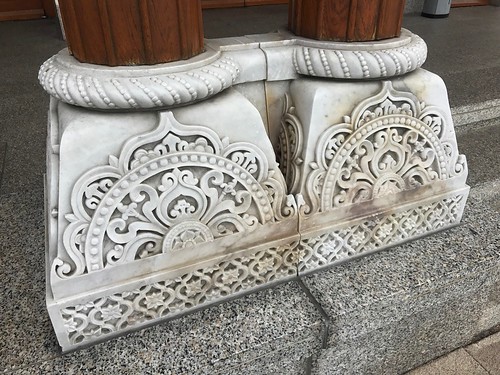
A close-up of some of the stone carving outside. And this is just a relatively restrained bit on the sort of “church hall” building called a Haveli, not the temple itself.

But it gets better! The construction of the temple was accomplished largely with volunteer labour. Volunteers. 3,000 of them. Assembling huge chunks of stone. And they finished the building in just 3 years. There was a quite long explanatory video in the basement museum area that showed miles of footage of the construction including lots and lots of presumably unskilled people manoeuvring 26,300 one-of-a-kind chunks of richly carved marble into position. That wasn’t a disaster waiting to happen at all. Luckily, the video didn’t mention any horrific crushing injuries or disfiguring tragedies. Not even a single shot of someone scratching their head over a plan in front of a vast field of almost identical bits of stone and shouting despairingly in Hindi something like, “Sanjay! Check that one over there! Is that 21,335 or 21,334?"

Raul and I fetched up at the temple complex on a grey Tuesday afternoon, where I checked my bag across the street in a poratkabin and we went through the mandatory metal detector. First we visited the Haveli, the community centre sort of building I mentioned earlier.

IMG_5410
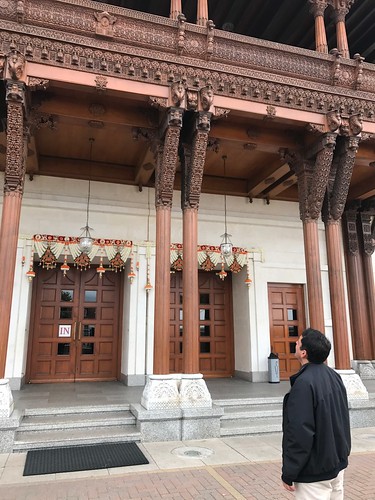
Raul and the Haveli from the outside. The decorations above the door were in preparation for Diwali;, the annual Hindu Festival of Light, crudely analogous with Christmas.


Housing a large prayer hall, gymnasium, library, day care, office and gift shop (with all the incense you could ever need) the Haveli is also ornately carved but made mostly from English oak and sustainably harvested Burmese teak.

Neasden_Temple_-_Shree_Swaminarayan_Hindu_Mandir_4888044478
Here's a close up of some of the carved wood on the outside. Understated it is not. Apparently for every oak tree they cut down in construction they planted ten oak saplings somewhere in Devon. Nice.

No photos are allowed inside the buildings of the temple complex, but I did manage to sneak this one after I took my shoes off, a requirement of visiting.

IMG_5412
Guess which ones are mine?

We had a quick look around the Haveli, though the largest rooms weren’t open to the public. Then we walked the long corridor linking the Haveli with the actual Mandir. And as impressive as the mandir is from the outside, it’s much much more impressive on the inside.

Temple Interior
Here’s an interior picture I scooped up from Google that shows the room with candles lit for Diwali. The roof is a huge dome, supported by the columns and the serpentine supports between the columns. It really is amazing.

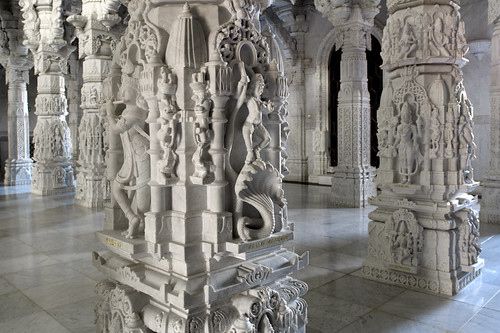
marble_baps-org
And here you can see a close up of some of the carvings on the support columns. The depth and detail is astonishing. Every column is carved like this.

The upper sanctum houses seven shrines that contain sacred figures of Deities that are normally hidden behind large doors. At appointed times through the day the doors are opened and the figures -  called murti - are revealed so that worshippers can pray, meditate and participate in devotional ceremonies. (We didn’t see that happen, though I recall I did see this in a temple in India.) I had a lot of questions, and it would have been great to consult with Raul about the meaning and purpose of a lot of the things in the room, but there was a very strict NO TALKING policy, with a stern looking elderly gentleman there to keep order, so we just padded around quietly in our sock feet and I itched to take photos, and I didn’t.

Murtis in Sanctum
Here are the mandir's murtis shown in my photo of a photo from a pamphlet

Murtis
And a close up of another set of murti from the mandir. 

I did find one thing funny. Throughout the temple complex there were donation boxes; that’s not unusual in any religious institution. However, the BAPS gang are savvy and modern enough that they actually had contactless payment systems set up at some boxes! Want to donate at the murti of Ganesh? Embarrassingly out of change or small bills? No problem. Just tap your phone! £1 per tap. For some reason I found this funny and disturbing at the same time.

Once we finished in the sanctum I elected to pay £2 to visit the exhibition on Understanding Hinduism in the lower level of the mandir. This was a small but extensive and densely informative look at the history and tenets of Hinduism, and at the Swaminarayans and this mandir in particular. Hinduism is an ancient and diverse religion. I was surprised to learn that it's generally considered the oldest major religion in the world that's still practised, predating not just the Roman Empire, but even Ancient Egypt. Sanskrit, the primary language of Hinduism, is the oldest Indo-European language, and Hinduism claims the world's first university (from 700 BC, a teaching subjects as diverse as logic, grammar, medicine, astronomy, commerce, music and dance). The exhibit also credits Hinduism, or ancient Indian culture in general, with inventing the zero, geometry, and the Pythagorean Theorem (before Pythagorus), and with discovering the heliocentric nature of the solar system and gravity, and developing plastic surgery. Busy beavers.

The Swaminarayan Mandir really is remarkable. Raul and my visit was not long, but the whole time I kept hearing him muttering, "You could be in India." It was a bit like someone had lifted up the Great Pyramid at Cheops and settled it gently in a carpark in Swindon. Coming back out into the grey Tuesdayness of north London after visiting was a bit of a shock. Which made my next destination all the more jarring. Where did I go? After being deeply immersed in ancient eastern culture and architectural wonder?

IMG_5419
Time for some meatballs!

Tourist Stuff: Hampton Court Palace

Wednesday, October 11, 2017

It seemed like a good idea at the time: a sunny Sunday afternoon with my visiting Mom and her husband, coupled with a lovely and significant historic palace and gardens in a picturesque suburban setting. What could possibly go wrong? Well, for starters you could be trying to get to a relatively untraveled spur line station which was inevitably going to involve a bit of faff. Then you could consult your most trusted app for London Life, Citymapper, and discover that trains to that particular station were curiously absent from the myriad of suggested routes. And you could also consult the helpful concierge at the Mom's hotel who would suggest going backwards to central London only to travel back west again on a train that seemed - according to Citymapper - not to exist. Then you could get slightly mixed up between Twickenham and Teddington. (Twickenham being much easier to get to and great if you're trying to see a rugby match, and Teddington being sort of tricker to get to and also curiously absent of trains, but actually much much closer to your intended destination.) Then you could stride forth anyways and make your way to Wimbledon, which is at least in roughly the correct southwesterly direction and expect to find a train when you got there only to be told by local station staff that there were no trains whatsoever from Wimbledon that day, and certainly none to any station within striking distance of where you were going, but you were welcome to sit for an hour or so on a Bus On Rail Replacement Service (five of the saddest words known to Londoners). And you could resign yourself to the dreaded B.O.R.R.S and go out to find absolutely no sign of buses or where to get them. And then you could just give up and get a fucking Uber. And then, after a still surprisingly long ride, you would, dear readers, end up at Hampton Court Palace.

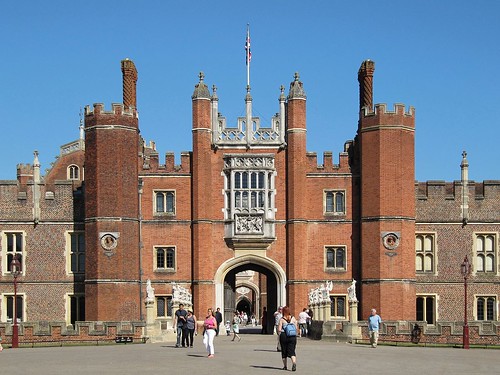
Great_Gate,_Hampton_Court_Palace
Here it is, Hampton Court Palace. (Ironic quote from the Wikipedia page for Hampton Court Palace: "Today, the palace is open to the public and is a major tourist attraction, easily reached by train from Waterloo station in central London and served by Hampton Court railway station in East Molesey")

Construction of Hampton Court Palace was started by Cardinal Wolsey in 1515 but ended up being a favourite of the Tudor King Henry VIII, who seized it from Wolsey in 1529 and enlarged it. The Baroque era King WIlliam III also enlarged it a bunch, so the palace shows both Tudor and Baroque architectural styles. But we didn't want to see any boring Baroque stuff so we mostly stuck to the Tudor bits the building and to the gardens, which is where we started, because they're the site of the famous Hampton Court maze.

IMG_5130
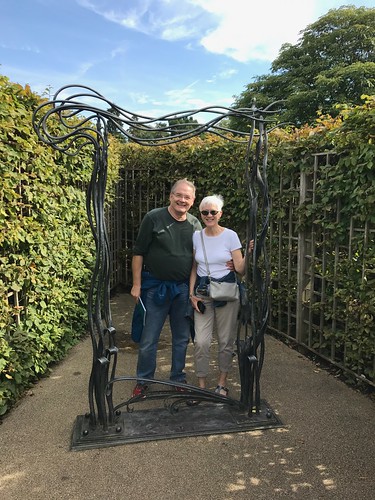
Mom and Bill in the Maze

The maze was laid out and the hedges planted in the late 17th century, and was the first proper multicursal hedge maze in England. It was originally all hornbeam bushes but was later replanted with yew. And here I will remind less Astute Go Stay Work Play Live Readers of the different between a maze - as in Hampton Court - and a labyrinth, as in our recent blog post. A labyrinth is unicursal, having only one path to the centre, being intended not as a challenge but a route for contemplation. A maze is multicursal - a puzzle with dead ends and forks and wrong turnings, which is much of the fun. However, as our party was comprised of a science teacher, an astro-physicist and one who might sometimes be described as just a tad on the methodical and rigid side, we entered and immediately implemented the "only turn one way" system which is a simple method of cracking any maze. This means we took every left turn available and therefore covered a lot of technically unnecessary ground but easily made it to the centre of the maze, where there was a mandatory photo op.

IMG_5133
Two thirds of the triumphantly systematic team

Having ticked off the maze, we continued to explore some more of the massive grounds of the palace, which includes 60 acres of formal gardens set in 750 acres of surrounding parkland. The Kitchen Garden was the next stop, originally planted in 1689 during the reign of William and Mary, using some of Henry VIII's old tilting grounds. It originally supplied fresh fruit, vegetables and herbs for the entire household but fell into disuse when Victoria consolidated all royal kitchen gardens at Windsor Castle, and was converted to a pleasure garden in the 1930s. The present garden is a recreation of the original 17th century garden and was just opened in 2014. It was looking a bit sparse when we were there but we were still able to identify a lot of familiar species. The yield of the garden is sold to the public at a weekly market stall from June until the end of the season, for those who prefer to get their Brussels sprouts with a tinge of faded royal glory instead of just nipping out to Tesco for stuff any commoner can get.

IMG_5134
A bit scruffy these days, as I said

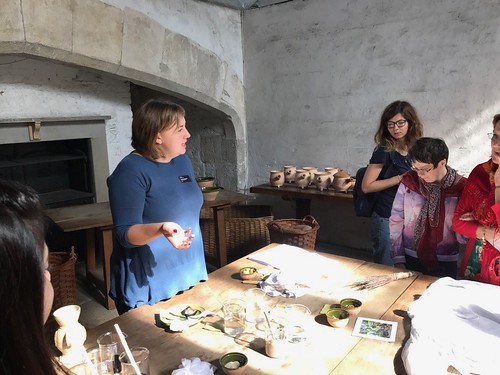
After a quick glance at the Rose Garden (lots of roses), we headed for the palace itself. Being more interested in the Tudor bits, we first headed to the kitchens. When the palace was a royal household, between about 1530 and 1730, the kitchens catered for up to 400 people each day, though not for the King himself - he had a separate Privy Kitchen. The main kitchens were there to feed to staff of the estate, and were a massive operation divided among several rooms. The first rooms showed some of the crockery and utensils used, and there was a staff member explaining things.

IMG_5137
Explanation of something in progress, possibly involving stirring small pots of something? Or is that a shirt on the right? And I think that's a whisk...

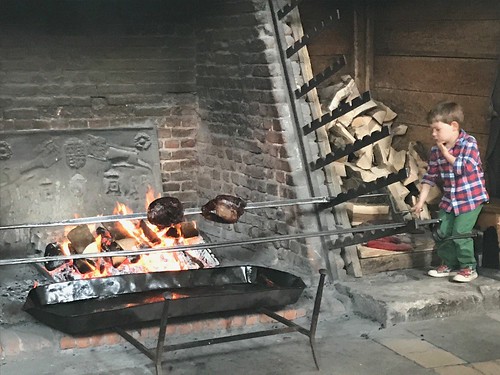
More interesting was the roasting kitchen, where huge fireplaces were used for roasting whole beasts on a turning spit. They had one fire going when we were there, though all they were cooking was two (relatively) little joints of beef. Back in the day they got through 1,240 oxen, 8,200 sheep, 2,330 deer, 760 calves, 1,870 pigs and 53 wild boar in a year, meaning that operating fires like this took an enormous amount of firewood. I took notes as I listened to the guide, but I wonder if I actually wrote it down wrong because my note says each fire took one ton of wood per day. And there are six fireplace just in the roasting kitchen. Imagine how many others there were in the rest of the kitchens for cooking and in the rest of the palace for heat. No wonder there’s no forest left.

IMG_5142
Members of the public were invited to have a go at turning the spit. This little guy looked like he would have fit right in as a bedraggled kitchen boy. Also, charmingly, each time they do a roast like this they hold a raffle among the staff working that day to see who gets to take home the joint! Mmmmm... historic meat!

After the kitchens we went through the Great Hall, with its impressive hammerbeam roof and hung with a famous set of tapestries depicting the story of Abraham. Hammerbeam is a method of supporting wide ceilings with timber shorter than the overall span. The short projecting beams coupled with the longer vertical post are meant to look like a hammer and support the ends of the centre arches that in turn support the highest section of the roof. Very clever. It was actually kind of Hammerbeam Roof Week, since we also visited Westminster Hall at the Houses of Parliament the next day. Hammer-rama!

IMG_5145
It’s also got nice windows and an impressive collection of dead animal heads.

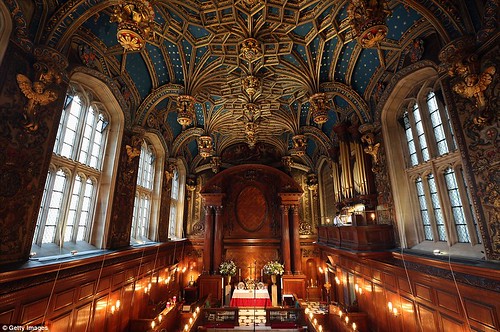
Continuing along the tour we started to hear the sounds of choral music when approaching the Chapel Royal, with its impressive vaulted ceiling and ornate gold and blue paintwork. It seemed to be a recording playing to set the mood but it turned out to be the actual choir of the Chapel Royal rehearsing for the afternoon service, complete with angelic boy sopranos in red choir gowns. (No photography allowed, so thanks Google). It was an unexpected treat.

31074B6300000578-3439293-image-a-66_1455043658282
The Chapel is still in use for religious services today and if we’d been so inclined we could have attended the 3:30pm Choral Evensong. As it happened we were not thus inclined, because we had to go see more sumptuous rooms and ornate gardens and possibly find ice cream and souvenirs.

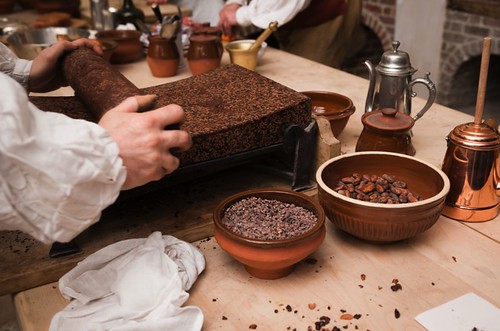
Along the way we visited the Chocolate Kitchen which was not a kitchen made of chocolate but a separate kitchen for the preparation of hot drinking chocolate. Its existence was known about from palace records, but its exact location in the palace grounds was lost until 2013, and its now been restored. The Chocolate Kitchen is where the  king’s specialist Chocolate Chef would start with raw cacao beans, roast them, crush and process them, and add sugar, milk and spices before personally serving the cup of chocolate to the King. Records show that aniseed and even chili were used as flavouring, which I guess means that the trendy chili flavoured chocolate you see now is hopelessly old fashioned.

Chocolate 1
This is the chocolate crushing thingammy in action. Not only was this kitchen not made of chocolate, there was also no actual chocolate available to be consumed, which seems like a ridiculous oversight.

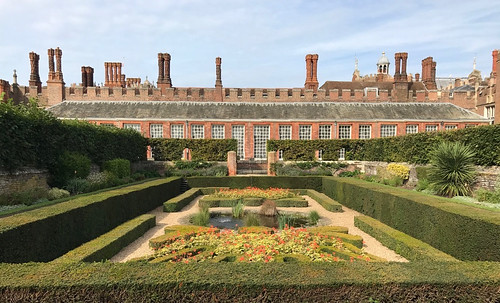
Skipping further along we ducked out into the gardens again and strolled through the large and formal Privy Garden, which is overlooked by the William & Mary era east front of the palace, a much more modern looking affair. The garden itself is a very accurate reproduction of the 1702 design for William III. Its accuracy is due to the very detailed records kept by the gardeners and workmen involved in the project, making it a simple matter for the modern palace staff to restore the gardens exactly. Amusingly, those records are so complete not because of the consummate professionalism of those 18th century workers, but because the king died before the garden was completed and they were afraid they might not be paid, hence kept very robust records of their work.

IMG_5153
Privy Gardens

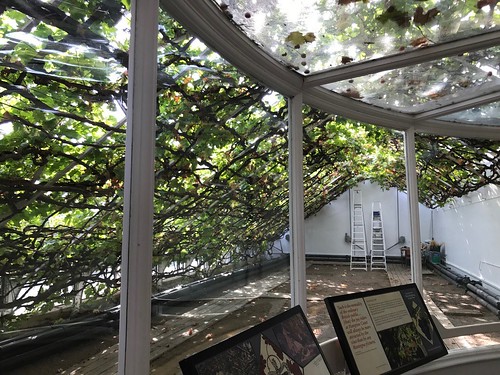
More interesting was the glass house enclosing the Great Vine - the longest grapevine in the world. Planted in 1768 by the famous landscape architect Capability Brown, the vine is now 13’ around the base with the longest branch extending 120 feet. It still produces sweet black table grapes (for eating, not wine-making) with each season’s crop averaging about 600 pounds in total. Originally the fruit of the vine would have been reserved for the royal inhabitants of the palace. Queen Victoria had them sent to royal residences at Windsor Castle and the Isle of Wight. But during the reign of Edward VII, the king decided they could be distributed to the masses so now the grapes are carefully harvested in early September, packaged by volunteers, and sold in the gift shops of the palace. We must have just missed them!

IMG_5155
This is the latest of six or seven glasshouses that have contained the vine. This one was built in 1969 and completely encloses the 1900s era steel framework that had become so entwined with the vine that it was impossible to remove.

By the time we’d made it through the Privy Gardens and the grapevine we all agreed we’d pretty much sated our desire for gold leaf, stained glass, broad avenues of topiary, perky costumed staff and gift shops. So there was really only one thing to do.

IMG_5162
Ice Cream. Of course.

This was followed by another Uber ride to Richmond, and a walk along the river, and a tasty full roast dinner at a very agreeable pub, including a positively transcendent sticky toffee pudding. Then there was a quiet journey back to central London on the slow but steady District Line. I'm generally irked by the District Line (really TFL, how can you possible argue that it's ONE line? It's got three different termini in the west. THREE. It's almost as bad as the Northern Line...). But on that day it had one great advantage over mainline trains in that it was actually running trains. Radical.

GRUB!: Welsh Rarebit

Sunday, September 24, 2017

It’s been a while since I blogged about any local food (a year ago in fact, with Summer Pudding) and the weather has turned chilly enough that I’ve had to get the fire going some nights, which is lovely and cozy. This, coupled with my now work-free lifestyle made it good time to contemplate a nice hearty toasty yummy treat like Welsh rabbit, which you sometimes see spelled “Welsh rarebit” even though it’s always pronounced “Welsh rabbit”.

FOT933397
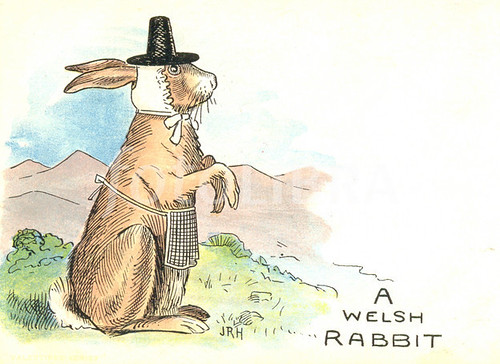
Note: No rabbits were harmed in the production of the blog post, largely because Welsh rarebit has nothing at all to do with rabbits.

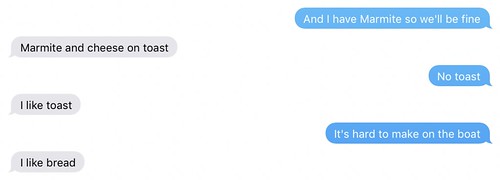
Welsh Rabbit is really just posh cheese on toast, and since I’m a big fan of cheese in any form I figured it was about time to test this out. This is despite the fact that toast is not really a boat-friendly foodstuff, because a conventional toaster draws about nine zillion watts of power, which is not healthy for one’s batteries. I do have one of those folding camping toasters to put on the stove, but it’s pretty crap. And it's possible to toast bread in the oven under the grill (broiler) but that’s not very fun, for reasons which will become clear below, which prompted this exchange between me and Karen when I was attempting to get her to tell me what food to stock up on for her recent visit.

I like bread
She’s flexible, I’ll give her that!

Having a gas stove is great for cooking. Having a gas oven is better than having no oven at all, but not brilliant. Having a gas grill/broiler is the worst of the lot. Mine didn’t work for ages because some kind of thermostat thingy was broken when I first bought the boat, but I've had that repaired. Still, it’s a remarkably temperamental bit of kit. I have to light it with a BBQ lighter (though that’s true for the hob and the oven as well) and then verrrrrry gently release the gas knob, or it will go out. And then verrrrrry slowly close the door, or it will go out. And then when you put the food in you have to verrrrrry verrrrrrrrrrrry slowly open the door, or it will go out. And if you have to relight it the odds of it going out again spontaneously, or at any of the above repeated stages increases dramatically. Basically, you need to be a Grill Whisperer to actually achieve toasting, which is kind of ironic because toast is not exactly Cordon Bleu Level cookery. That’s why I have a general reticence about toasting on the boat. However, I also have a general love of things that are toasted, especially cheese, so what the heck, let’s dive in.

IMG_5086
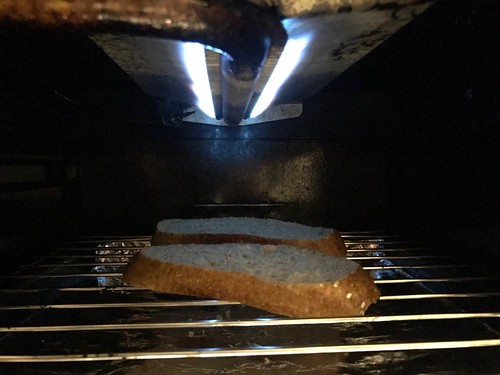
The grill in one of its rare moments of actually producing heat.

It’s not really clear why Welsh rabbit is called rabbit at all, nor why it is spelled sometimes spelled “rarebit” but still pronounced “rabbit”. The first recorded use, in 1725, was “rabbit”, with the “rarebit” option appearing 60 years later. Probably the alternate spelling was devised by killjoys who kept pedantically and cheerlessly pointing out that "there’s no rabbit in the recipe so really it’s misleading to called it rabbit and while we’re at it would you like a nice bowl of mock tertull soup?”

As for the Welsh connection, that’s pretty tenuous too and seems to boil down to something best expressed as, “Gosh those Welsh sure like their toasted cheese don’t they?” Wikipedia claims that "the notion that toasted cheese was a favourite dish irresistible to the Welsh has existed since the Middle Ages” and recounts a joke about St. Peter tricking all the Welshmen in heaven to leave by claiming there was toasted cheese just outside the Pearly Gates. Ho ho! What a merry jape!

The distinctive thing about Welsh rarebit though is that it’s not just a lump of cheese on toast, it’s grated cheese mixed with other yummy stuff on toast and then melted all together.

Let’s start first with the cheese, which should be a strong old variety, cheddar being the most common. The toast should be made from decent real bread that can stand up to toasting and then being smothered in yummy gloop without melting into pappy nothingness. If grilling your toast (instead of taking the easy way out by putting a slice of bread into some sort of electrically powered device that heats it evenly on both sides at once) it’s best channel your inner Grill Whisperer and toast both sides instead of slacking off and only doing one side.

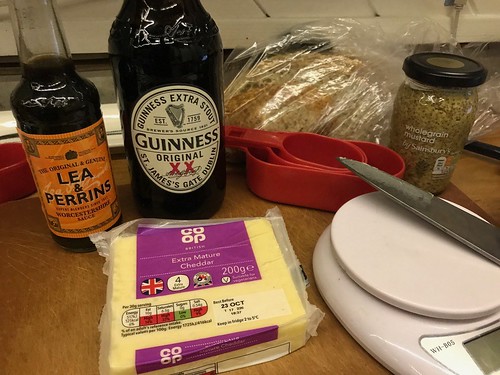
What elevates the Welsh rarebit are the small additions to the grated cheese that loosen up the cheese mixture and add an extra kick of flavour. It seems to be generally agreed that some kind of liquid goes into the mix, with ale or other beer a popular choice. Mustard is also usual and Worcestershire sauce is mandatory.

IMG_5088
For the uninitiated, Worcestershire Sauce is in the orange labelled bottle on the left, and presents an even greater linguistic challenge that “rarebit”, being pronounced “WUSS-ter-sher” sauce, and originates in Worcestershire, obviously. Sometimes it’s even shortened to “Wooster Sauce” because the English like nothing better than leaving out whacking great chunks of words when they pronounce them. In the pantheon of typically English behaviours (alongside queueing, moaning and self-depracating humour) utterly ignoring three-quarters of the letters in a word is an area where the English perform effortlessly at an Olympic level.

Worcestershire sauce lives in the same family as other fermented liquid condiments like fish sauce. Originally formulated by the Lea & Perrins company in the 1830s, its makers did not find it particularly beguiling on first tasting, set it aside, and forgot about it. When the barrels were rediscovered months later it had mellowed into the umami-packed flavour festival we know today. The exact recipe of original Lea & Perrins Worcestershire sauce is a secret but a discarded note from the 19th century discovered in a bin in 2009 features vinegar, molasses, sugar, anchovies, tamarind and spices. A little goes a long way. As well as flavouring Welsh rabbit, it’s also used in a lot of beef dishes and, of course, in Bloody Marys and Caesars (which definitely deserve a mention I ever do a home-grown Canadian GRUB post.)

But back to Welsh rabbit. Here’s how I attempted to make it, with thanks to the Guardian recipes section.

WELSH RAREBIT

2 slices of chunky toast
1 tsp English mustard powder
3 tbsp stout like Guinness (tragically, the recipe uses a very small amount, so you’ll have to find another use for the remaining 26.3 tablespoons)
30g butter
Worcestershire sauce, to taste
175g hard sharp cheese, grated
2 egg yolks

1. Mix the mustard powder with a little stout in the bottom of a small pan to make a paste, then stir in the rest of the stout and add the butter and about 1 tsp Worcestershire sauce – you can always add more later if you like. Heat gently until the butter has melted.
2. Tip in the cheese and stir to melt, but do not let the mixture boil. Once smooth, taste for seasoning, then take off the heat and allow to cool until just slightly warm, being careful it doesn't solidify.
3. Pre-heat the grill to medium-high, and toast the bread on both sides.
4. Beat the yolks into the warm cheese until smooth, and then spoon on to the toast and cook until bubbling and golden. Serve immediately.

Here’s what really happened:

WELSH RAREBIT

2 slices of chunky toast: I actually managed this! Even with the recalcitrant grill.

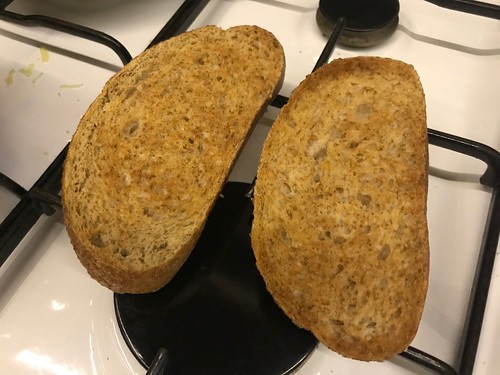
IMG_5090
Photographic evidence of perfect toast, made on the boat.

1 tsp English mustard powder. Local grocery lacks powdered mustard so use a dollop of grainy mustard because I’m pretty sure that one recipe I read online somewhere mentioned grainy mustard.

3 tbsp stout like Guinness. No trouble. Tragically, the recipe uses a very small amount, so need to find another use for the remaining 26.3 tablespoons.

30g butter: Think to self, “This seems like an awful lot of butter for two slices of toast”. Use it anyways, because: Butter!!

Worcestershire sauce, to taste: This ended up being a couple of teaspoons.

175g hard sharp cheese, grated: Again think to self, “This seems like an awful lot of cheese for two slices of toast.” Prepare a bit less, and use up random bits of cheese from the fridge including the end of a bit of parmesan.

2 egg yolks: Start separating eggs having carefully set out a dish for the excess whites, but no dish for the yolks. End up leaving each yolk nestled in half an egg shell perched precariously on the counter leaning against random utensils thinking, “This is going to end badly."

1. Mix the mustard powder with a little stout in the bottom of a small pan to make a paste, then stir in the rest of the stout and add the butter and about 1 tsp Worcestershire sauce – you can always add more later if you like. Heat gently until the butter has melted: Mix everything in the pan and think, “This is awfully wet looking."

2. Tip in the cheese and stir to melt, but do not let the mixture boil. Once smooth, taste for seasoning, then take off the heat and allow to cool until just slightly warm, being careful it doesn't solidify: Add cheese and think, “Yes, I was right, this is awfully wet. This is going to be like ladling soup onto toast. I’ll add the rest of the cheese." Add more cheese.

3. Pre-heat the grill to medium-high, and toast the bread on both sides: Success!

4. Beat the yolks into the warm cheese until smooth, and then spoon on to the toast and cook until bubbling and golden. Serve immediately: Beat the yolks into the warm cheese until still a bit lumpy and very very soupy indeed. Spoon onto toast and think, “Yes, this is exactly like covering toast in a very tasty cheese soup full of raw egg yolk.” Put it under the grill. Open the oven door to check and hear the grill go out. Relight the grill. See the grill go out. Swear. Relight the grill. See the grill go out. Swear a lot. Relight the grill. See the grill go out. Give up on the grill and light the oven. Gently warm the proto-rarebit in the oven. Spoon the rest of the cheese soup on top, because the initial covering has congealed enough to support another layer. Monitor cooking and decide the oven is just not getting the job done. Put both slices of toast, soup-side down, in a frying pan on the stove, thus perhaps inventing something called Australian Rarebit.

IMG_5091
You can really see the extravagant butter content start to show itself here.

Sample the remaining 26.3 tablespoons of Guinness and cook until losing the will to continue and turning the whole mess out onto a plate. 

IMG_5092
Jazz things up with a sliced apple, artfully displayed. Nevermind that the rarebit itself does not look precisely appetising. Remember how much butter and cheese were involved and tuck in.

So I did eventually end up with warmed cheese on toast, though the process was arduous. If I ever attempt this again I'll probably need to outsource the toasting to save precious working grill time for the actual toasting of the cheese. Or perhaps I could make the toast the day before, to give the grill a chance to recover. (Though considering this is meant to be a simple and easy recipe, the need to prep a day ahead seems not entirely in the spirit.) And I'll use 90% less butter and probably skip the egg yolks or only use one, since I can't really see what they add to the party. It seems to me the irreducible elements of Welsh rarebit are: toast, cheese, mustard, Worcestershire sauce and a working grill. Perhaps those of you with toasters and working grills could do a bit of experimentation and report back. It's about time you lot started earning your keep anyway.

Thus ended my grand experiment in Welsh Rarebit, which I only embarked on because I thought it would be a quick and easy thing to blog about which then devolved into a messy, sweaty, sweary fight to the death with the grill.

Thank God for the Guinness, that's all I have to say.

Back to School Words (or: What the hell is a GCSE?)

Sunday, September 10, 2017

It’s back to school time for most of these days, so I’m taking the opportunity to review a few words and phrases related to schooling over here. I’ll admit right now that I find the English school system mostly baffling with its A-levels and GCSEs and league tables and such, but it’s about time I got to grips with it so here we go, starting at the beginning.

Primary School: Starts as early as age 3-4 with a year of Nursery School, which is followed by a year of Reception, then Year 1 (starting in the year a child turns 5), Year 2, Year 3 etc., up to Year 6 and lasting until age 10 or 11. For ease of understanding, this would be all the schooling you’d do BEFORE getting a letter inviting you to Hogwarts School of Witchcraft and Wizardry. At the end of primary school students will take SAT exams - the Standard Assessment Test, or an Eleven-Plus exam.

Prince George
The media was abuzz this week with pictures of Prince William taking Prince George to his first day of school. Here they are, meeting the Headmistress of Thomas’s Battersea School, where the facilities include a ballet room, science labs, a pottery room, two libraries and a one-acre playground. The young prince, who will be known as George Cambridge, will get morning snacks of organic milk and freshly baked pain aux raisins, which is, with the addition of a shot of espresso, a lot like my morning snack.

Eleven-Plus: An exam taken at the end of primary school used to determine admission to Grammar School. The exam was introduced in the 1940s as a tool for streaming children into one of three levels of secondary school (known as the tripartite system). Grammar schools were the most academically oriented stream, and, despite being re-tooled in the 1960s it was far more common for children from middle class backgrounds to pass their Eleven-Plus exams than for working class children. The Eleven-Plus exams are now less common. Most kids do a different standardised test that’s more geared towards assessing progress than determining if little Electra and Hugo will make it into a grammar school like St. Custard’s.

Grammar School: A secondary school that selects students based on academic performance. So named because the original medieval grammar schools were developed to teach Latin. Grammar schools are academically-oriented state funded secondary schools, as distinct from:

Comprehensive School: A secondary school that accepts all students*, and is also state-funded. (* I say they accept all students but admission is based on the student living in the school’s local catchment area, which, when the school is particularly high in the League Tables, can fuel a run on housing as parents attempt to secure a place for their child buy moving into the area.)

League Tables: A system of ranking schools according to performance, partly based on students’ test scores in national standardised tests. Competition for rankings in the league tables can be fierce. This summer several grammar schools were accused of ejecting students for not achieving high enough grades, thus possible affecting the school’s all-important rank.

Secondary School: Also variously called Upper School, College, High School blah blah blah. Covering ages 11-18, these are the Hogwarts years. You can spend them at a grammar school or a comprehensive, but odds are that wherever you end up you’ll be in some kind of school uniform.

Hogwarts-dh2
Tragically, almost no schools in the UK look like this.

School Uniform: Most schools in the UK require students to wear a school uniform. For the most part, schools have pretty simple uniforms, usually with black or grey trousers, plain white or light coloured collared shirts or polo shorts and plain black shoes, all without obvious school “branding”. (This is to keep the cost of uniforms as low as possible because often these standard items can be bought at many different stores, not just from the school.) The basic uniform is normally supplemented with a jumper and/or blazer in school colours, often with a crest, and a school tie.

There’s actually a sort of competition among bargain high street shops to see who can offer the lowest price for a complete set of basic uniform items. In 2014 Aldi offered one jumper, one pair of trousers or skirt and two polo shirts for £4. In total. Not £4 for each item. £4 for four items of clothing. (Which makes me wonder if perhaps you’re meant to just throw the whole lot out at the end of the week and buy a new one?)

Younger boys usually wear shorts, and girls usually wear skirts instead of trousers, or sometimes something called a gymslip, which is a sort of pleated sleeves tunic dress. (Actually, at one school boys also have the option of skirts, as illustrated this summer. Temperatures got so hot that boys at one school, whose uniform did not offer shorts, instead borrowed skirts from sisters or friends in protest and wore them to school.)

Boys in skirts
Nicely done boys.

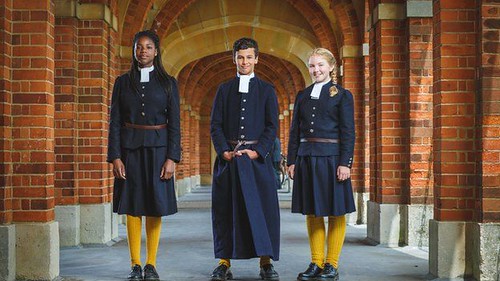
Some schools have particularly notable uniforms. There was one near the happy house in Brixton where the little girls wore blue gingham dresses and straw boater hats. Eton famously makes its boys wear a black tailcoat, waistcoat and pin-striped trousers, though they usually eschew the tophat these days. The prize, though, goes to Christ’s Hospital school, whose students wear a uniform first in fashion in Tudor times.

_77367239_3a9a6049s
Christ’s Hospital students. Rockin' the 16th century's hottest fashions.

Jumper: The generic term for what in North America is called a sweater. You’d also call a fleece a jumper. Basically, any warm knit long-sleeved top is a jumper.

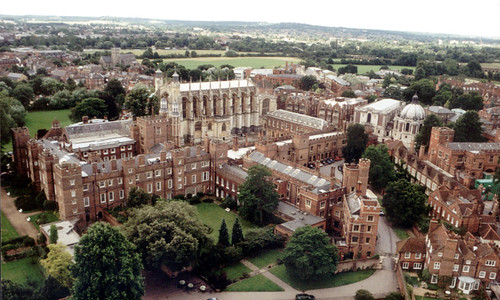
Eton: (pronounced EE-tun, but please tell me I didn’t have to tell you that…) The oldest and most famous of England’s traditional boarding secondary schools, founded by Henry VI in 1441. Eton is a public school, which means it’s a private school. Go figure. Admission is selective and fees per year are in the neighbourhood of £36,000. Eton is one of only four remaining public boys’ boarding schools. (The others are Harrow, Radley and Winchester.) The school has educated 19 British prime ministers and has been referred to as the chief nurse of England's statesmen. The Duke of Wellington is often mis-quoted as having said "The Battle of Waterloo was won on the playing fields of Eton.” Students are referred to as boys and on graduating become Old Boys, and, more specifically, Old Etonians.

1257_eton
Eton College, which definitely has more than a faint whiff of Hogwartiness about it.

Old Boy: The generic name for a former pupil of a primary or secondary school, and the literal basis of the Old Boys Club and Old Boys Network. Different schools have different names for their graduates, usually based on the name of the school, hence the Old Etonians, Old Harrovians (from Harrow), etc. To graduate and become an Old Boy (or just a plain old normal person who finished school) you’ve first got to contend with the GCSEs.

GCSE (General Certificate of Secondary Education): Equivalent to the Hogwarts OWLS (Ordinary Wizarding Levels), GCSEs are the last stage of compulsory education, taken in Year 11, at age 15 or 16. Every student is required to take the 5 compulsory subjects (Usually English Language, English Literature, Math, Science and a second language of their choosing). In addition, students choose five more subjects from a laundry list ranging from Astronomy to Motor Vehicle and Road User Studies to Divination. At the end of the school year students will sit an exam in each subject (and note that here in the UK you “sit" exams, not “take” them.) If they pass, they will earn a GCSE in that subject, so you’ll often hear people say things like, “I took a GCSE in Punjabi but I can’t remember a thing now.” GCSEs replaced the old O-Levels system, eliminated in 1988. Attaining a certain number of GCSEs at a certain level is a requirement for further study, which comes as A-Levels.

A-levels: A Levels are subject-specific courses taken in the last two (optional) years of secondary school (Years 12 and 13, Age 16-18) commonly known as 6th Form. To complete our Hogwarts analogy, A-levels are like NEWTs (The Nastily Exhausting Wizarding Tests). Students choose how many A-Level subject to take. Most will choose three or sometimes four. I think my old housemate took six but we have already established that she is a clever clogs. The UK record is, I think, 11.

The A-levels system means that students study their chosen subjects (and nothing else) intensively for two years. I suppose it's assumed you’ll take subjects that you’ll go on to pursue at university and as a career. Like taking an A-Level in Defense Against the Dark Arts if you want to become an Auror, obviously. A-levels are required for entrance to university, and your A-Level results will often determine whether or not you get into your university of choice, since students often have a conditional offer of acceptance from a university that will be contingent on them attaining certain grades in certain A-Level subjects, based on the course they’ve applied for.

Clever Clogs: A person who is ostentatiously and irritatingly knowledgeable. A clever clogs will probably spend a lot of time revising.

Revising: Studying, as in the thing you do when you’re getting ready for an exam, not they general practice of learning something. I find this a particularly odd phrase but it is universal. I’ve never heard someone here say “I’m busy studying for my A-levels.” It’s revising, in order to sit an exam, and then wait for Results Day.

Results Day: The results for all GCSE and A-Level exams for all schools across the country are announced on the same day. (This year it was A-levels on August 17 and GCSEs on August 24.) Results Day generates a lot of sturm and drang and media attention and many photos of kids smiling or cheering or crying or all of the above because GCSE results determine whether you can go on to study A-Levels, and A-Level results determine whether you get into your university and programme of choice. If things don’t go as planned though, all is not lost. You can always try your luck at Clearing.

teswebresults2_2
Bad Haircut Guy: Uh Oh. This is not good. I needed an A in Modern Sanskrit and all it says here is "Must try harder". Or I think that's what it says. It's in Sanskrit.
Blue Hoodie Guy: You’re screwed mate. It’s Clearing for you.

Clearing: The Clearing process lets students apply for university courses that still have places available. This is for those who have not received any offers from a university, or (foolishly) rejected all their offers, or missed the conditions of their offers by sleeping through their A-level exams. Just like Results Day, Clearing is a huge topic in the media, with all kinds of guides to how to access the system and how lots of people have to go through clearing and still go on to lead fulfilled lives and how you should not panic because you’ve screwed up every chance you ever had of becoming a success and should probably just move to the Outer Hebrides except that you failed your A-levels in Salmon Husbandry, Peat-cutting, and Lard Cookery.

I could get into the university level stuff here too - the Russell Group and Oxbridge and the Colleges system and such, but that feels like a different blog. Also I've just an enormous bowl of incandescently good bread pudding so what I really need now is a nap.